
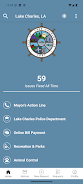
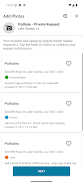


OneLC Action Line connects Lake Charles residents with city services and local information in a simple, practical way. OneLC Action Line lets you report non-emergency problems such as potholes, damaged sidewalks, overflowing lots and other municipal maintenance needs using your phone or tablet, attaching photos and descriptions so staff have the context they need. The app also highlights community events and city programs, consolidating useful resources into a single place so you can find services, follow up on requests and stay involved with neighborhood initiatives.
OneLC Action Line offers a focused set of tools designed for straightforward reporting and civic interaction. You can create detailed service requests by selecting a category, describing the issue in plain language and attaching one or more photos to illustrate the problem. Each submission captures location data to help municipal crews find the site, and the app keeps a record of your past reports for reference. In addition to reporting, OneLC Action Line provides a calendar of city events and links to program information so residents can learn about public meetings, recycling days, and other community services without switching between multiple websites.
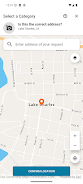
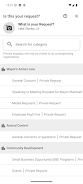
The reporting workflow is intentionally simple: choose the issue type, mark the location on a map or allow automatic GPS tagging, add a short description and attach photos. Controls are optimized for touch devices with large buttons and clear labels to reduce entry errors. After submission each report moves through a transparent status progression such as submitted, in review, scheduled or resolved, giving you a clear sense of how the request is being handled. Notifications or in-app updates alert you to status changes, and you can reopen conversations with municipal staff if more details become necessary.
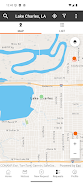
OneLC Action Line prioritizes legibility and minimal distraction. The visual design uses high-contrast text, intuitive icons and a clean layout that keeps reporting fields visible without overwhelming the user. Photos are shown with simple thumbnails that expand for inspection, and maps display pin drops with basic routing to help you confirm the exact location. The interface favors clarity over decoration so residents of all ages can quickly learn where to tap to file a request or browse local resources.
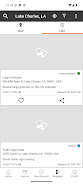
Tracking is central to the user experience. Each case has a timeline of updates and a clear status label that reflects municipal workflow stages. The app helps prioritize incoming reports by providing structured fields that capture severity, location accuracy and supporting images; these details help city staff triage issues more efficiently. For more complex challenges, such as repeated complaints at the same site, OneLC Action Line groups related reports so follow-up work can be coordinated without duplicating effort.
Users can tailor notifications to their needs, choosing whether to receive push alerts for status changes, replies from staff or community announcements. Preference controls let you set default report categories, manage contact information and control how location data is shared with the city. These options reduce repetitive data entry and make it easier to maintain an organized history of civic interactions over time.
The app is built with accessibility in mind, including readable fonts, clear contrast and support for system-level screen readers. Forms use descriptive labels and logical tab order to help users who rely on assistive technologies. Because connectivity can be inconsistent in some neighborhoods, OneLC Action Line provides a way to save draft reports locally; drafts can be completed and submitted when a stable connection is available, ensuring reports are not lost during spotty service.
OneLC Action Line collects only the information necessary to process service requests, such as location, photos and optional contact details. It is not intended for emergency use; urgent incidents should be reported to emergency services directly. The content and resources are focused on the City of Lake Charles and its municipal departments, so some features and programs will be municipality-specific. Personal data handling follows municipal privacy practices and your settings control whether you receive follow-up communications.
Beyond a single report, OneLC Action Line encourages ongoing participation by making it easy to discover volunteer opportunities, public meetings and neighborhood programs. Keeping a searchable history of requests helps residents track trends in their neighborhood and supports civic oversight by making progress visible. Regular use of the app can improve responsiveness and foster stronger communication between residents and municipal staff, creating practical value for individuals and the broader community.