



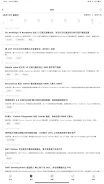
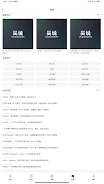
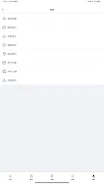
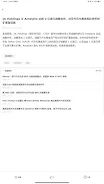
吴说 is a trial-release application designed for early testers who want to evaluate interface flows, functionality, and stability before public launch. 吴说 serves as a hands-on testing environment where users can explore experimental features, complete guided scenarios, and submit structured feedback that directly informs the development roadmap. The current release emphasizes usability testing rather than a finished product, and participation helps shape controls, content layout, and accessibility improvements in future updates.
吴说 targets users who are comfortable trying unfinished features and reporting their experience. It is useful for people interested in user experience design, interface behavior, and iterative product development. The app organizes practical tasks and observational scenarios so testers can evaluate real-world workflows, identify pain points, and confirm fixes as they are published. Testers do not need specialized knowledge: the trial includes contextual guidance and tips that explain what to look for while using each feature.
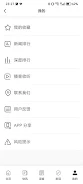
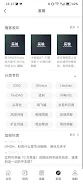
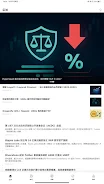
During the trial, 吴说 exposes a curated set of capabilities that reflect the app’s planned direction: core navigation patterns, content organization models, and interactive elements. Experimental functions are clearly labeled and accompanied by tooltips or in-app notes that describe expected behavior. The release focuses on surface-level interactions—how content is discovered, how settings respond, and how previews render—so testers can concentrate on clarity and consistency. Incremental updates may add or remove specific features as the team evaluates telemetry and user reports.
Interaction in 吴说 follows standard Android conventions to minimize the learning curve: swipe and tap gestures support primary navigation, long-press reveals contextual options, and compact on-screen buttons handle core actions. The app provides short guided tutorials that demonstrate these gestures in the context of common tasks, and a progression system unlocks advanced tools and settings after completing introductory tasks. Progression is designed to reveal additional testing scenarios and configuration options rather than to block basic use, allowing testers to experiment with advanced workflows while still returning to foundational tasks for repeat testing and comparison.
The visual design in 吴说 emphasizes legibility and consistent structure: neutral color palettes for content surfaces, clear separation of information with scalable typography, and responsive layout behavior across screen sizes. Trial users can adjust text size, switch between light and dark themes, and enable motion-reduction options to match comfort preferences. Accessibility is prioritized with descriptive labels for key controls, focus order that supports keyboard navigation where applicable, and compatibility with Android screen readers so testers with assistive needs can validate experience and report accessibility-specific issues.
Instead of traditional game levels, 吴说 presents a series of functional scenarios and challenge tasks designed to exercise particular features. Each scenario outlines a goal, suggested steps, and criteria the team wants evaluated—such as clarity of instructions, speed of navigation, and robustness of error handling. Scenarios are replayable and may be updated between releases so testers can verify improvements after fixes. This structure encourages repeated evaluation rather than one-time completion, providing replay value as testers compare behaviors across versions and track how iterative changes affect everyday interactions.
To support real-world testing, 吴说 keeps core browsing, local settings, and preview capabilities available with limited connectivity where practical, while network-dependent items remain restricted until public release. Testers should anticipate occasional crashes, incomplete flows, or brief disruptions in documentation—these occurrences are expected in a trial build and are vital for uncovering edge cases. The team documents known limitations in release notes and delivers frequent incremental updates to address issues reported during the testing window.
Feedback is integrated directly into 吴说 through an in-app form that captures reproduction steps, device details, optional screenshots, and a priority indicator for issues. Testers can also suggest improvements or note specific interactions that feel confusing. The development team aggregates reports, identifies recurring themes, and publishes status indicators or follow-up notes in subsequent trial updates to show how input influences roadmaps. Participation offers a practical way to help shape functionality, polish the user experience, and ensure that accessibility and stability are improved before a wider release.