
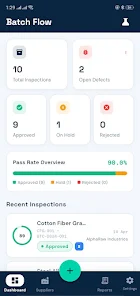
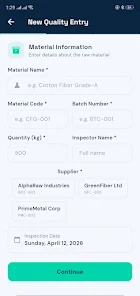
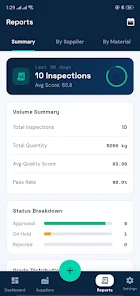
Batch Flow is an offline-first inspection app designed for manufacturing and production teams that need to replace paper forms with a fast, consistent digital workflow. Batch Flow captures incoming batch details such as material type, batch number, supplier, inspector identity, quantities and multiple quality parameters, then calculates a 0–100 quality score and assigns a grade so teams can make immediate receive-line decisions: approve, hold or reject.
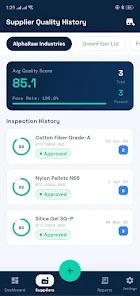
The app provides guided, multi-step entry forms that lead an inspector through a standardized inspection sequence, ensuring the same measurements and observations are recorded every time. As individual quality parameters are entered the built-in scoring algorithm updates the overall 0–100 quality score in real time and places the batch into a clear grade category with an associated decision status. A centralized dashboard on-device summarizes total entries, average score, pass rate and active defect alerts so supervisors can scan performance at a glance. Supplier performance tracking records defect counts and severity over time to support procurement conversations and continuous improvement. All data is stored locally in a lightweight database to keep inspections reliable when connectivity is intermittent or absent.
Inspectors use simple controls to complete each inspection: touch-friendly fields, dropdowns for selectable attributes, numeric inputs for measurements, and comment fields for notes from the receiving line. The form layout is arranged as a sequence of steps, with optional checkpoints for critical parameters and clear visual feedback when a value affects the quality score. During setup, teams define the set of quality parameters and acceptance tolerances appropriate to their materials and process; these criteria drive the automatic scoring so results reflect the organization’s priorities. After an inspection is saved the app records who performed the check, the time and the batch identifiers to preserve an audit trail.
Batch Flow supports a natural progression of inspection activity: create or select a template, perform a guided inspection, review the computed score and decision, and then store or flag the record for follow-up. The on-device dashboard and defect alerts help teams prioritize corrective actions, while historical entries let quality managers review trends and recurring issues. Records can be reviewed repeatedly on the device to support audits, training exercises and root-cause analysis, giving the app practical replay value beyond a single-use form. Where multiple devices are used across sites, records are intended to be consolidated through an established operational process so cross-site trends can be evaluated.
The interface focuses on clarity and minimal training: clearly labeled fields, step progression, and color-coded grade indicators make it straightforward for staff on varied shifts and literacy levels to use the tool reliably. The app is optimized for typical handheld Android devices and designed to be lightweight in both storage footprint and battery use so inspections can continue through long receiving shifts. Accessibility considerations such as large touch targets, high-contrast text and succinct instructional prompts reduce errors and support rapid adoption on the shop floor.
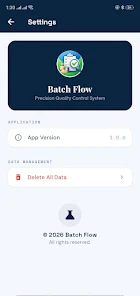
Because Batch Flow operates offline by default, every inspection is saved to a local database on the device so teams are not dependent on network coverage at the point of receiving. That design improves reliability and speed but means central aggregation is not automatic; organizations that require consolidated, enterprise-level reporting should define a routine for exporting or transferring records from devices to a central system. Data retention and access are controlled on-device, and administrators can implement device-level security practices consistent with their internal policies.
Batch Flow replaces paper forms with a structured digital process that reduces manual errors, improves traceability and shortens decision time at the receiving line. The real-time scoring, clear grading and supplier performance history support better procurement and production decisions and help enforce accountability among inspectors and vendors. The primary limitation is the offline-first architecture: there is no built-in instant cross-site cloud aggregation, so organizations that need immediate centralized visibility will need to plan a consolidation workflow or use complementary enterprise tools. For teams that prioritize reliable, on-device inspections and a fast transition away from paper, Batch Flow offers a practical, focused solution.