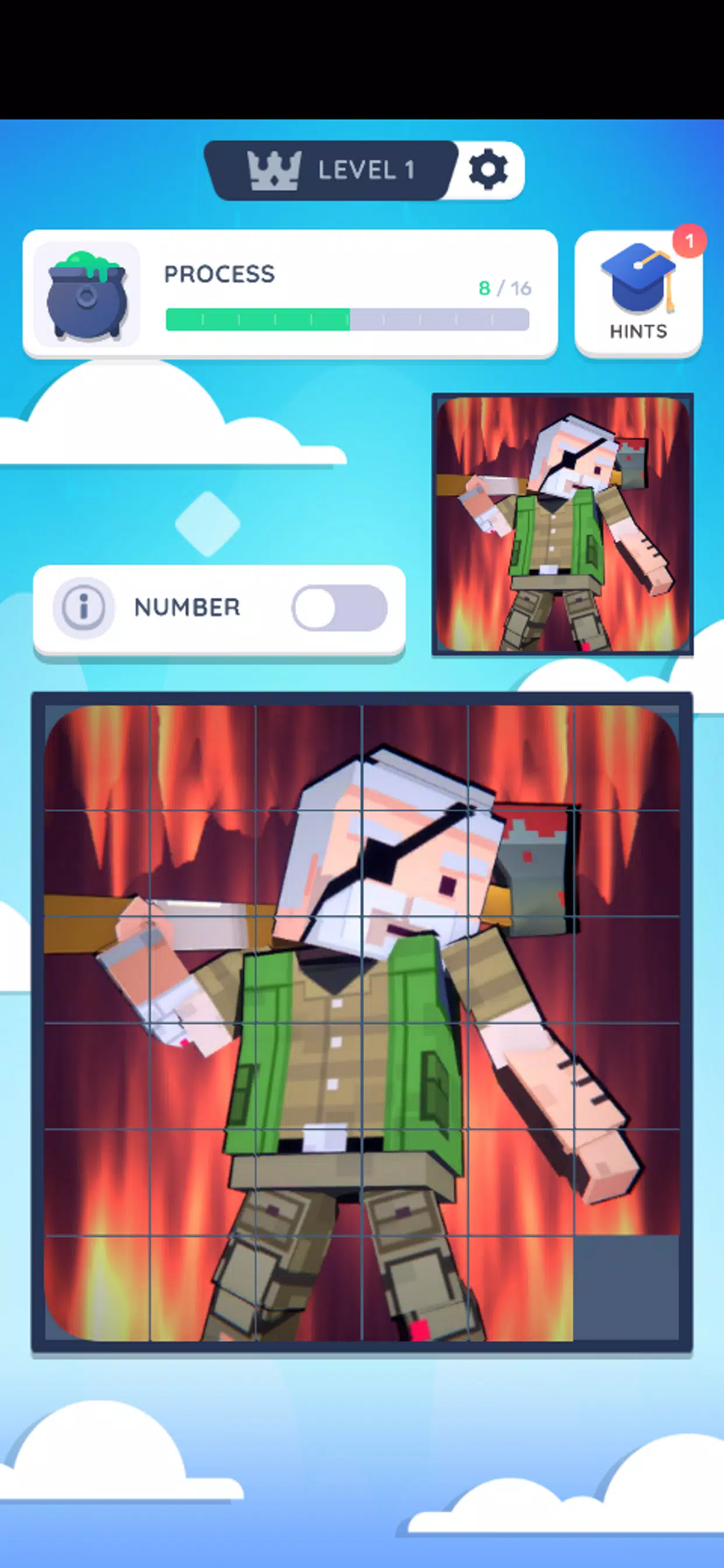
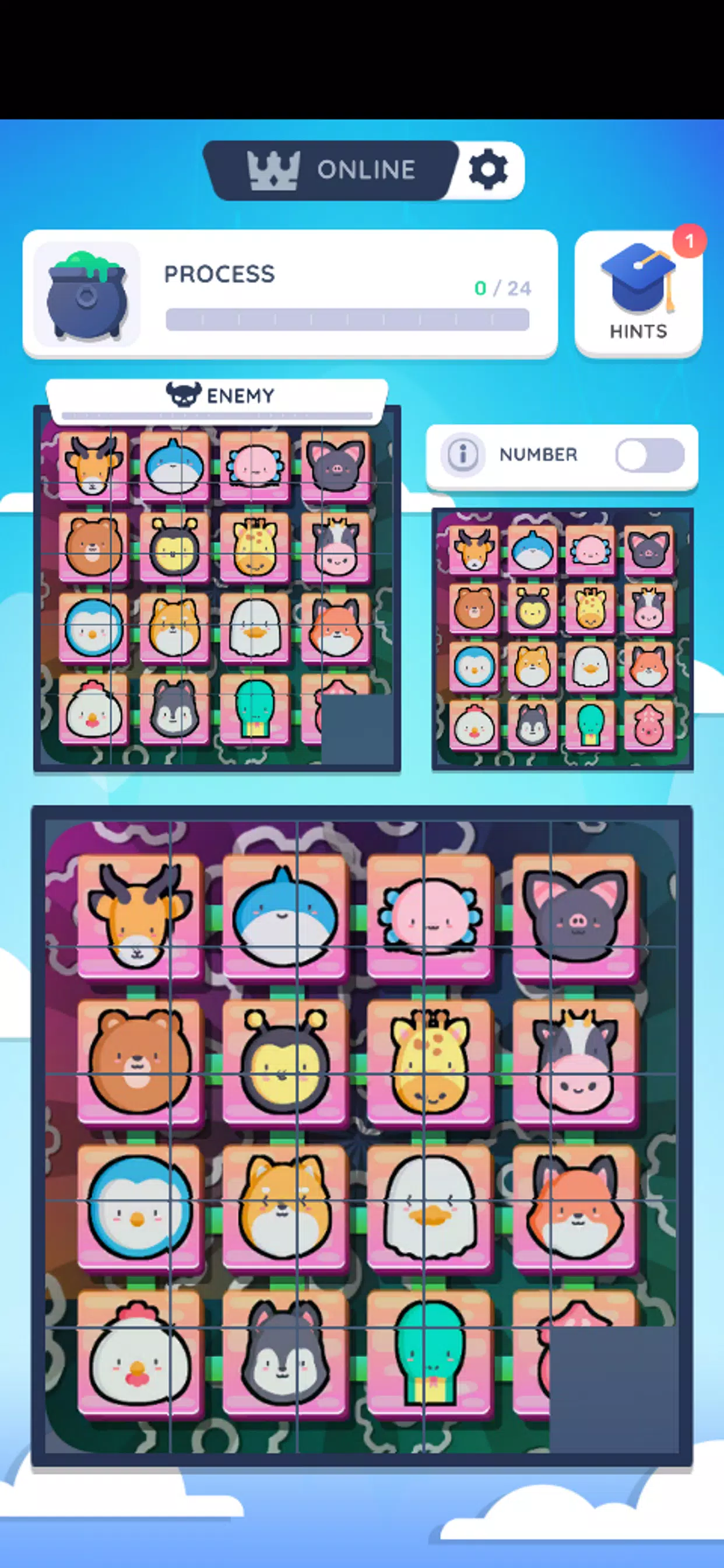
Sliding Jigsaw Puzzle Online is a competitive, online sliding-tile puzzle game that pits you directly against other players in short races to reassemble a scrambled image. Matches present the same target picture to everyone in the room, and the first player to restore the full image wins the round. This description explains how the game plays, what to expect from sessions, how controls and difficulty scale, and what the online-only requirement means for your experience.
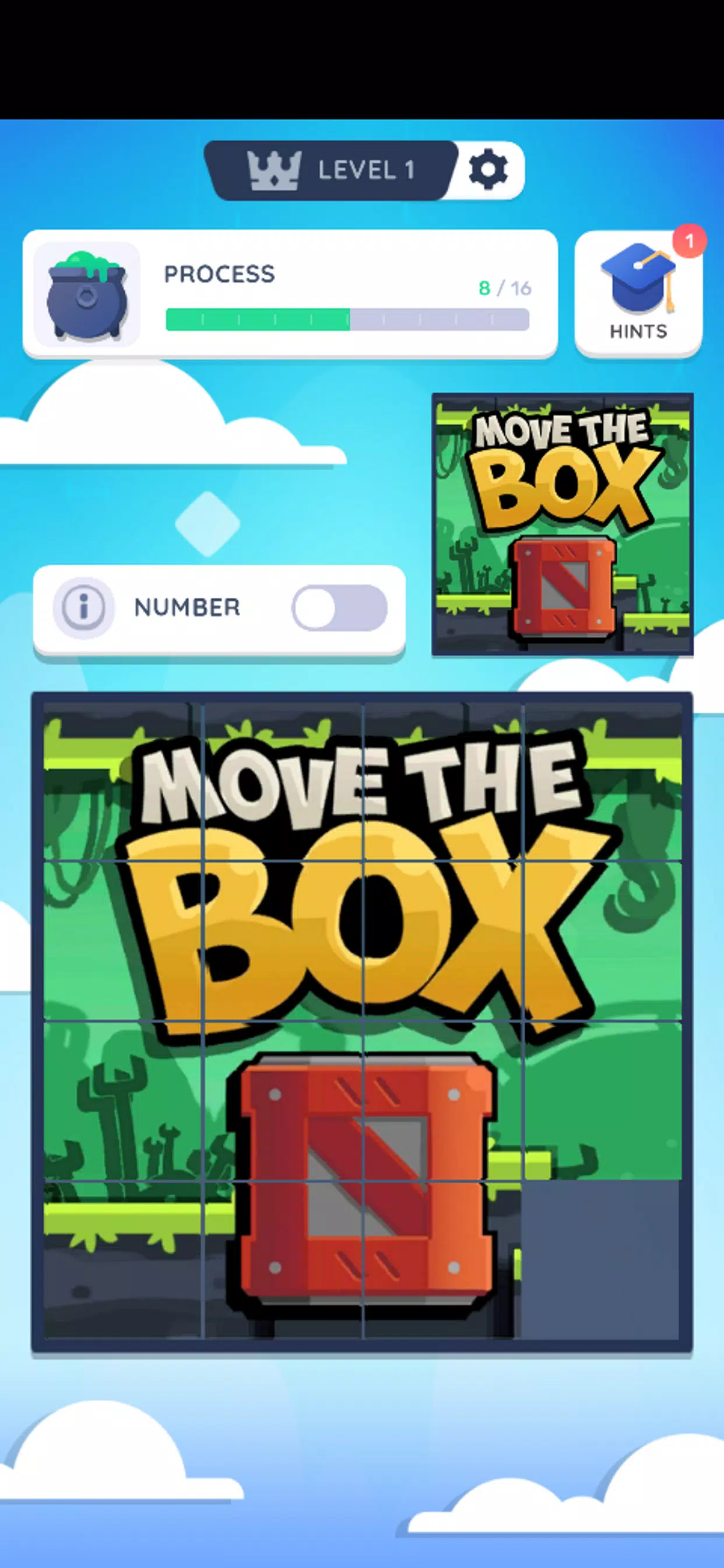
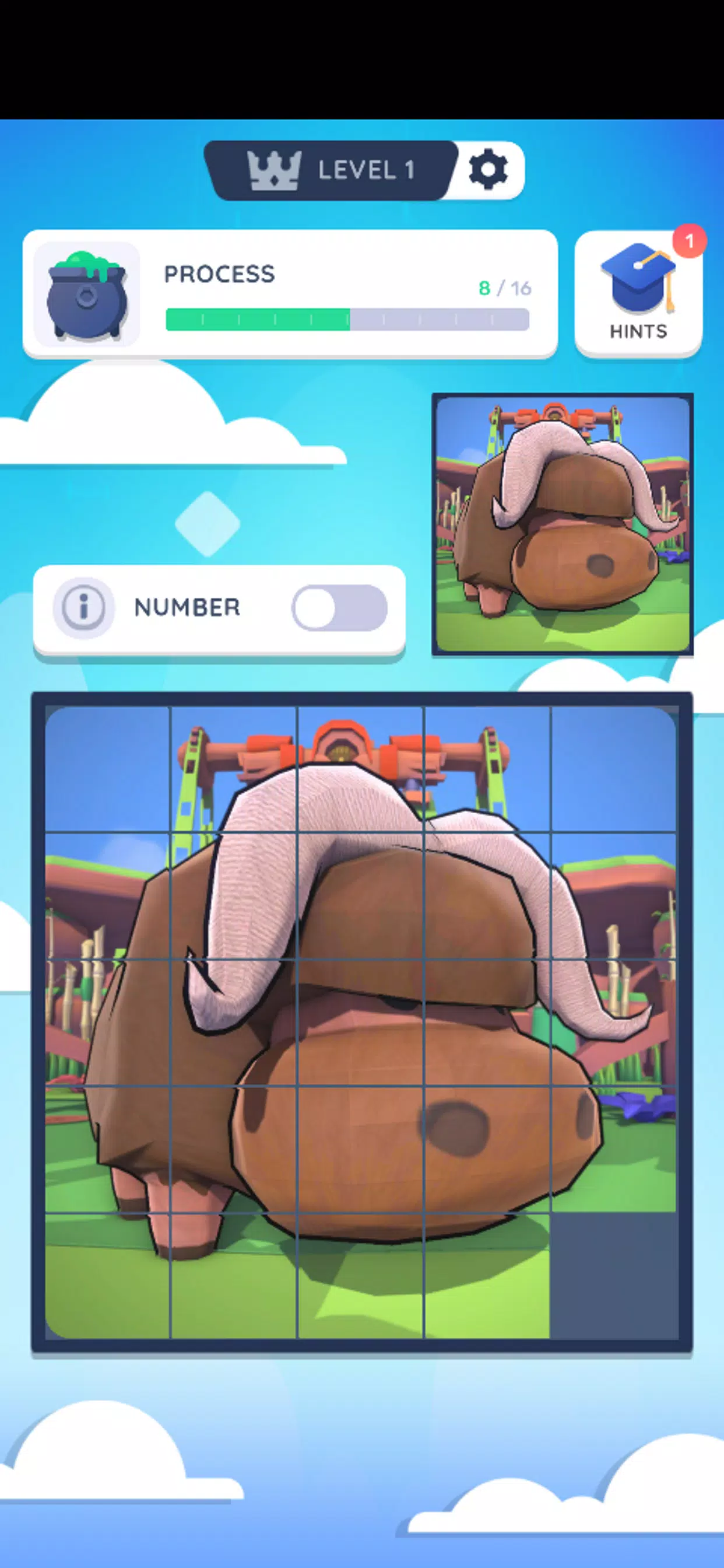
Each match in Sliding Jigsaw Puzzle Online revolves around a single sliding-tile board: one tile-sized gap allows adjacent pieces to move, and players shift tiles until the visible image matches the reference. Rounds are designed to be quick and decisive so you can jump into multiple matches in a short session. Because all players see the same target image, the core challenge is both spatial reasoning and speed — solving the same puzzle faster than your opponents. Matches can vary in difficulty by changing the grid size and the complexity of the image, creating a mix of easy and challenging races throughout play.
The controls are intentionally simple to keep the focus on puzzle solving rather than complex inputs. On touch devices you can tap an adjacent tile to slide it into the empty space, or use a swipe gesture to move tiles fluidly. The interface highlights movable tiles subtly to reduce accidental moves and to keep the pace brisk. Visual feedback and responsive touch handling are tuned for a range of devices, so gameplay feels immediate whether you are on a small phone or a larger tablet.
Progression in Sliding Jigsaw Puzzle Online comes from facing increasingly complex puzzles and improving personal speed. As you play more matches you naturally encounter a wider variety of board sizes and image details, which serve as a practical difficulty curve. The competitive element — racing another human opponent — also creates a dynamic challenge: a puzzle that is straightforward when solved leisurely can feel much harder under pressure. This keeps each session fresh and rewards players who refine pattern-recognition and tile-sequencing techniques.
The visual presentation focuses on clear, high-contrast images so the puzzle elements are easy to discern during fast play. Target pictures are chosen to provide distinct shapes and color regions that aid recognition without simplifying the challenge. Level structure is match-based rather than campaign-based: you enter a room, see the target image, and begin the race. Grid sizes and image detail vary between matches, providing a natural range of short, medium, and longer puzzles to suit different play durations.
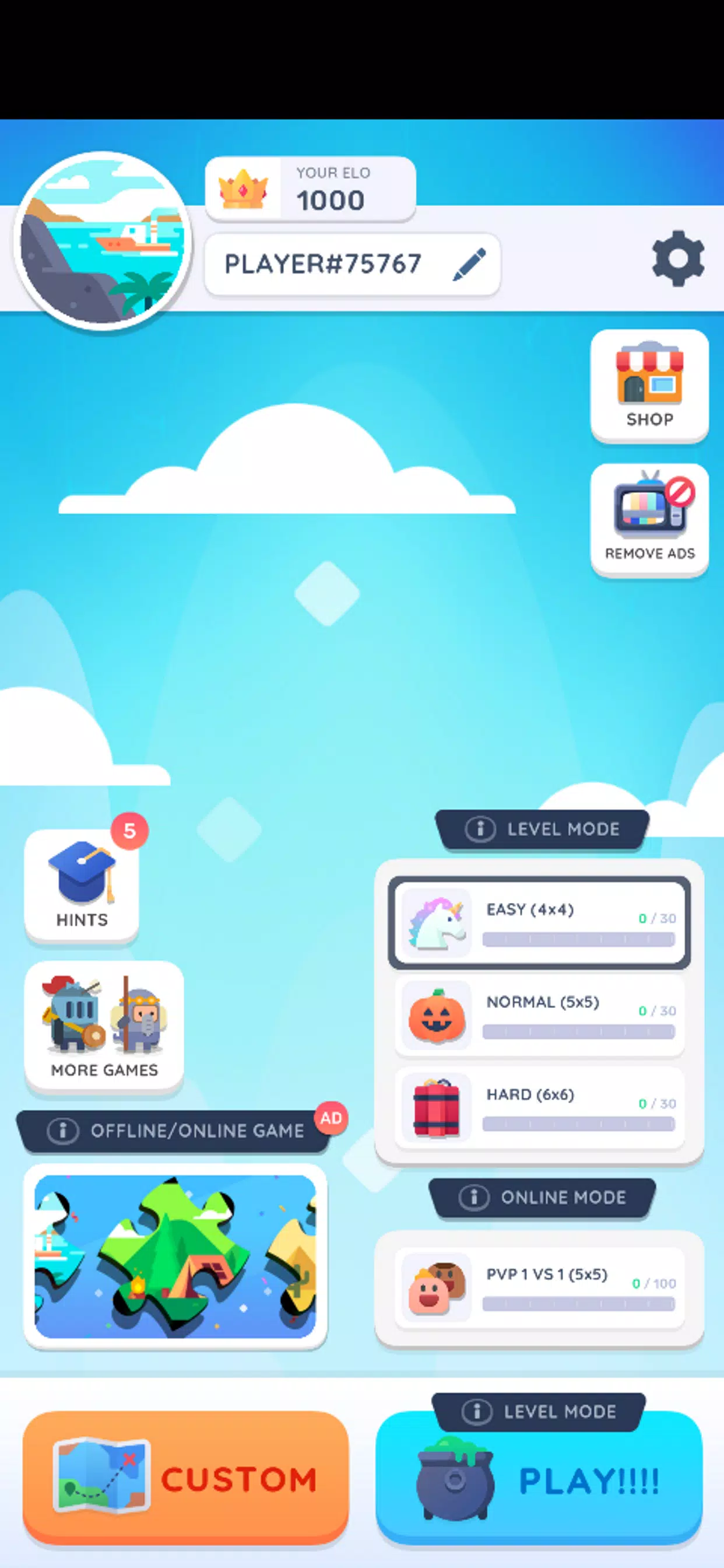
While the core game centers on head-to-head matches, the settings menu allows you to adjust common preferences such as sound levels, vibration feedback, and control sensitivity to match your comfort. You can also toggle visual aids that make movable tiles easier to spot, which helps when playing on smaller screens or in quick sessions. These options let you tailor the user interface without changing the basic sliding-tile mechanics that define the gameplay.
Replay value comes from the combination of a simple mechanic, varied images, and the unpredictability of human opponents. Short rounds encourage repeated attempts and quick rematches, so even a brief break can become a satisfying competition. The user experience emphasizes minimal waiting times: match setup is kept lightweight and the interface focuses on getting you into puzzles quickly. In-game prompts and tutorials cover the basics in a single short sequence so new players can start racing with minimal downtime.
Sliding Jigsaw Puzzle Online is designed to be approachable for a wide range of players because the rules are straightforward and the controls are intuitive. However, this is an online-only title: a stable internet connection is required to join matches and compete in real time. Poor connectivity can lead to interrupted rounds or longer match queues, so we recommend checking your network before starting a session. There is no offline match mode available in the current build, so plan play sessions where a reliable connection is available.
When you start a match, scan the target image quickly to identify distinctive edges or color regions and then work from those anchors toward the center. Practice on smaller grids to sharpen pattern recognition and then move to larger boards for longer, more challenging races. Because the game rewards speed as well as accuracy, focus on smooth sequences of moves rather than isolated corrections. Finally, keep sound and visual feedback set to levels that help rather than distract, and make sure your device is on a stable network to avoid interruptions.