

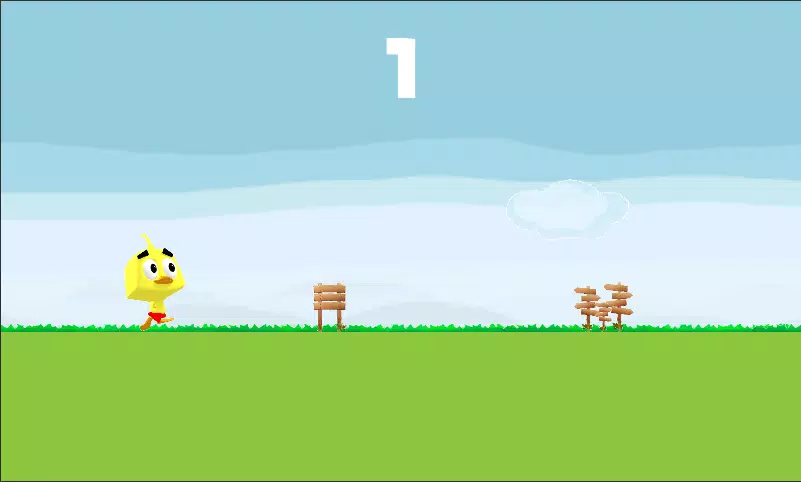


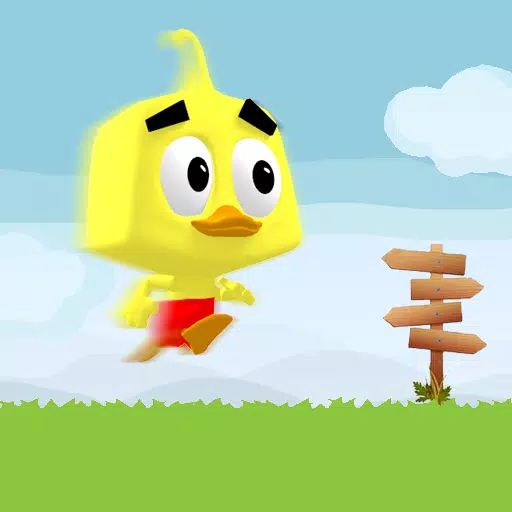


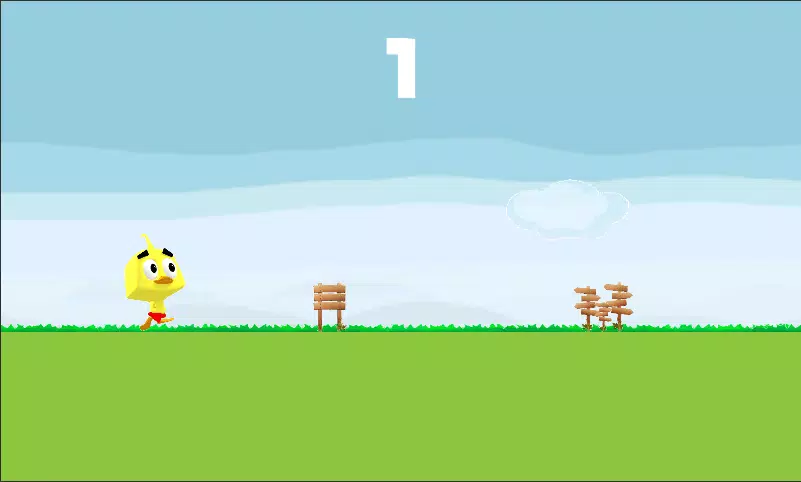
Willy Run puts you in control of a cheerful duck racing through a series of fences and obstacles, turning short bursts of play into focused tests of timing and reflex. In Willy Run the objective is straightforward: tap the green area to make the character jump, avoid barriers and collect points as you move forward. The first few runs introduce the basic rhythm, while later attempts reveal tighter timing windows and faster patterns that keep each session engaging.
Willy Run delivers a compact, score-driven experience built around one-touch controls and immediate feedback. The game emphasizes short sessions with a clear risk-reward loop: successful jumps add to your score and build momentum, while missed jumps end the run and invite retries. The minimalist control scheme keeps barriers to entry low, and the visual presentation centers on a light, approachable tone that fits quick breaks or short commutes.
The core mechanic in Willy Run is timing. Tapping the green area makes the duck leap; holding is unnecessary, so control comes from rhythm rather than complex gestures. Obstacles appear in predictable but increasingly varied patterns, requiring you to judge distance and cadence as the speed ramps up. The game supports immediate restarts so players can jump back in without menus or load screens, making practice runs feel natural and efficient.
Progression in Willy Run is centered on improving personal scores and mastering obstacle timing. Rather than relying on long-term unlock trees, the game rewards repeated play by presenting subtly escalating challenges and occasional milestone rewards tied to score thresholds. These small rewards can include new color themes or simple cosmetic variations that refresh the look of runs without altering the gameplay balance. Because scoring is the main currency, every run is an opportunity to refine technique and beat your previous best.
Visually, Willy Run favors clean, colorful graphics with a focus on legible shapes and clear contrast so obstacles are easy to read at a glance. Backgrounds shift gradually as you progress, offering visual variety without introducing distracting effects. The level structure follows an endless-runner model where speed and obstacle density increase over time; there are no discrete missions, but the pacing creates natural segments of difficulty that help players set short-term goals within a single run.
Customization in Willy Run is intentionally modest: cosmetic options are designed to personalize the appearance of the duck and background theme rather than change mechanics. Accessibility considerations include a large touch target area for jump input and visually distinct obstacle outlines to assist players with color perception differences. Controls are simple enough for new players while the difficulty curve can be approached at your own pace, so the game is suitable for a wide range of ages and skill levels.
Willy Run is built for instant play and does not require a constant internet connection to enjoy the core experience, allowing you to play offline when you have limited connectivity. The interface remains uncluttered, with minimal menus and straightforward settings for sound and touch sensitivity. Quick retries ensure that frustrated players can restart immediately, and short session lengths make it easy to fit the game into gaps in your day without a lengthy time commitment.
The main challenge system in Willy Run is the escalating obstacle patterns and faster pacing that arrive the longer you last. To improve, focus on learning rhythm cues from the environment and prioritize consistency over risky point grabs. Aim to build streaks of successful jumps to increase score efficiency, and use cosmetic unlocks as small milestones to track progress. Because the learning curve rewards repetition, casual players can enjoy relaxed sessions while more determined players chase higher scores and personal records.
Willy Run combines simple one-touch mechanics with a clean visual style and score-based progression to create an accessible, repeatable arcade experience. Whether you play for a minute at a time or spend a few runs polishing your timing, the game offers a lightweight, satisfying challenge that is easy to pick up and built for short, enjoyable play sessions.