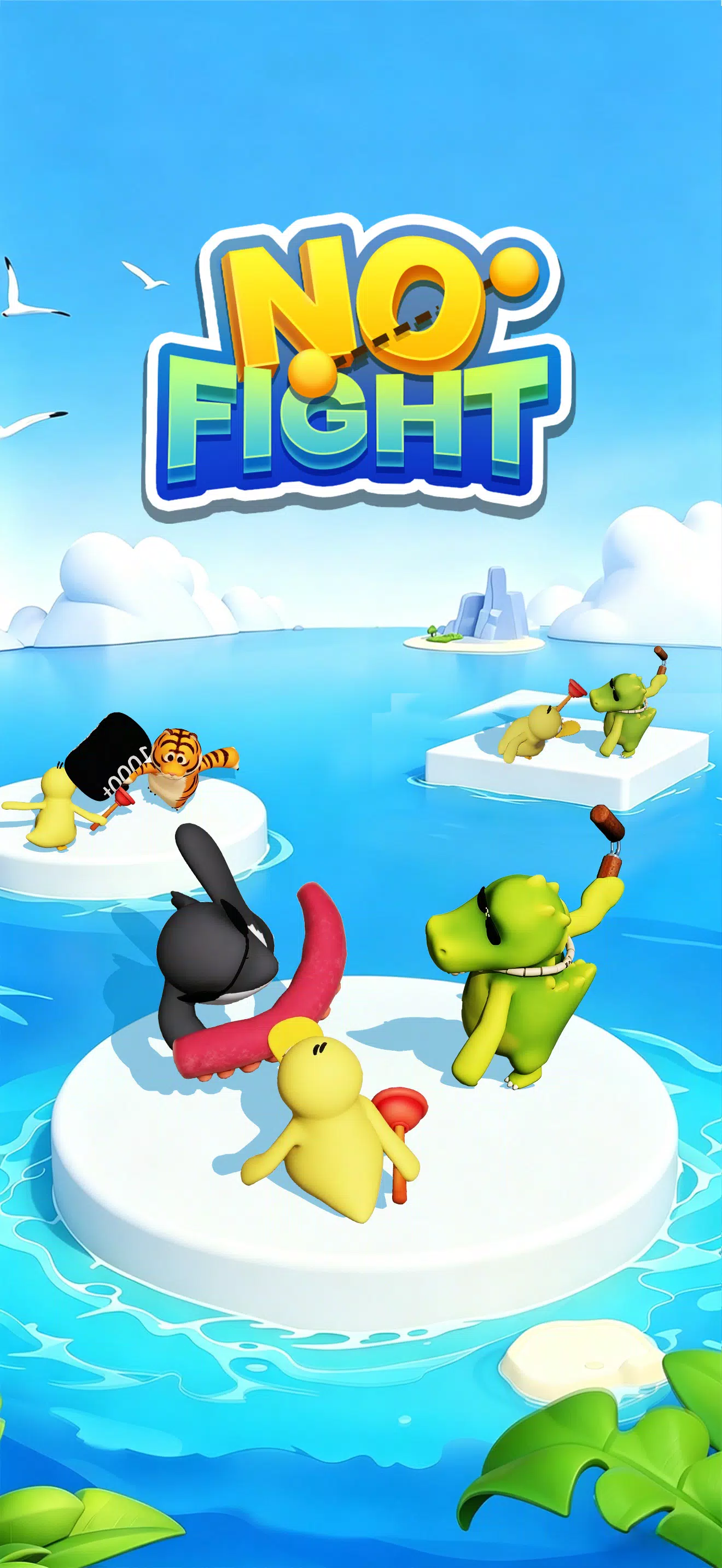
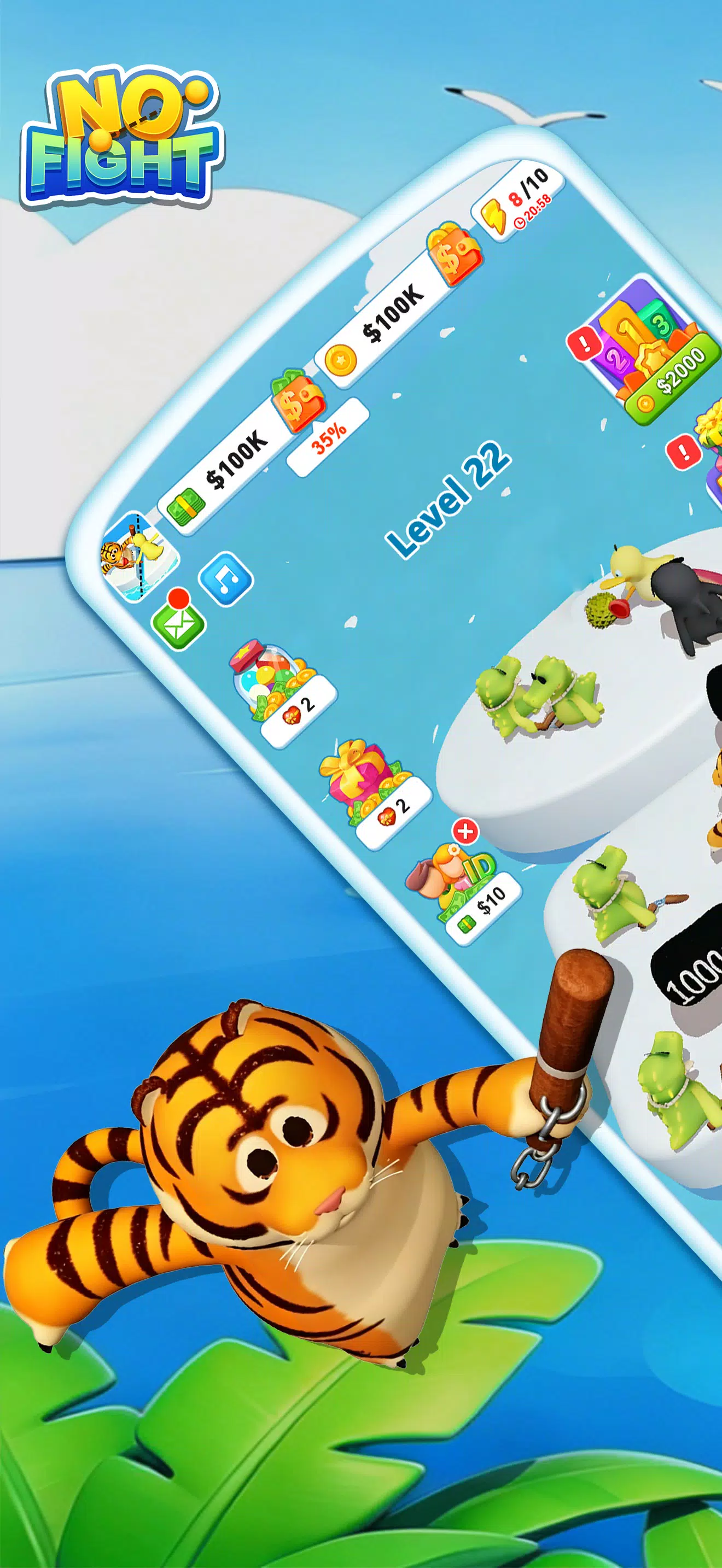
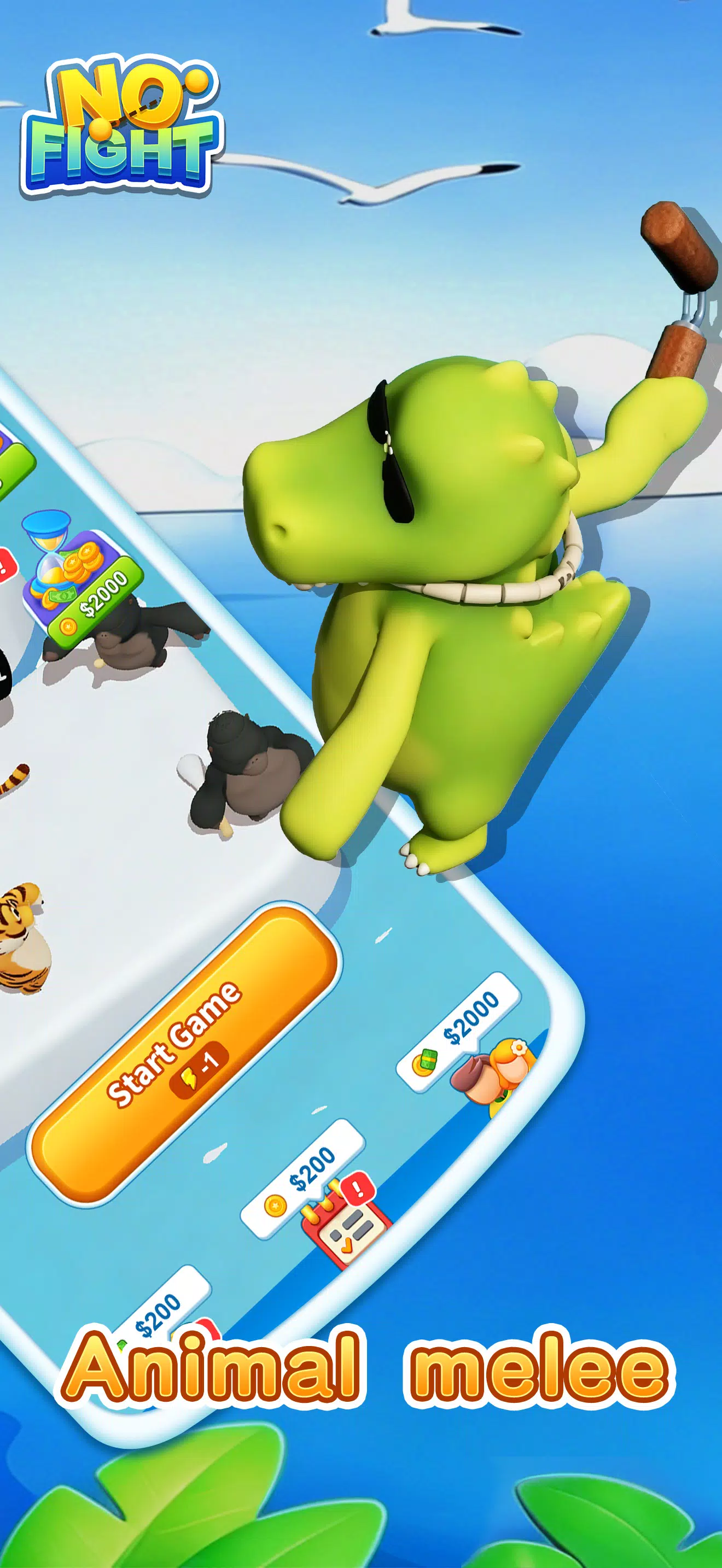
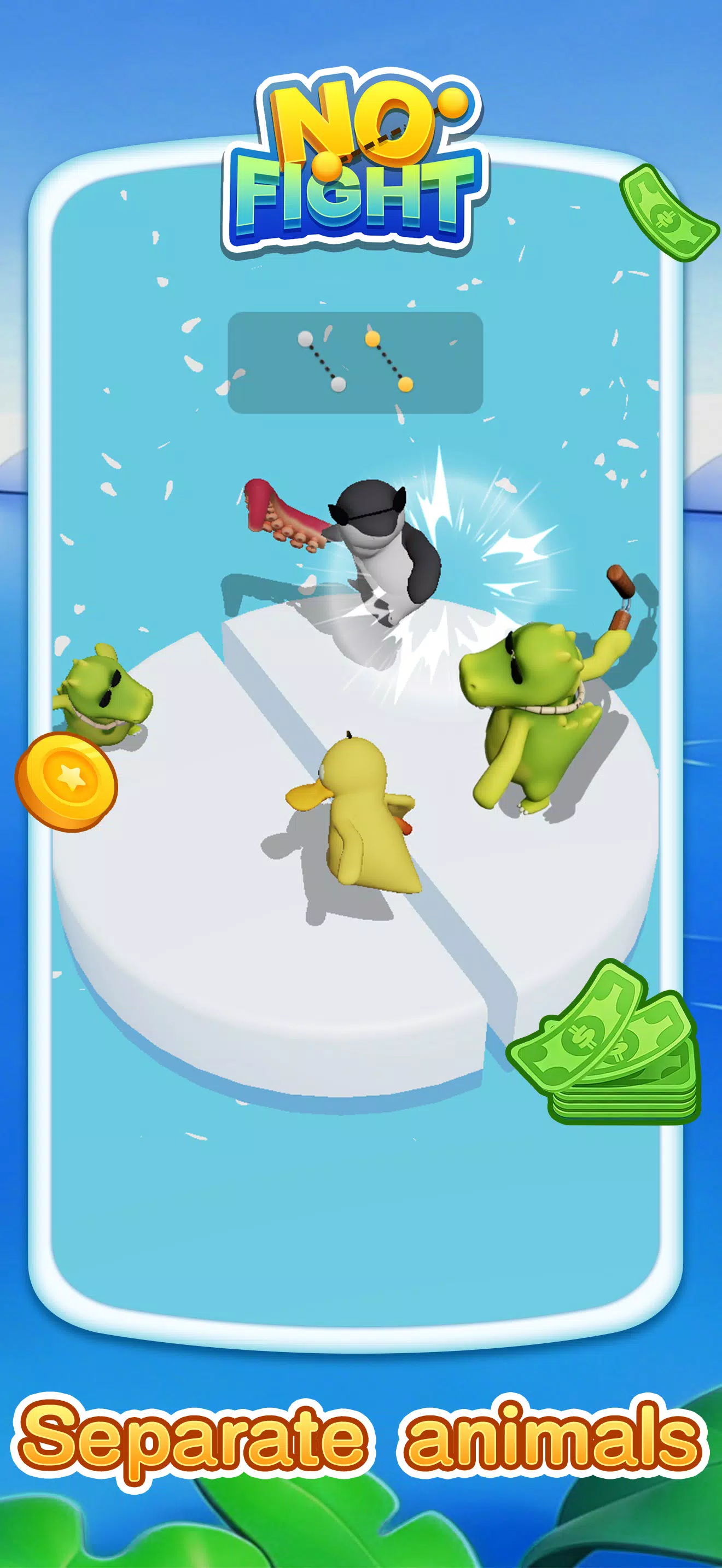
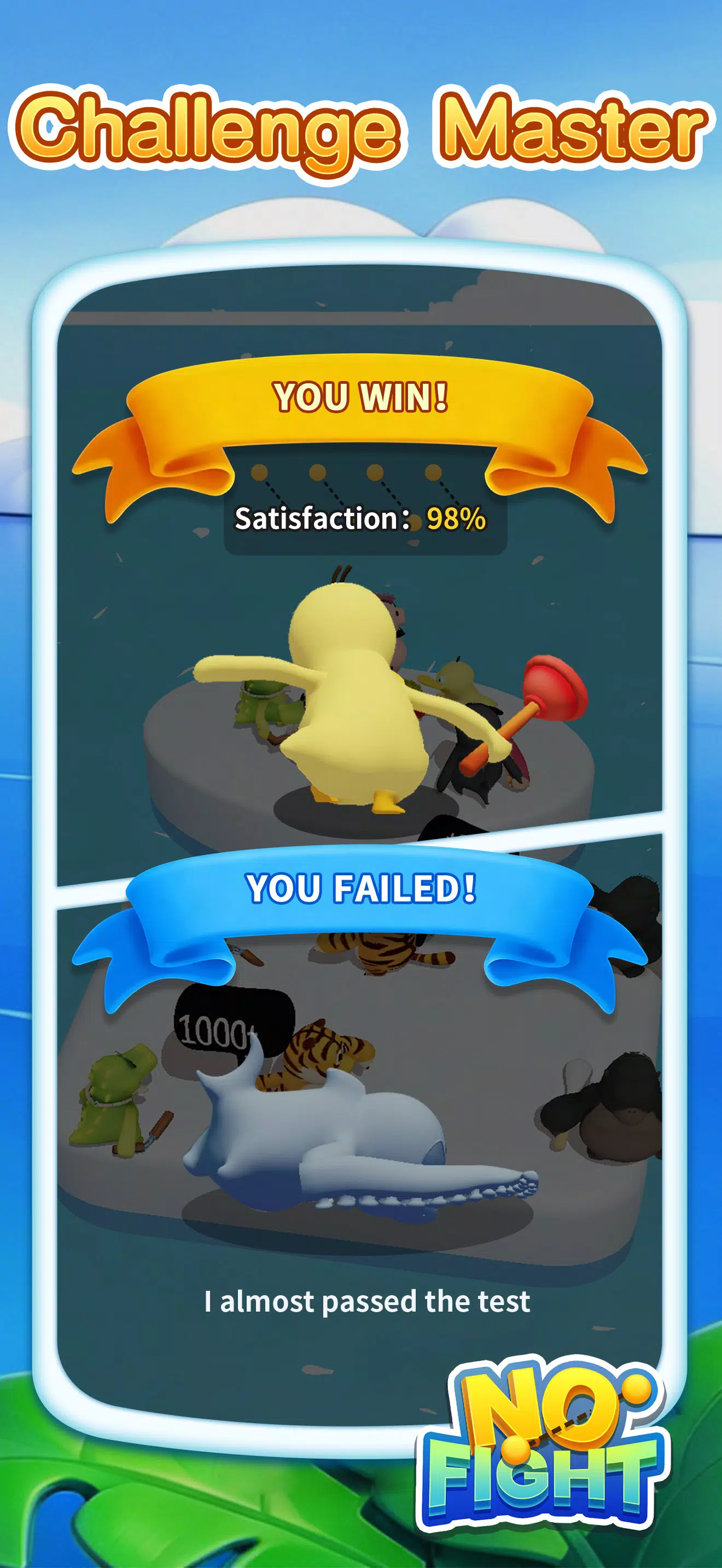
No Fight is a relaxing yet cerebral puzzle game that asks you to plan how to slice drifting ice floes so different animal species remain separated. In No Fight each level is a compact spatial problem: draw limited cuts to partition ice so creatures cannot reach one another, then watch pieces drift and settle. The game is designed for short sessions and repeated problem solving, making it suitable for quick commutes or focused five-minute plays at home.
The core objective is simple but deceptively deep: separate animals by slicing connected ice into distinct floes before any creature tips into the water. Levels present fixed-shape ice pieces, a limited number of permitted slicing lines, and groups of animals positioned in ways that require visualization of final partitions. Because you have only a few cuts, the challenge becomes one of foresight and efficient geometry rather than reflexes. Some puzzles reward a single precise cut, while others require planning a sequence of cuts and using drift to achieve separation with minimal lines.
Controls are intentionally minimal to keep attention on strategy: tap to pick a start point and swipe to draw a straight slicing line across the floe. The interface emphasizes large touch targets and immediate visual feedback so you can tell at a glance whether a proposed cut will separate animals. Animations illustrate how floes break apart and move after a cut, and unobtrusive sound and haptic cues confirm success or signal when a cut will fail. These elements work together to make the game easy to learn while leaving room for deeper planning.
Levels begin with straightforward demonstrations of the slicing mechanic and gradually introduce denser animal clusters, interlocking ice shapes, and tighter cut limits. Early puzzles teach typical patterns and constraints you will encounter; later challenges combine multiple shapes and timing elements that require both careful visualization and strategic use of drift. The sequence is paced so each level remains short and self-contained, but the difficulty increases steadily to encourage mastery of spatial reasoning and cut economy.
No Fight includes a lightweight rewards loop to encourage replay without disrupting the core puzzle experience. Players earn coins through successful separations and daily tasks that offer approachable goals and occasional tougher objectives for extra payoff. Coins can be used according to the game’s reward rules to unlock modest custom options or additional puzzle sets, and daily tasks provide small incentives to return while keeping progression optional rather than required.
The visual design favors clarity and readability: high-contrast silhouettes distinguish species, ice and water tones are balanced to make partitions easy to see, and subtle thematic shifts between worlds keep the presentation from feeling repetitive. Animations emphasize the physical behavior of drift and breakup so you can judge outcomes visually. Customization is modest and practical—alternate background themes, simple sound settings, and adjustable animation speed let you tailor the experience without obscuring puzzle-critical information.
Replayability comes from chasing cleaner solutions, completing daily tasks, and mastering levels with fewer cuts. The challenge system rewards efficiency rather than grinding: better performance is tracked by how economically you isolate animals. Accessibility options include clear on-screen prompts, adjustable sound levels, and high-contrast visuals to support players with color sensitivity. Controls remain straightforward so the game is approachable for a wide range of skill levels.
Most core content in No Fight is playable offline, allowing you to solve puzzles without a constant internet connection. The app is optimized for short sessions and conservative battery use; animations and effects are tuned to conserve resources while preserving a satisfying tactile feel. Periodic updates may add new puzzle packs or cosmetic themes, but the base game is fully functional without network access.
Before you commit to a cut, mentally trace the final partitions and look for drift that will help isolate animals with fewer lines. Prioritize cuts that remove potential paths between species and consider how multiple small separations can combine to isolate a group. Use the restart flow to experiment: the level design encourages iterative learning so you can try different approaches until you find the most efficient solution.