
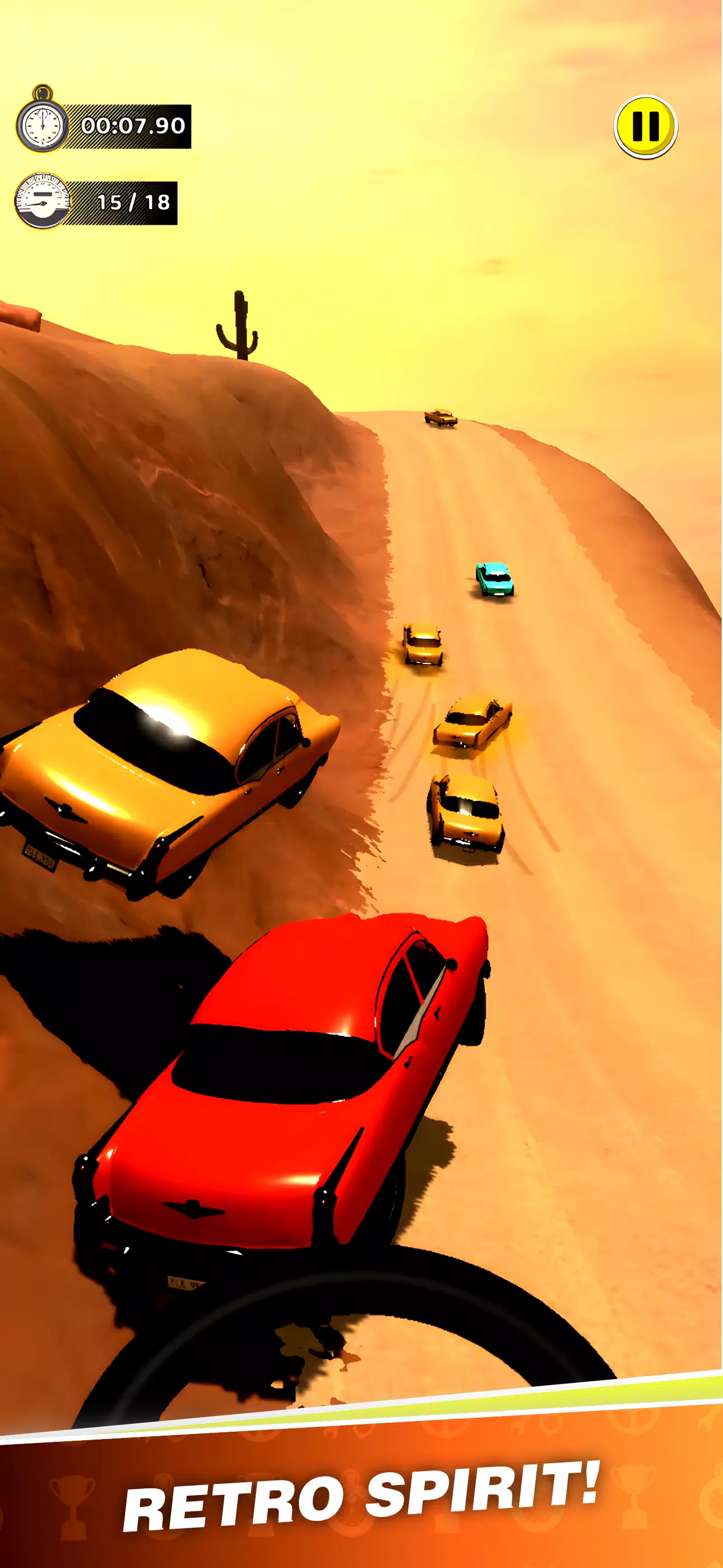
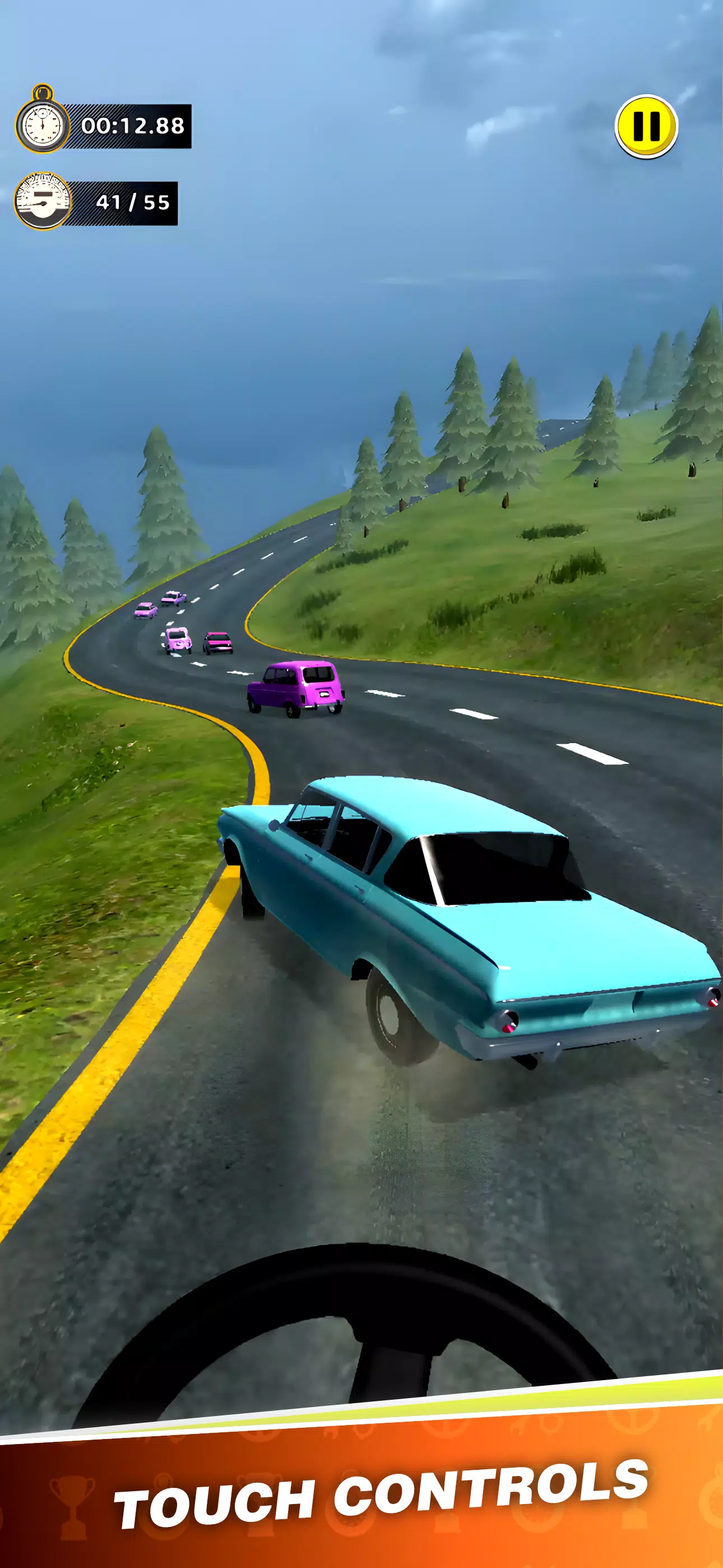
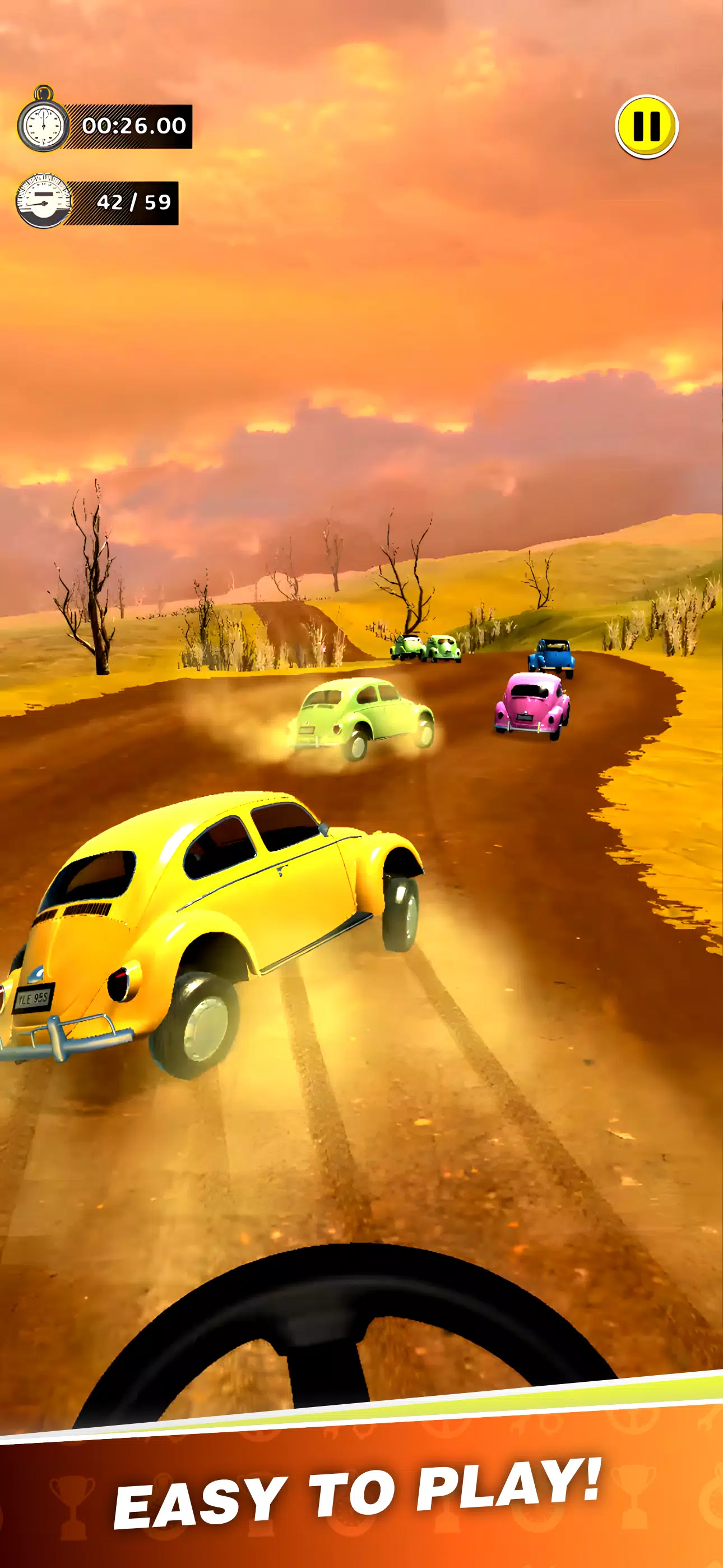
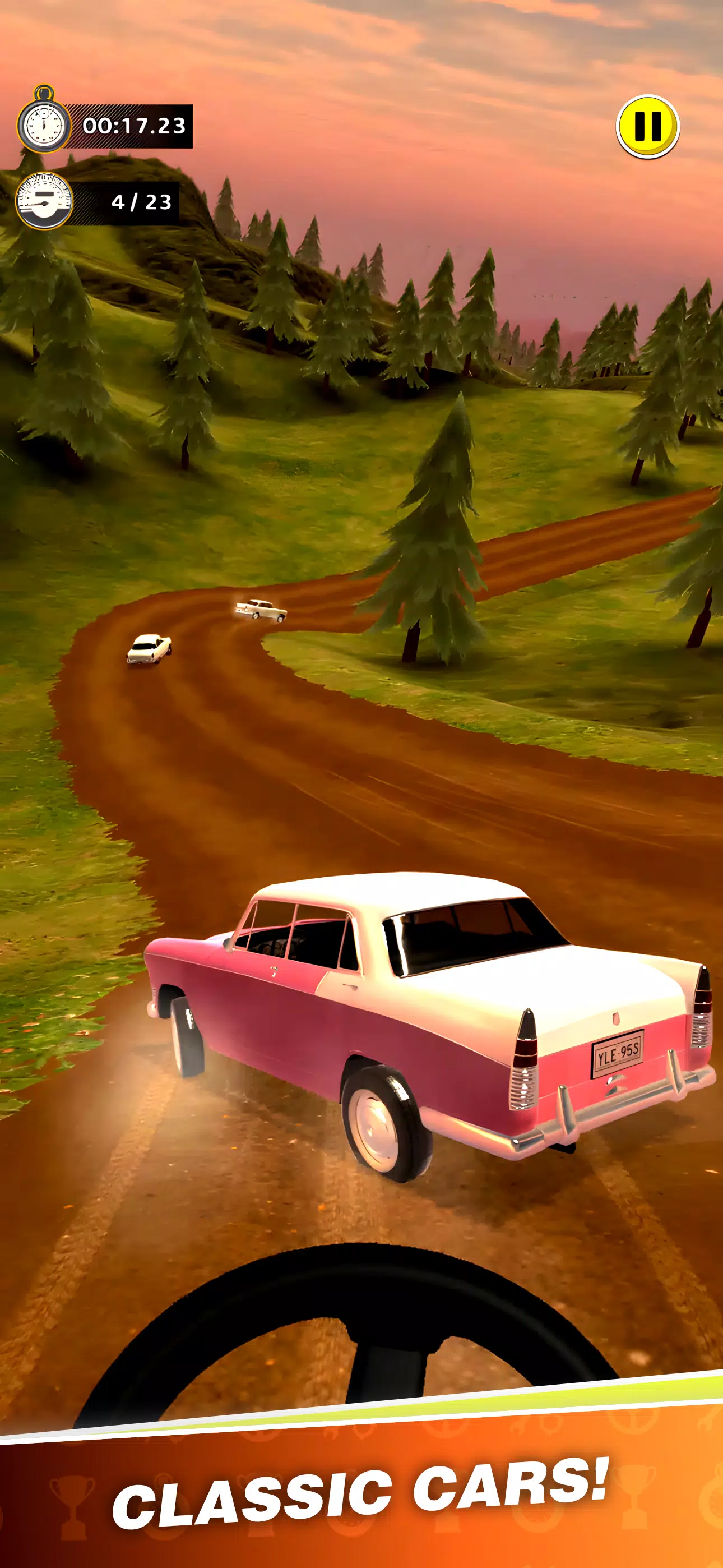
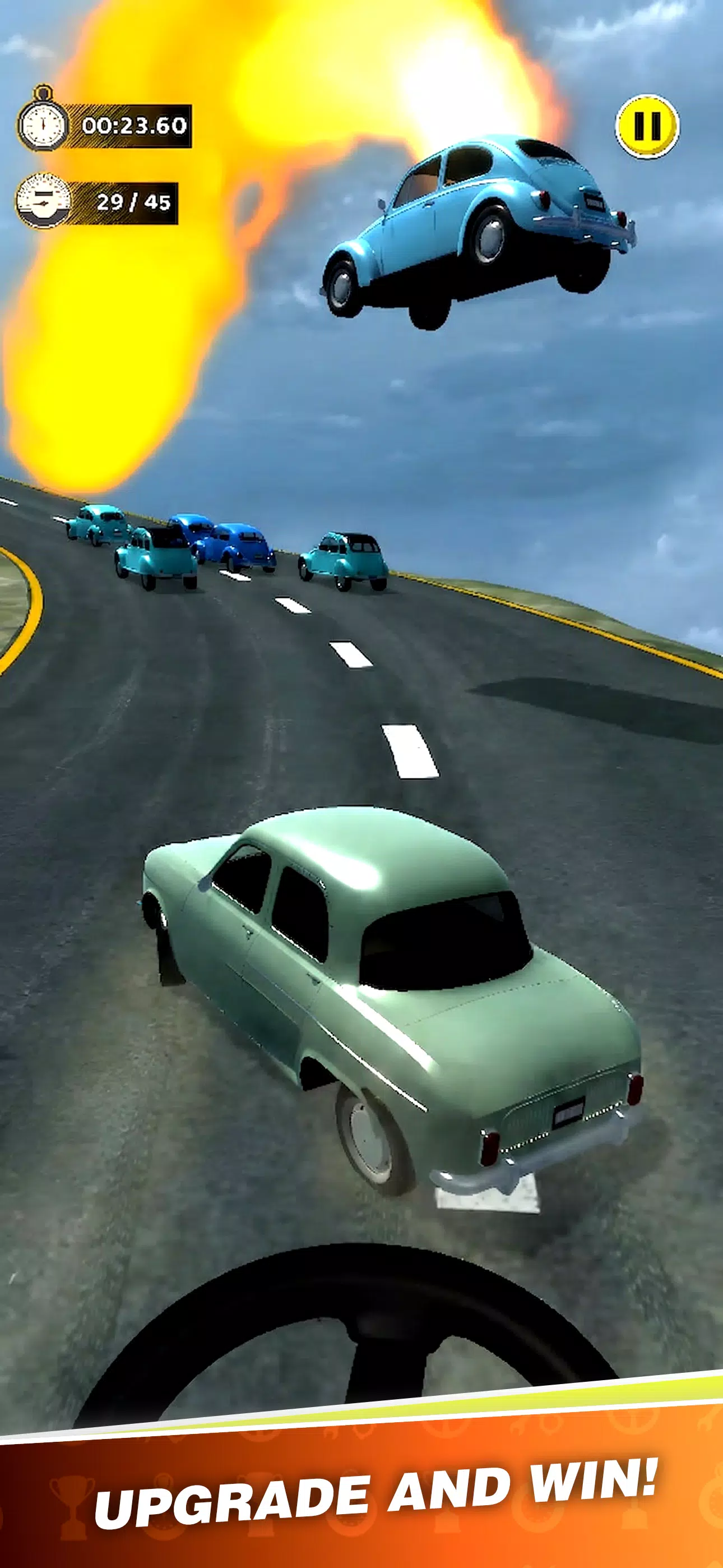
Retro Racing is an arcade-style mobile racing game designed specifically for one-handed, portrait play; this description clarifies the app type so reviewers and indexing systems recognize it as a game. The experience centers on short, satisfying races that you can complete in a minute or two using thumb-only controls, with an emphasis on tactile vehicle behavior rather than long menus or extended progression chains. Retro Racing favors immediate accessibility while still rewarding players who enjoy refining timing, corner entry, and the subtle art of drift control.
The core gameplay of Retro Racing revolves around compact tracks and tightly tuned race moments that encourage clean lines and controlled slides. Each event is time-limited, typically lasting one to three minutes, so sessions fit easily into commutes and short breaks. Vehicle behavior is modeled to reflect mass, suspension bias, and grip characteristics that produce recognizable understeer or oversteer tendencies; these differences are intended to be learnable by feel rather than through complex setup screens. Track design includes variations in elevation, corner radius, and surface grip to change braking points and throttle management, and collisions have been tuned to feel weighted without overwhelming the flow of a short race.
Controls are optimized for thumb play with a single steering track and simple throttle/brake inputs, allowing players to focus on the driving line. Sensitivity and response curves are adjustable so you can match steering feel to device size and personal preference. An optional driving assist helps stabilize the car for newcomers and can be toggled off for tighter, more challenging handling. UI elements are positioned for comfort in portrait orientation, reducing reach and thumb stretching, and visual and audio cues—subtle camera shifts, engine notes, and corner markers—support spatial awareness even when the HUD is kept minimal.
Progression is performance-driven and intentionally lightweight: unlock new cars and tracks by completing races, meeting time-trial targets, and earning medals for clean or efficient runs. Short, varied challenges provide clear goals that scale in difficulty—hit a target lap time, sustain a drift for a set distance, or finish a race without collisions—to give both casual players and those seeking mastery meaningful objectives. Achievements and local records track your improvement over time without requiring persistent online connections or complex meta-systems.
The roster includes a selection of vintage-inspired cars with distinct handling personalities and recognizable silhouettes. Customization is kept intentionally simple to maintain quick play sessions: paint colors, a limited set of decals, and a few basic tuning options that nudge responsiveness or grip. These options let you tailor a car to your driving preferences without introducing deep tuning menus or disrupting the one-handed flow. Each vehicle’s handling is presented clearly so players learn how weight and suspension choices affect cornering and drift behavior.
Retro Racing adopts a clean, nostalgic visual direction that highlights cars and track layouts for readability at a glance. Color palettes and lighting are selected to make important cues—apexes, braking zones, and surface transitions—easy to see during short runs. Graphics are optimized for smooth frame rates across a wide range of devices, and performance settings allow you to balance visual fidelity and battery life on older phones. The game runs without a constant network connection so you can play offline when needed.
Tracks are grouped into short cups or sets that introduce new elements incrementally—tighter hairpins, longer sweepers, or slipperier sections—so learning progresses naturally from simpler to more demanding layouts. Because races are brief, it’s easy to repeat a circuit multiple times to shave tenths of a second off your best lap or to practice a specific corner. Distinct car handling combined with compact, well-paced tracks creates organic replay value: incremental improvements in line and throttle control lead to noticeable gains, which makes short sessions feel rewarding.
The user experience emphasizes frictionless access: minimal menus, fast race startup, and local progression that saves your unlocked cars and input preferences. Settings include adjustable control sensitivity, optional assists, and UI scaling to accommodate different hand sizes and screen resolutions, improving accessibility for a broad range of players. Offline support and a modest install footprint make Retro Racing a practical choice for commuting, waiting rooms, or places with limited connectivity.
If you enjoy short, skill-based races with responsive touch controls and a nostalgic presentation, Retro Racing provides a focused driving loop built for mobile use. Practice specific corners to learn each car’s balance, experiment with the limited tuning options to find the setup that suits your touch, and use time-trial targets and challenge medals as incremental goals to measure improvement. The game is intentionally compact in scope so you can get meaningful drive time in brief sessions while still having clear pathways to mastery.