
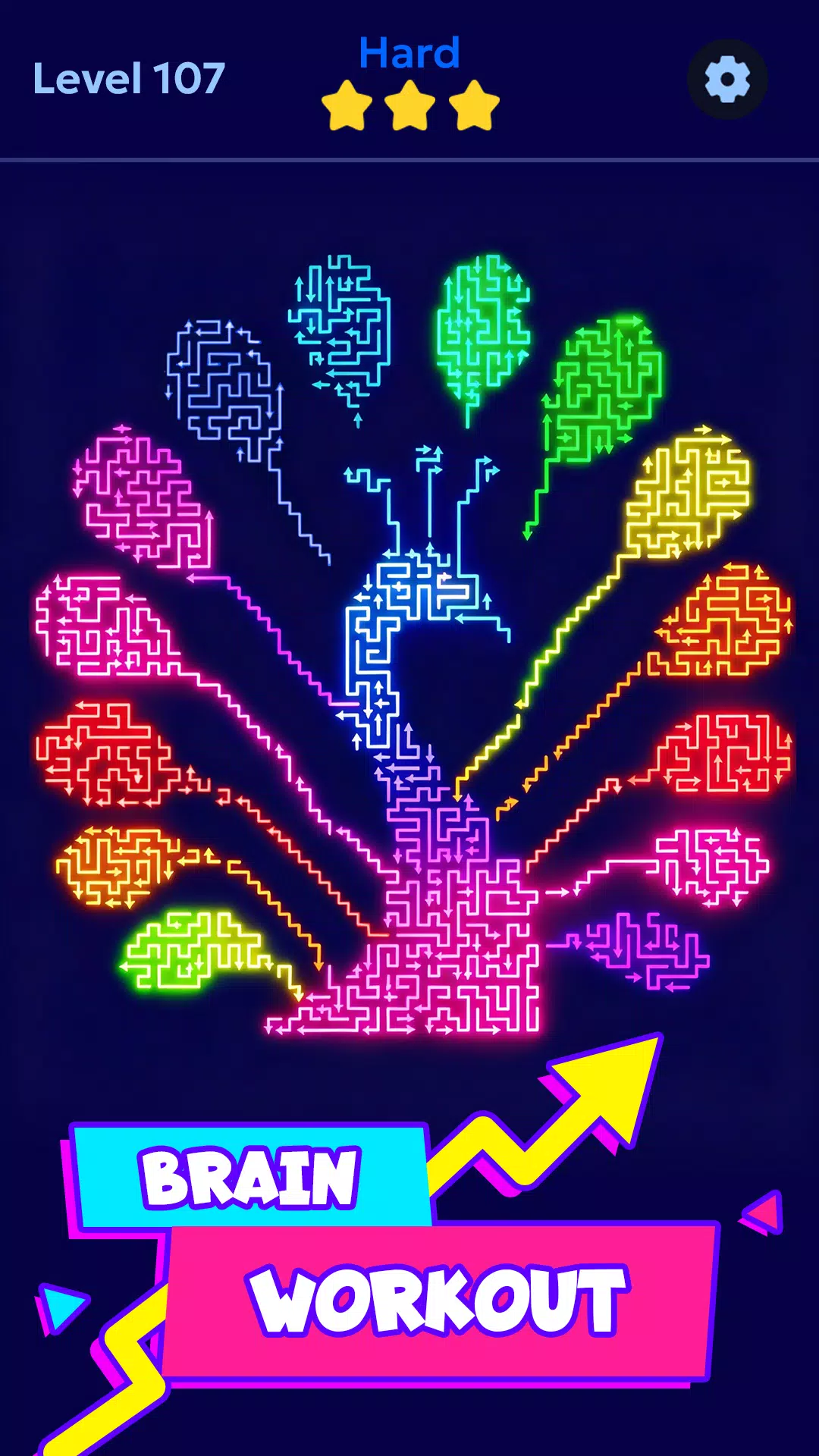
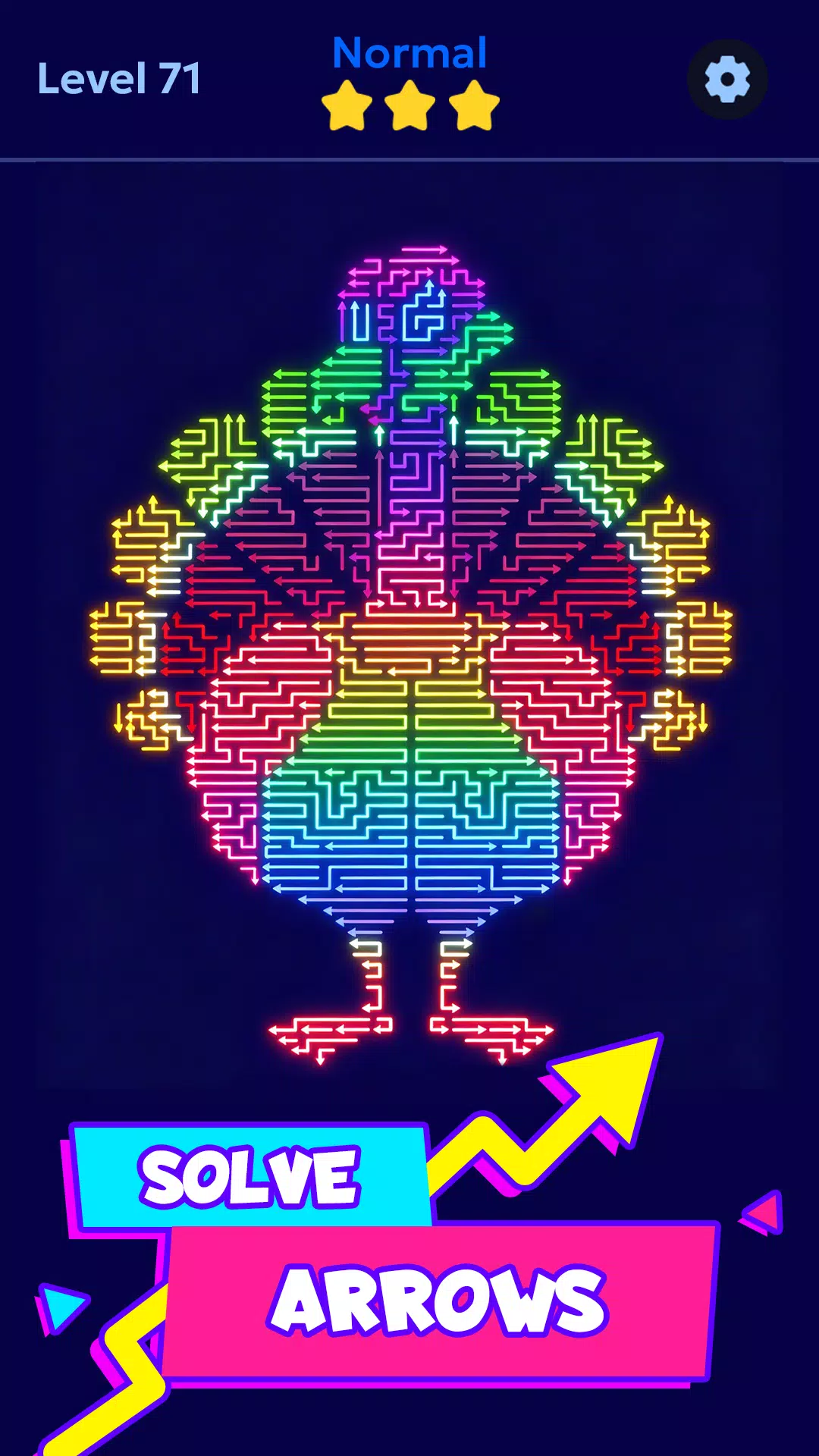
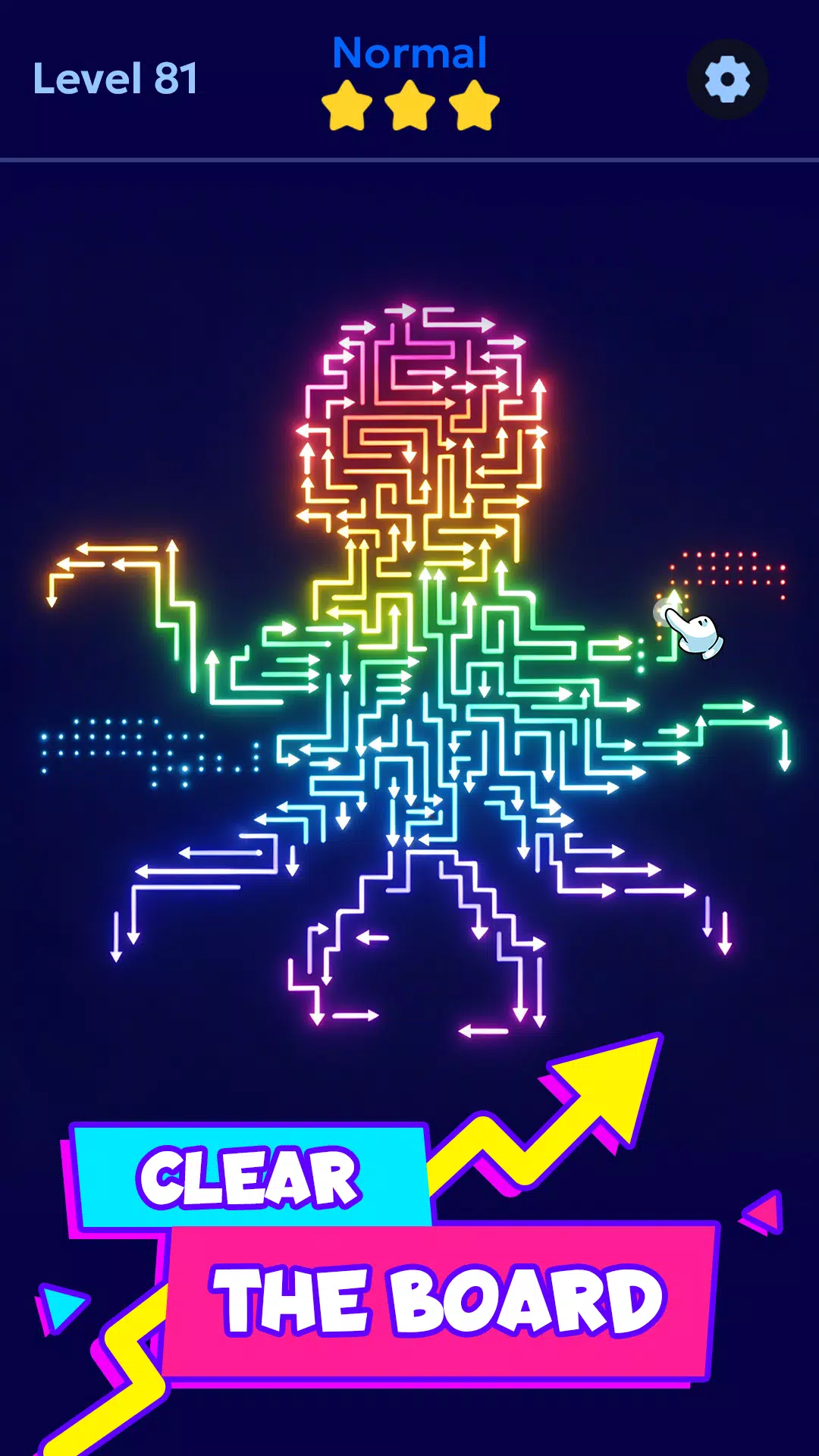
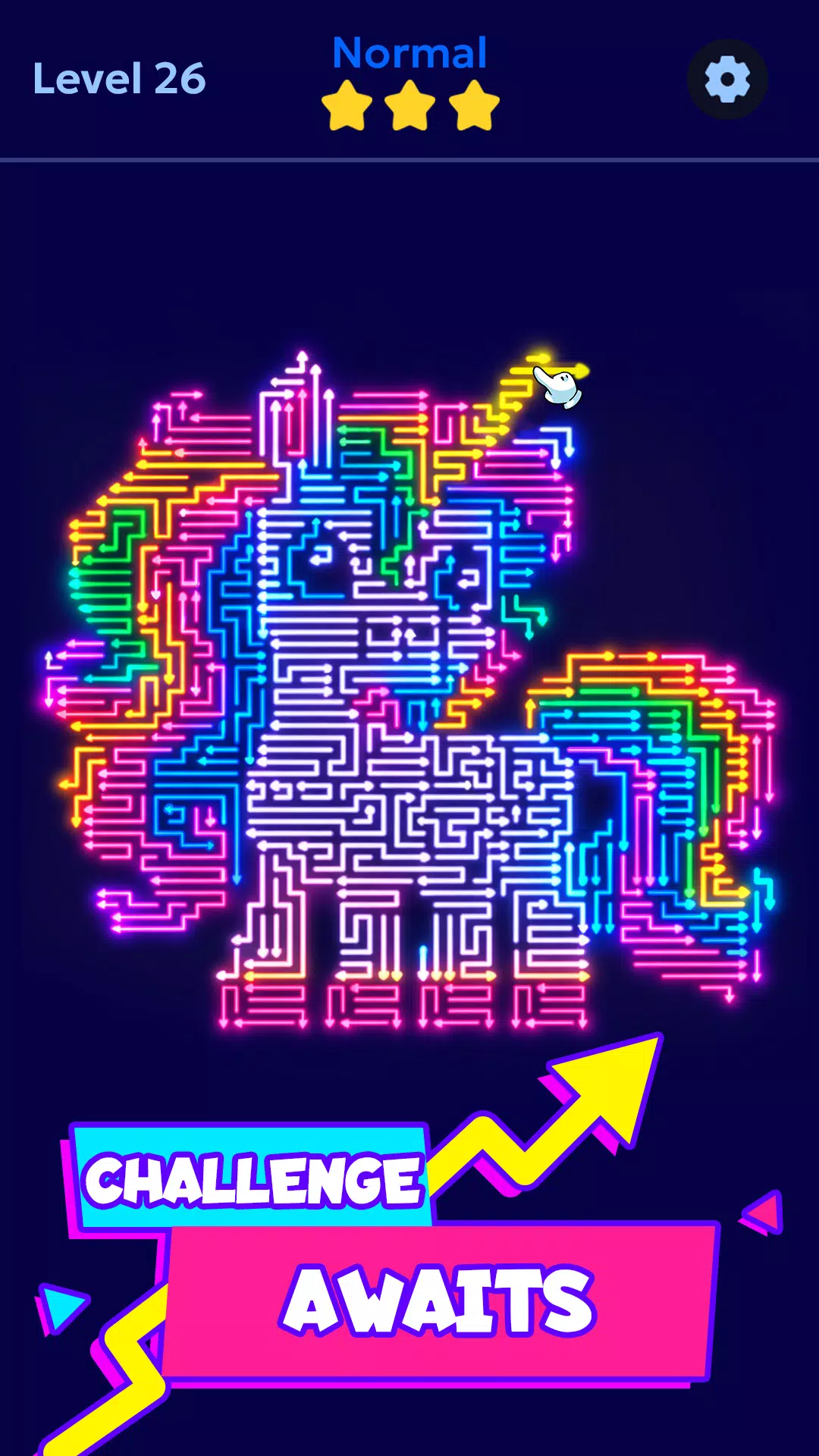
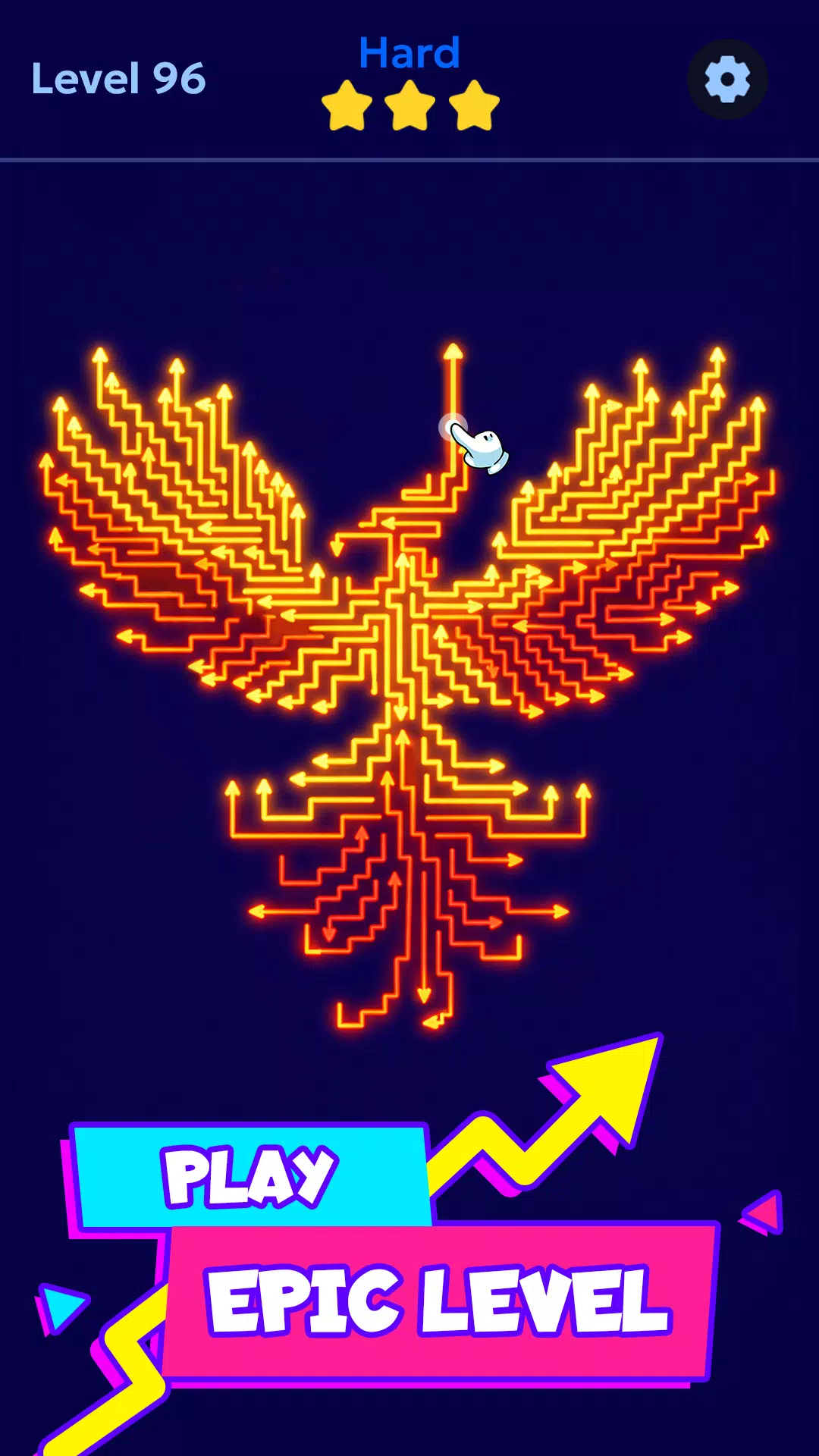

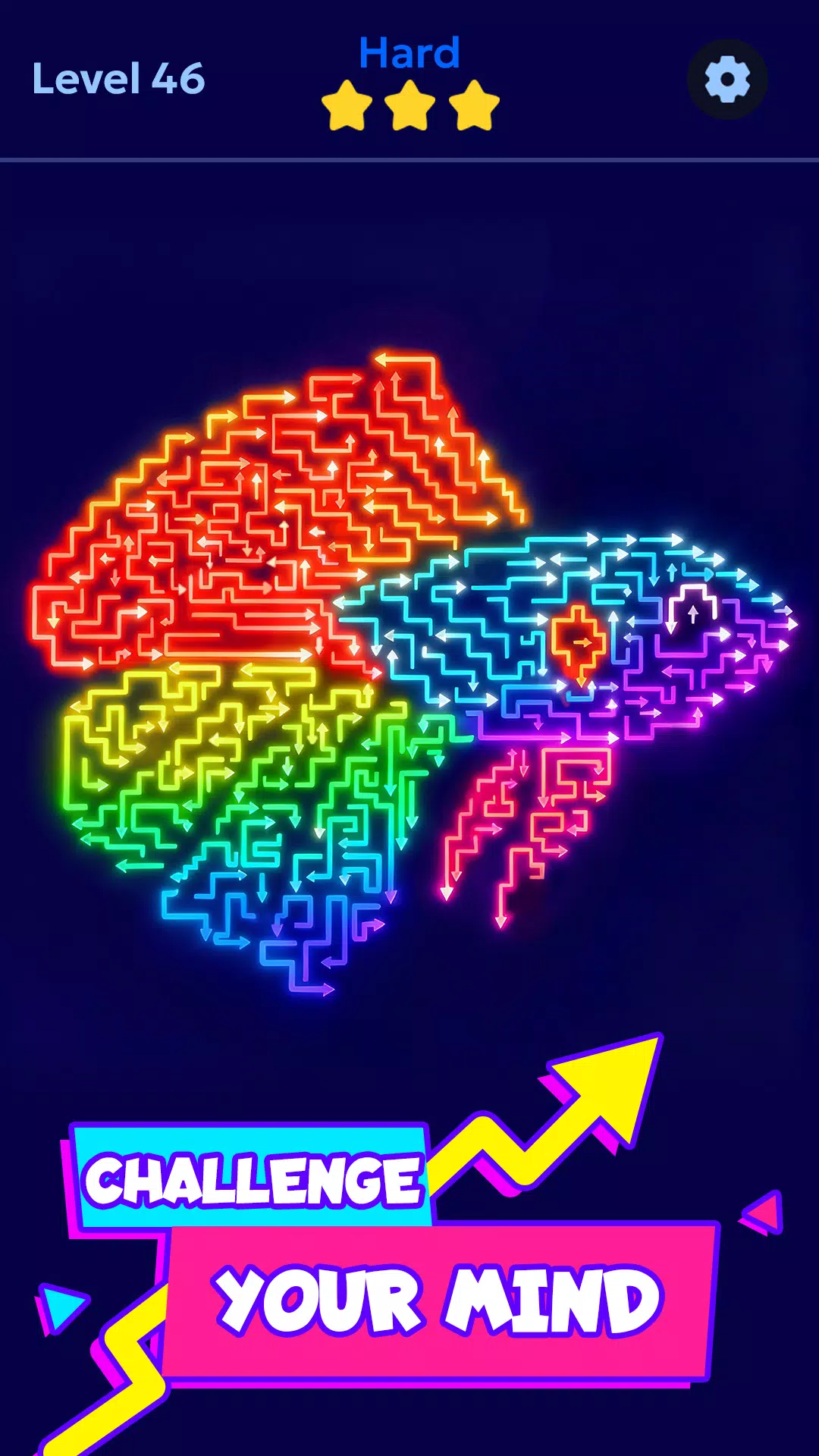
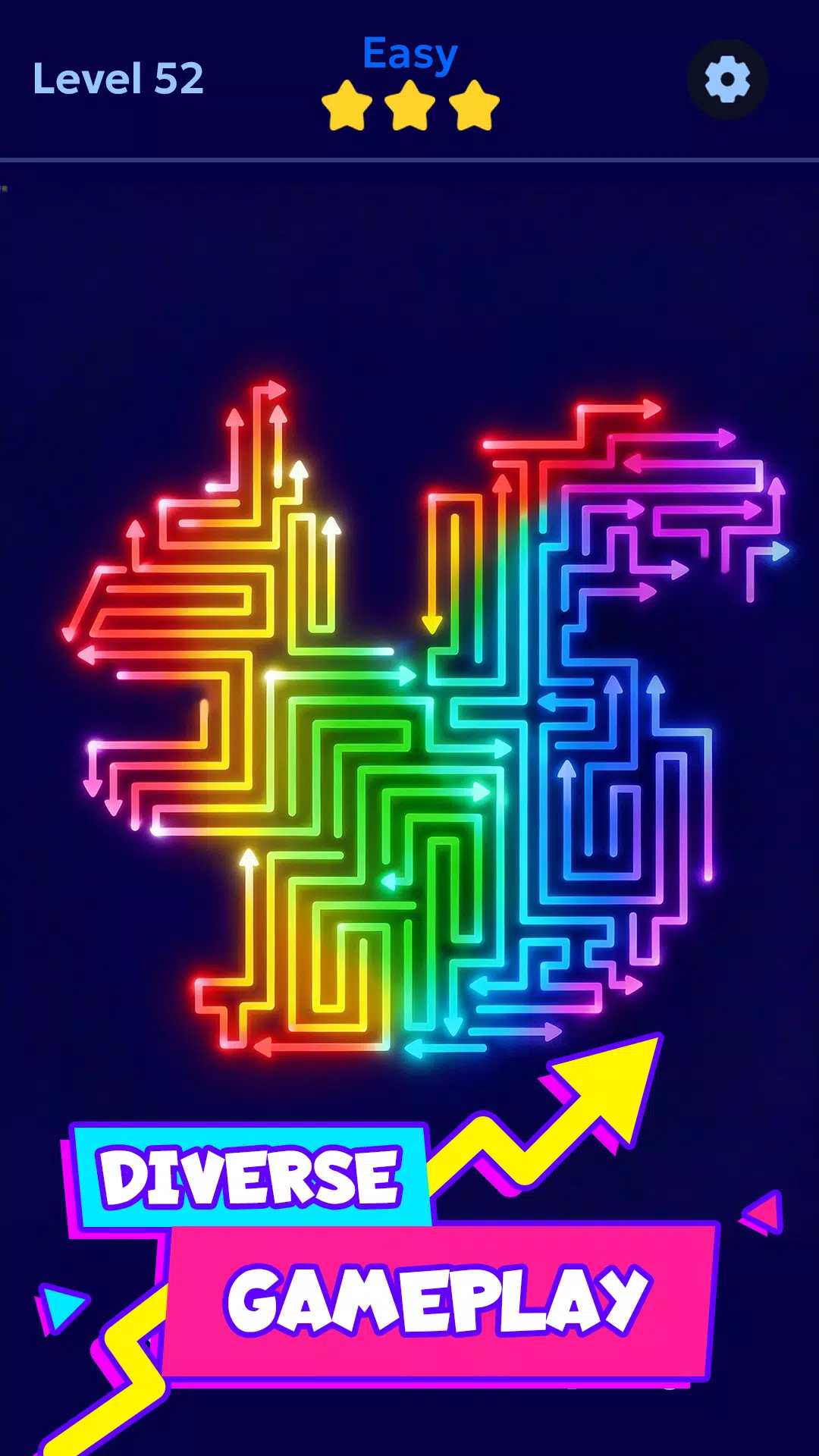
Arrow World is a minimalist arrow-puzzle game that asks players to clear each board by tapping directional arrows and thinking several moves ahead; in Arrow World you tap an arrow and it flies away in the direction it points, interacting with other pieces and the board boundaries, which makes sequence and spatial planning the core of every puzzle. This editor introduction describes how Arrow World balances simple tap-to-move controls with steadily increasing complexity, why its tactile feedback and animations feel satisfying, and what players can expect in terms of progression, accessibility, and replay value.
The central mechanic in Arrow World is deliberately straightforward: every arrow moves only in the direction it points when tapped, and it continues until it leaves the board or collides with another object. Puzzles are built from that single rule, so levels explore permutations of blocking, collision, and chain reactions rather than adding many separate systems. Early boards introduce one or two arrows and teach how collisions can clear or block paths; later stages combine multiple arrow orientations and tighter layouts so that a single misplaced tap can change the outcome of an entire puzzle. Players who enjoy planning, spatial reasoning, and pattern recognition will find the core loop consistently rewarding because the same simple rule generates a wide range of problem types.
Controls are intentionally minimal: tap to move an arrow, observe how pieces interact, and repeat until the board is cleared. The interface emphasizes direct manipulation with clear hit areas and responsive animations so that each input feels precise. Visual and audio feedback accompanies actions to make it easy to track what happened and why, supporting learning through play rather than long tutorials. Because the game does not rely on complex gestures, it translates well to a variety of touchscreen devices and remains approachable for new players while still offering depth for those who like to optimize sequences.
Arrow World features hundreds of levels arranged in a progressively tougher sequence that moves from beginner-friendly puzzles to stages that verge on impossible. The level structure is designed to introduce new spatial patterns and layout motifs gradually, allowing players to internalize core interactions before they are combined into complex challenges. Completing earlier boards unlocks subsequent ones, and difficulty increases by tightening space, adding more arrows, and arranging orientations that require multi-step planning. While casual sessions can focus on short groups of levels, dedicated players can pursue long runs of consecutive puzzles to practice strategies and refine thinking.
The game embraces a minimalist visual style with clean shapes, subtle contrast, and smooth motion to keep attention on puzzle logic instead of decorative elements. Animations are tuned to feel satisfying and tactile, helping players understand momentum and collisions at a glance. Sound design leans toward gentle, ASMR-like feedback that reinforces successful moves without creating pressure; audio cues are low-key and meant to support concentration rather than distract. Together the visual and audio choices create a calm but focused atmosphere suitable for short breaks or longer problem-solving sessions.
Arrow World includes a compact settings area that lets players tailor basic presentation and comfort options, such as toggling sound effects, adjusting volume, and choosing higher-contrast visuals for improved readability. The design favors clear arrow shapes combined with color and contrast options that help players with visual sensitivity or colorblindness distinguish elements. Controls remain single-tap and predictable so that accessibility is built into the interaction model rather than requiring complex alternatives. These options make it possible to play comfortably across a wide range of devices and environments.
The experience is self-contained and fully playable offline, with no account creation required, so players can jump into puzzles without setup and continue when convenient. Menus are uncluttered and level selection is straightforward, supporting quick play while commuting or longer concentrated sessions at home. The absence of mandatory online features keeps the focus on the puzzles themselves and respects players who prefer private, interruption-free play.
Replay value comes from the variety of board layouts and the open-ended nature of planning solutions; many levels allow multiple approaches, and returning to a previously solved board to find a cleaner sequence remains a satisfying challenge. The built-in difficulty curve includes occasional spikes that provide steep tests for experienced players, and special near-impossible stages are included for those who seek extreme puzzles. Because core mechanics are intentionally simple, players who enjoy deep thinking and pattern exploration will find long-term engagement in mastering sequences and exploring edge-case layouts.
New players are encouraged to observe how one tap changes the board before committing to a multi-step plan, and to think about which arrows will become blockers after they move. Short sessions can be used to practice pattern recognition while longer runs help develop intuition about common configurations. Arrow World rewards patience, forward planning, and a willingness to experiment, and it provides a calm, focused puzzle experience that fits both casual and more dedicated playstyles.