




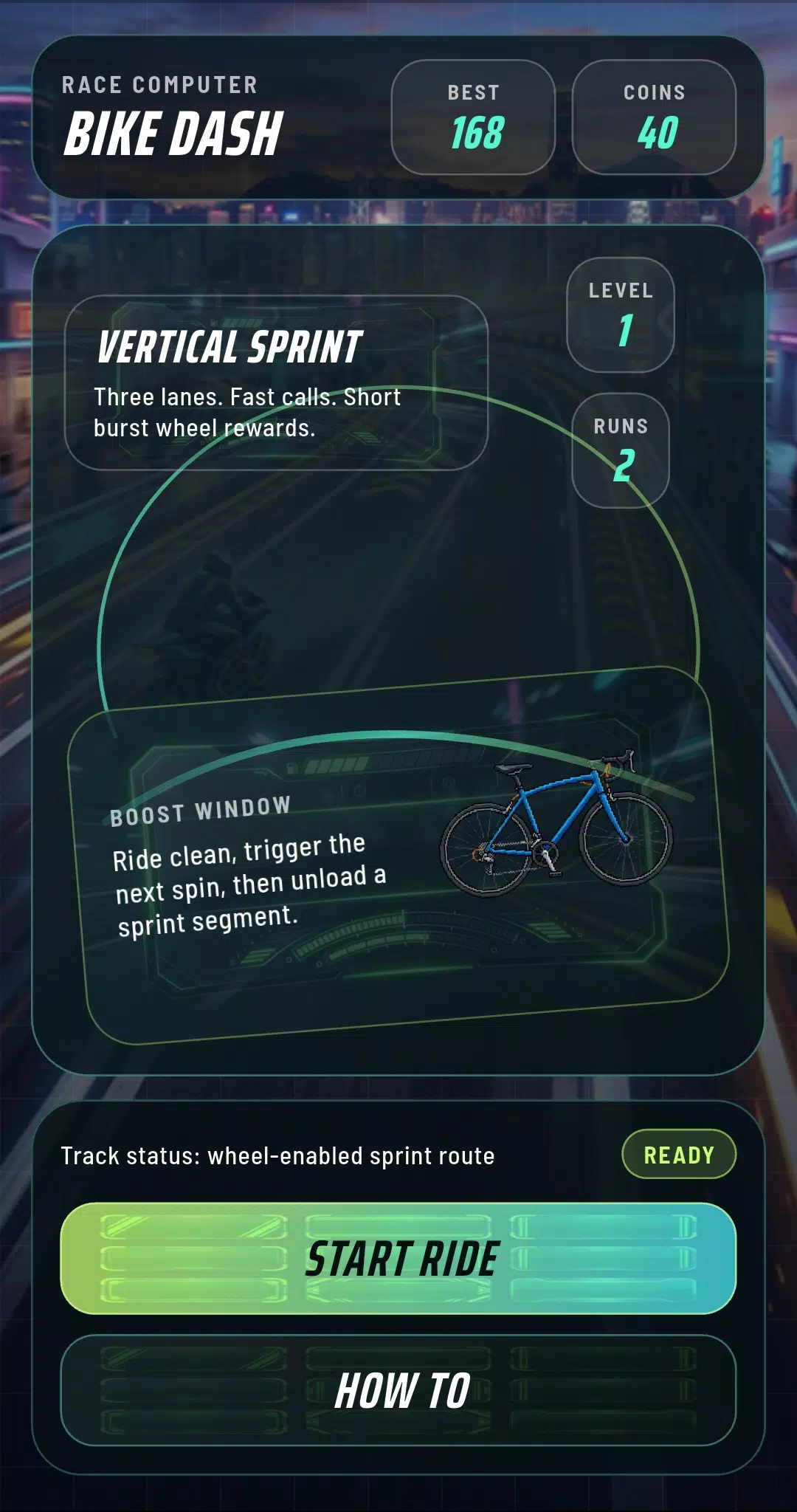


Bike Dash Vertical is a portrait-first arcade cycling game that puts lane control, checkpoint timing and short, high-intensity reward bursts at the center of every run. In Bike Dash Vertical you ride a continuously scrolling vertical track, choose lanes to avoid hazards, and build a charge by holding lines and threading clean approaches to checkpoints. Triggering the bonus wheel and entering sprint mode are the moments that flip a routine run into a high-score opportunity, and the design favors quick plays that emphasize rhythm, timing and split-second decisions.
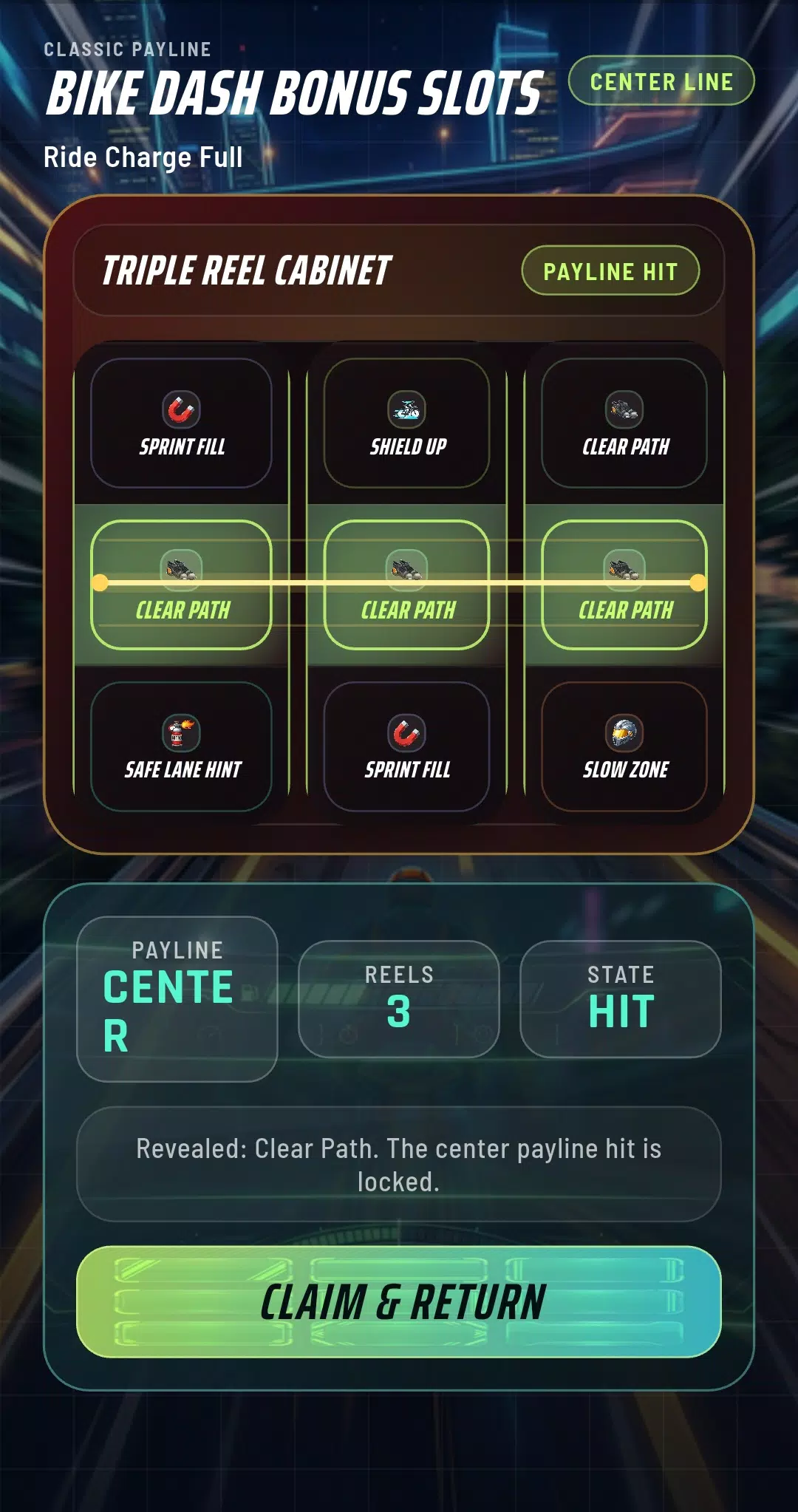
Bike Dash Vertical uses a compact set of mechanics to create layered depth: tight lane switching that rewards commitment, checkpoint segments that mark pacing and progression, a bonus wheel that reacts to your run progress, a sprint mechanic that converts accumulated charge into score multipliers, and bonus slots that grow after sustained success. Each mechanic is tuned for short sessions so every attempt can feel meaningful without requiring long playtime to make progress.
The core controls in Bike Dash Vertical are intentionally simple to support one-handed play in portrait orientation. Basic lane changes are handled with quick taps or soft swipes, while holding a lane increases your charge meter at checkpoint approaches. When a bonus event becomes available you can spin the wheel with a tap that is timed to your run, and a dedicated sprint input lets you trigger high-intensity segments where speed and risk yield larger scores. This small control set keeps the learning curve shallow but allows room for mastery through timing and lane discipline.
Progression in Bike Dash Vertical is driven by short run structure rather than long campaigns. Checkpoints act as mini-milestones that shift pacing and unlock wheel events; completing checkpoint objectives builds the bonus slots that fuel longer reward loops. The bonus wheel grants short-term advantages that can reshape the immediate next segment, and sprint mode is the main way to convert built charge into high scores. Run-to-run improvements are tracked through local high scores and measurable session metrics so you can see steady progress without needing online features.
The game’s presentation leans into neon aesthetics and clean contrast to keep lanes and hazards readable in portrait mode. Tracks are procedurally organized into short segments separated by checkpoints; those segments vary hazard placement, lane width and obstacle types so each checkpoint opens a slightly different challenge. Bonus events can temporarily alter the appearance or layout of the upcoming segment, which keeps the visual rhythm fresh while maintaining clarity for fast decision-making.
Bike Dash Vertical offers settings to tailor your experience: control sensitivity adjustments, the option to prioritize taps or swipe input, and visual filters intended to improve clarity for players with different display preferences. Sound and vibration controls let you fine-tune feedback for better timing cues. The game is designed to work offline for most gameplay, allowing quick plays during commutes or pockets of free time without requiring an internet connection.
The replay loop centers on improving scores and learning how to manipulate the risk–reward systems: choosing when to hold a lane to build charge, when to spin the wheel, and when to commit to sprint mode. Challenge increases naturally as the game escalates hazard density and timing windows over successive checkpoints, encouraging repeated plays to refine reflexes and strategy. Local score tracking and session stats provide clear targets for incremental improvement.
Start by learning lane timing and prioritize clean checkpoint approaches to accumulate charge reliably. Use the bonus wheel conservatively early on to learn how different effects influence the next segment, and save sprints for moments when your charge meter is high to maximize scoring value. Because Bike Dash Vertical is optimized for short runs, frequent brief attempts are an effective way to build skill and discover subtle patterns in level segments.