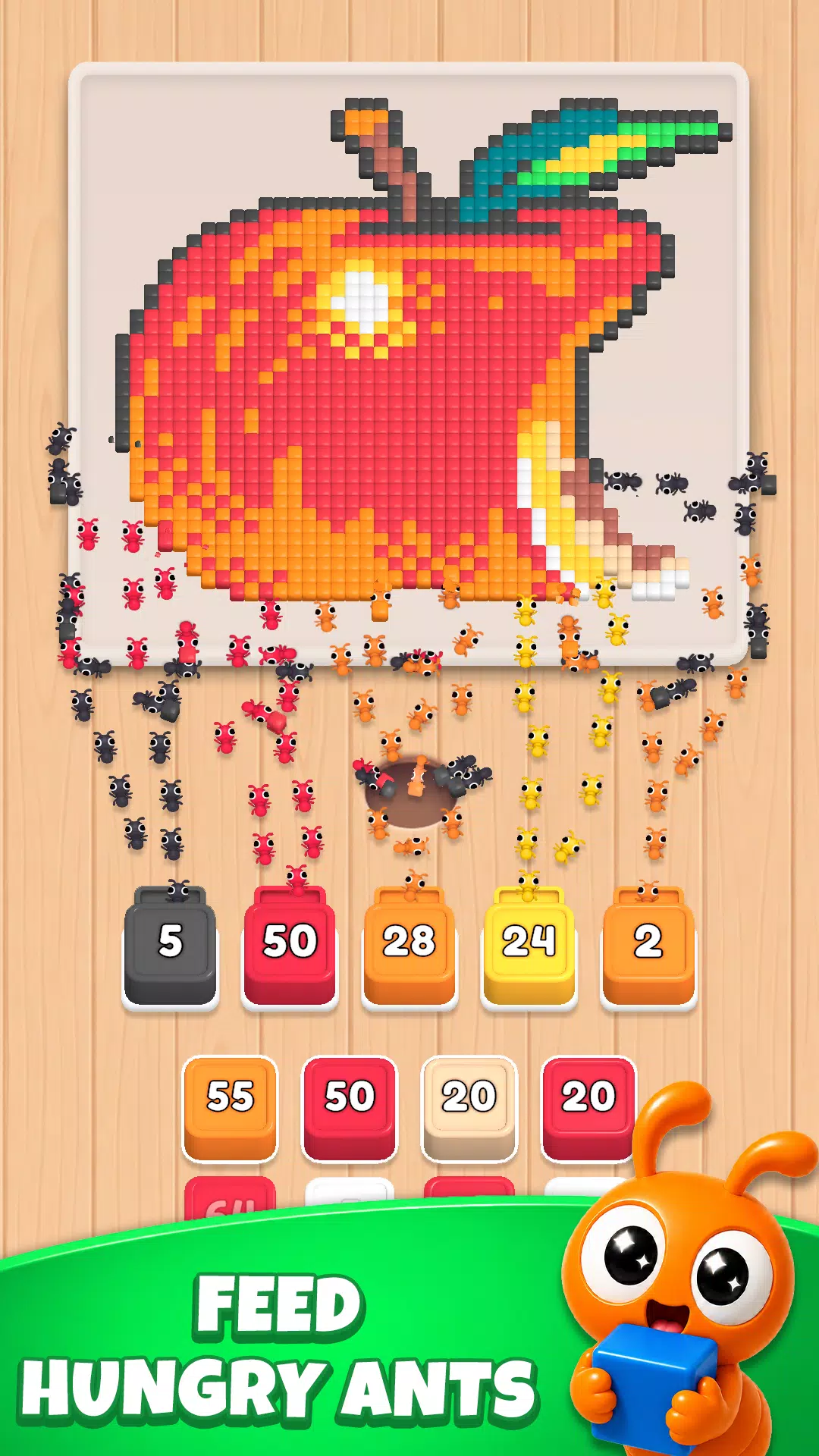
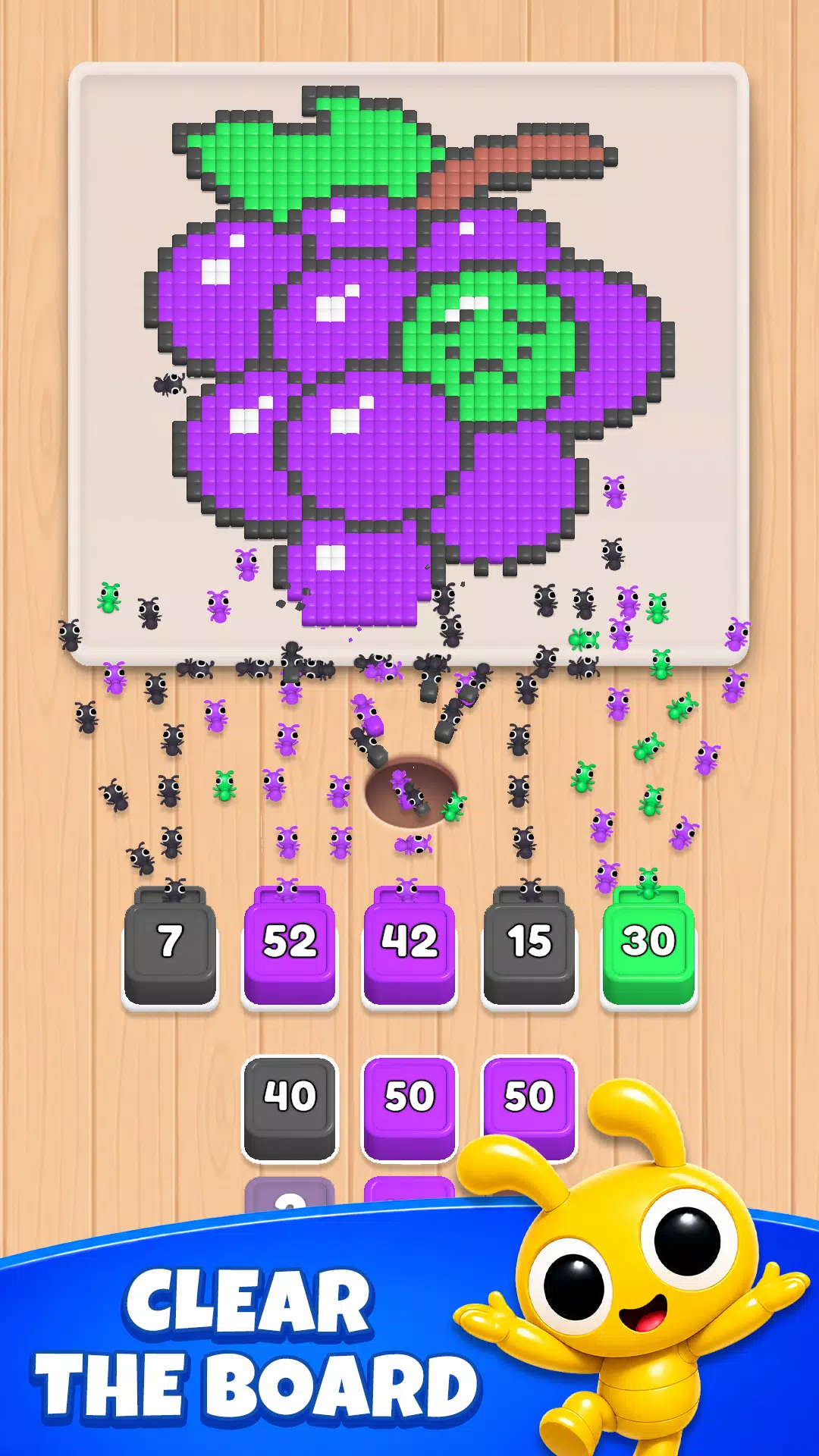
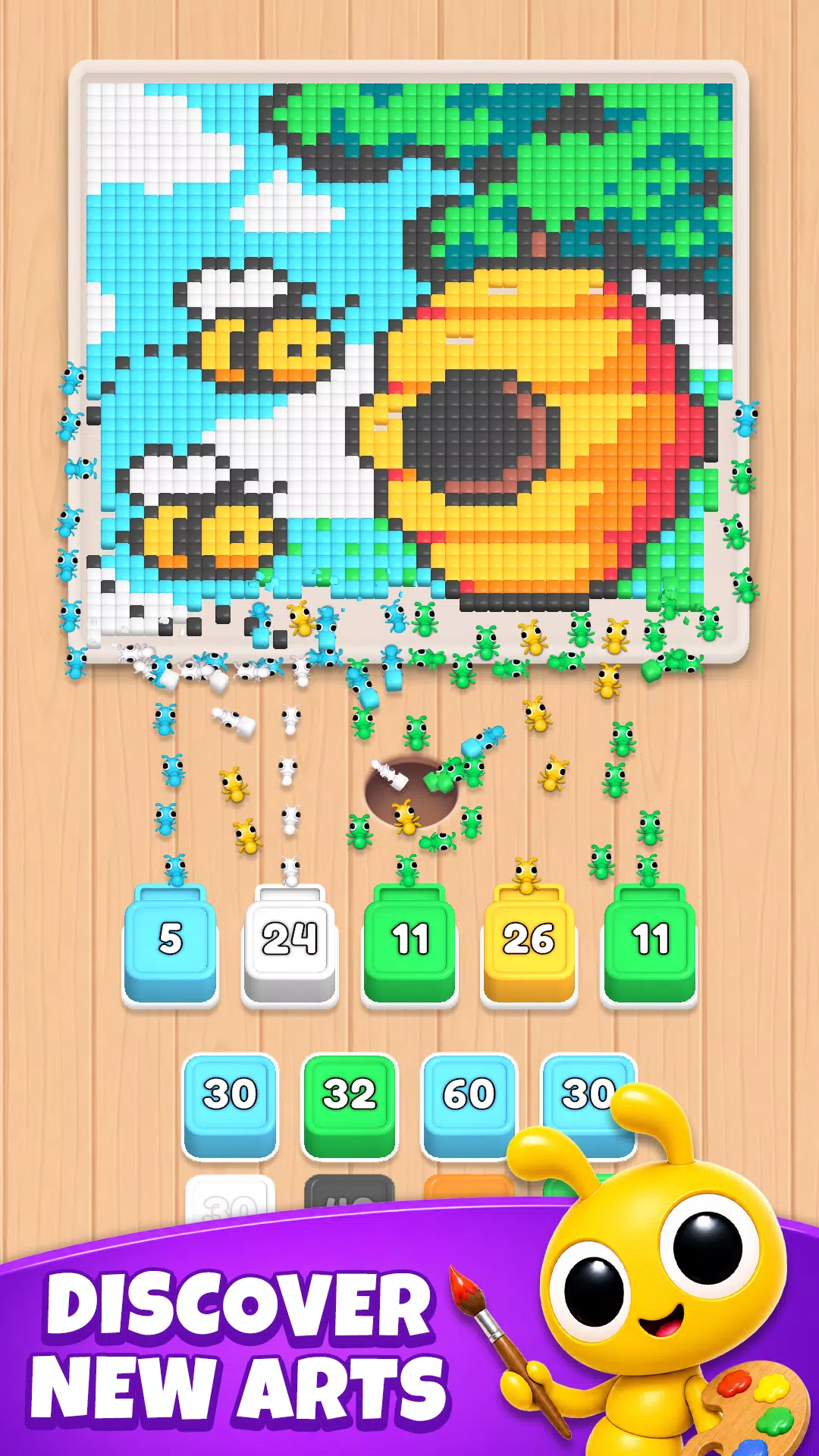
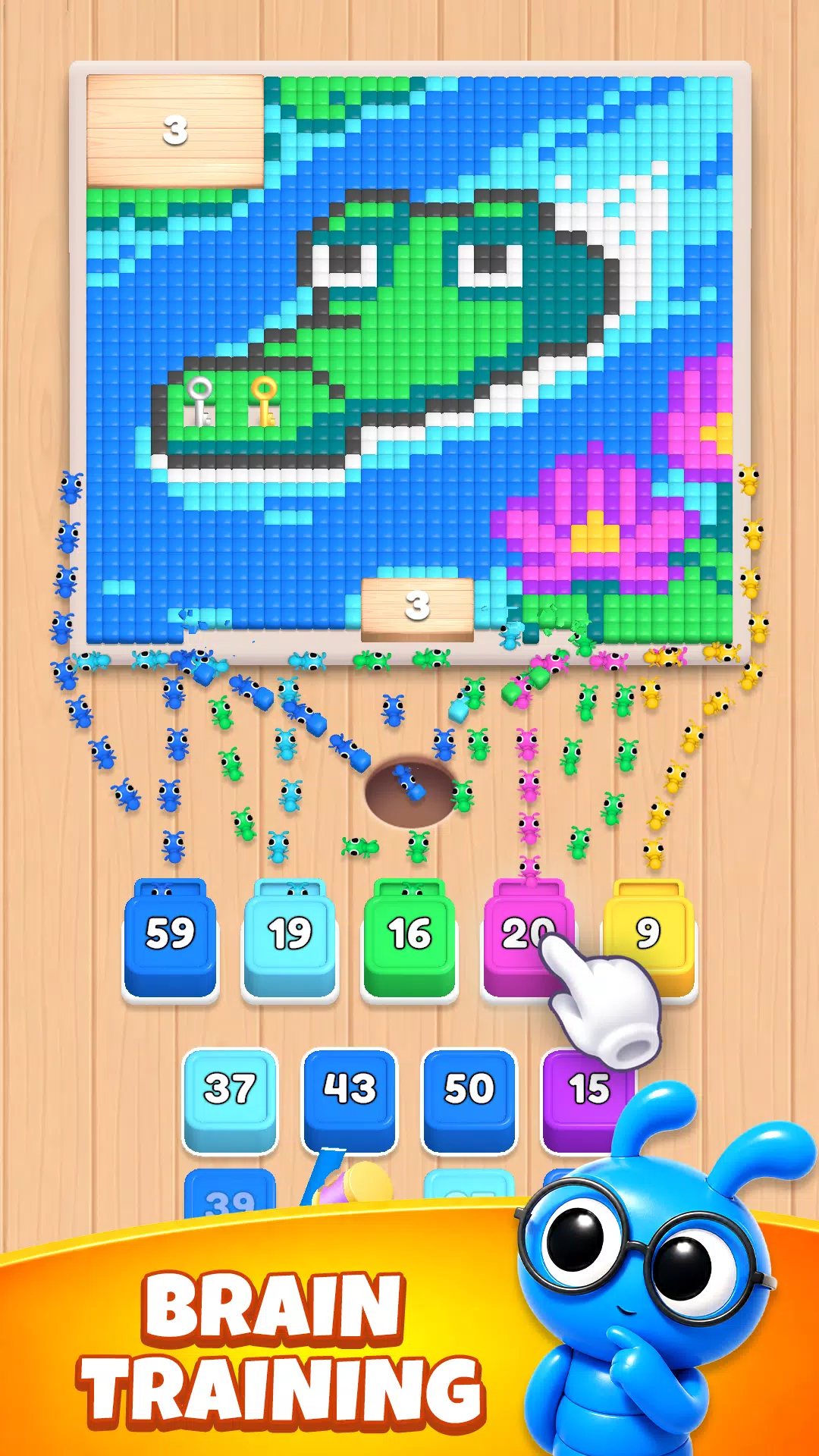
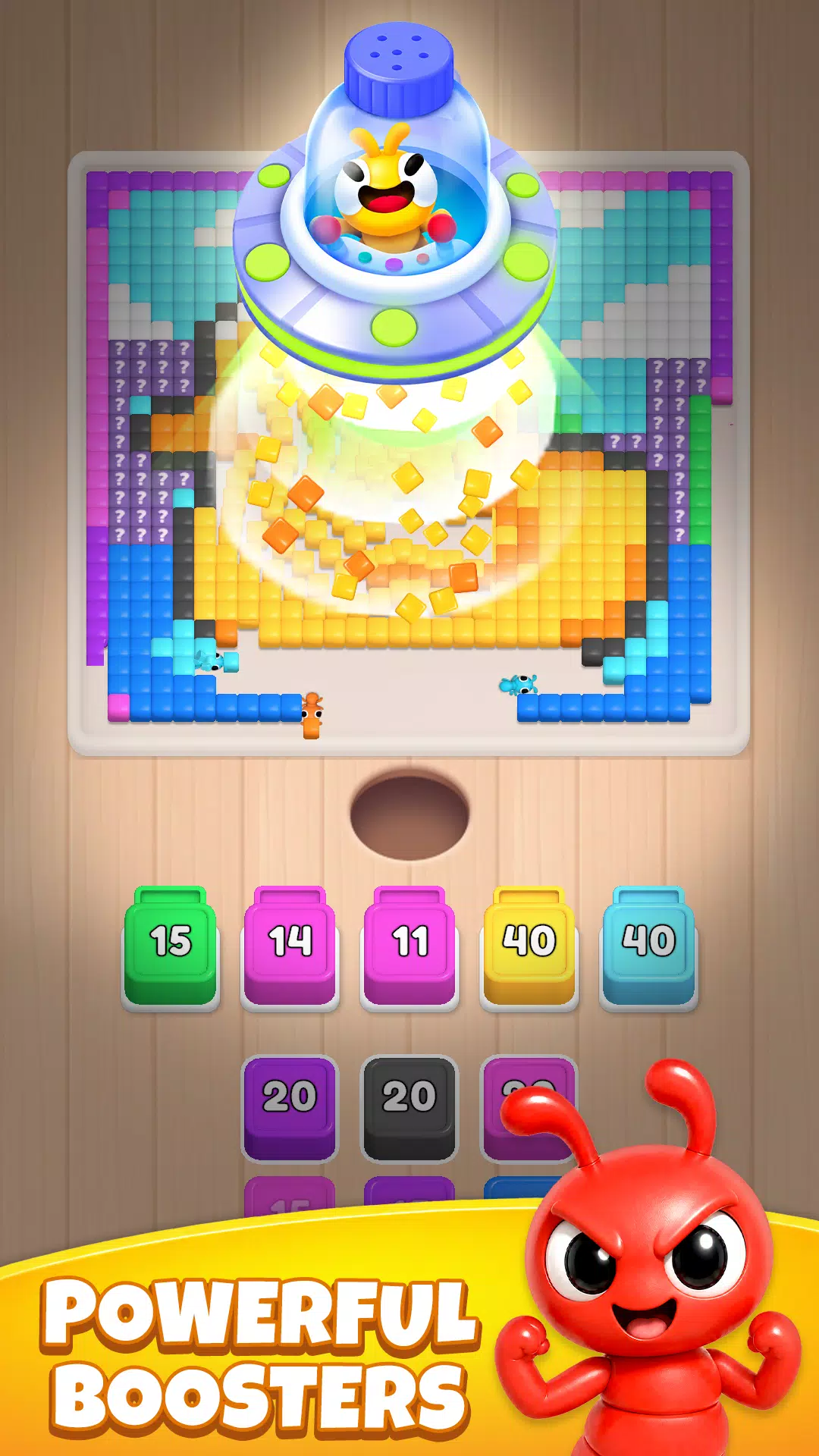
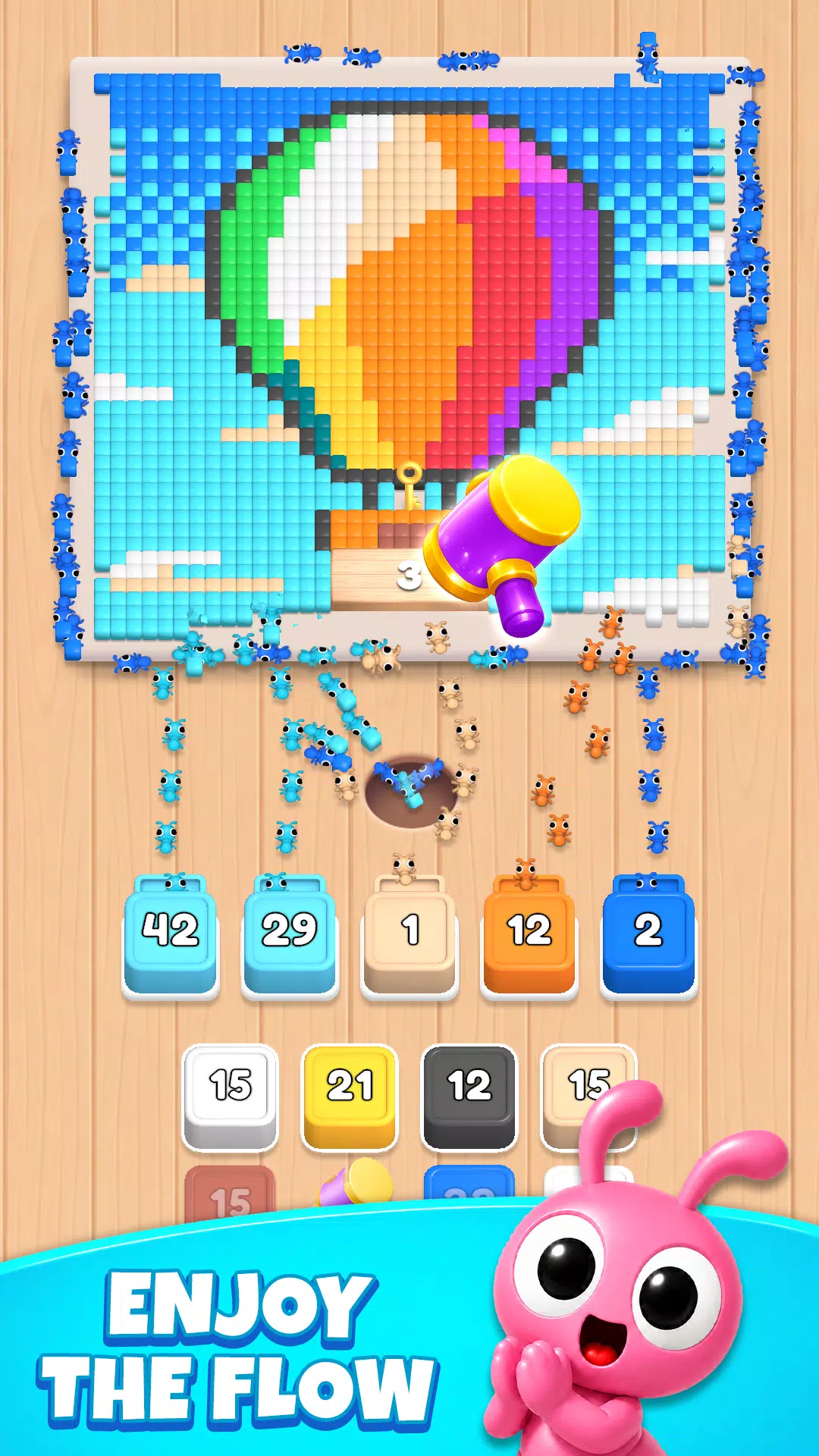
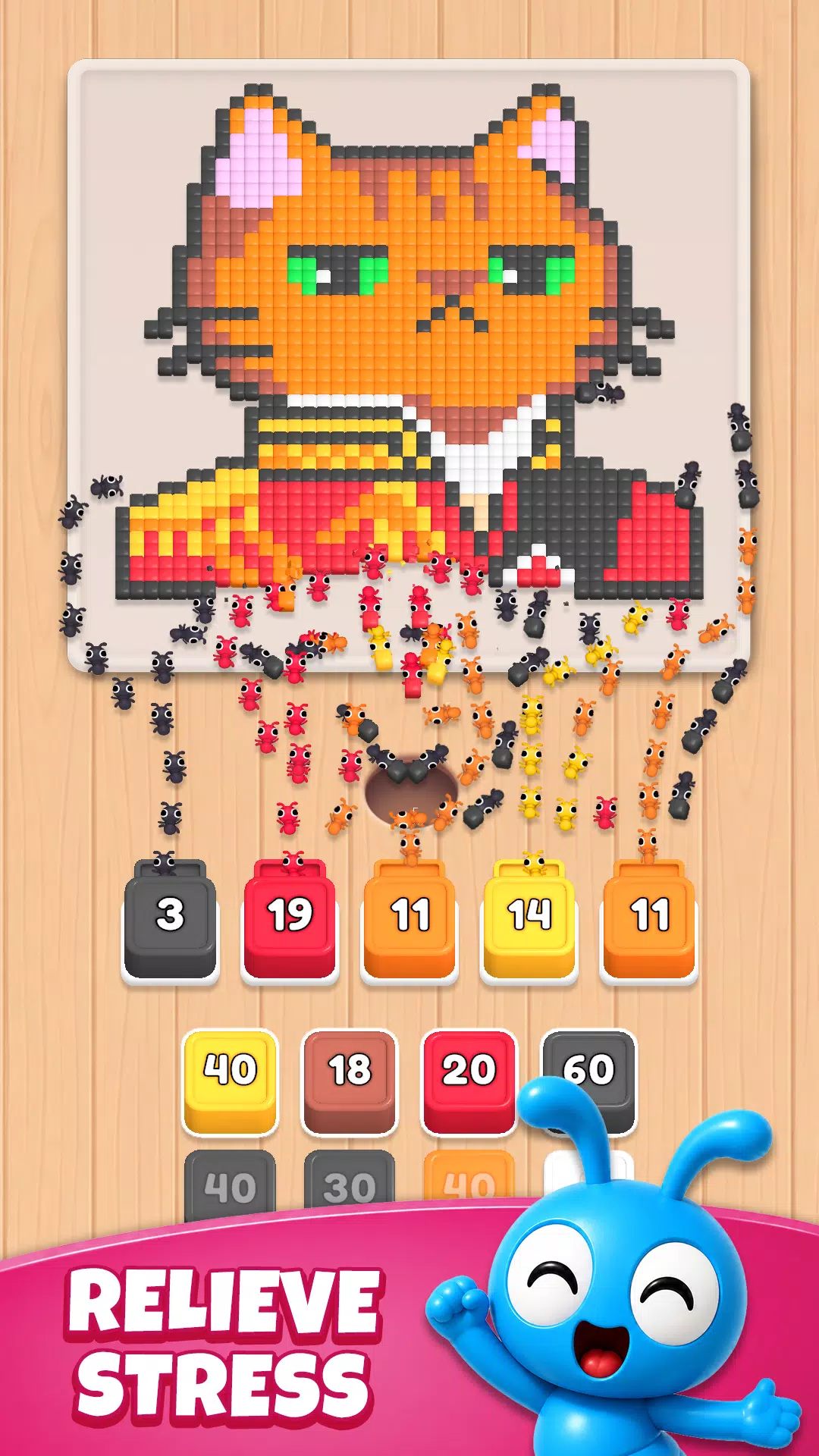
Food Hunt: Pixel Puzzle invites you to run a hungry ant colony through hundreds of bite-sized, colorful puzzles where each level is a small pixel-art picture made of food. Food Hunt: Pixel Puzzle begins with a simple idea — tap a matching color to send an ant swarm into the scene and remove connected food pixels — and builds on that with gentle escalation, tidy controls, and moments of satisfying cascade clears. The game is designed for short sessions but rewards thoughtful moves, making it suitable for quick breaks or longer, relaxed play.
The core gameplay centers on matching swarms to clusters of the same colored pixels. When you tap a color, all ants of that swarm move to devour adjacent pixels of that hue; removing contiguous groups creates space and can trigger chain reactions as neighboring colors collapse into new matches. Levels are typically solved in a handful of taps, but smart planning — such as leaving room for cascades or staging a sequence of clears — becomes increasingly important as new obstacles and tile arrangements appear. Puzzles often present a variety of goals, including clearing specific areas, freeing trapped pixels, or restoring a central image by removing overlaid tiles.
Controls are intentionally simple: one-tap, single-finger interactions let you select swarms and watch the ants carry out their work. The interface emphasizes clear visual feedback so you can see which pixels will be affected before confirming a move. For accessibility, the game uses distinct shapes and motion in addition to color so players who prefer high-contrast or reduced-color modes can still follow the action; settings also allow adjusting animation speed for players who want a calmer visual pace.
Levels are organized into compact sets that introduce mechanics gradually: early puzzles focus on teaching matching and basic chain clears, while later maps layer in blockers, narrower spaces, and more complex pixel arrangements that demand multi-step strategies. As you advance through chapters you’ll encounter increasingly intricate picture compositions and new tile types that change the way you plan clears. Progression is steady — hundreds of maps ensure hours of content and a clear sense of learning and mastery as you move from simple snacks to elaborate feasts on the board.
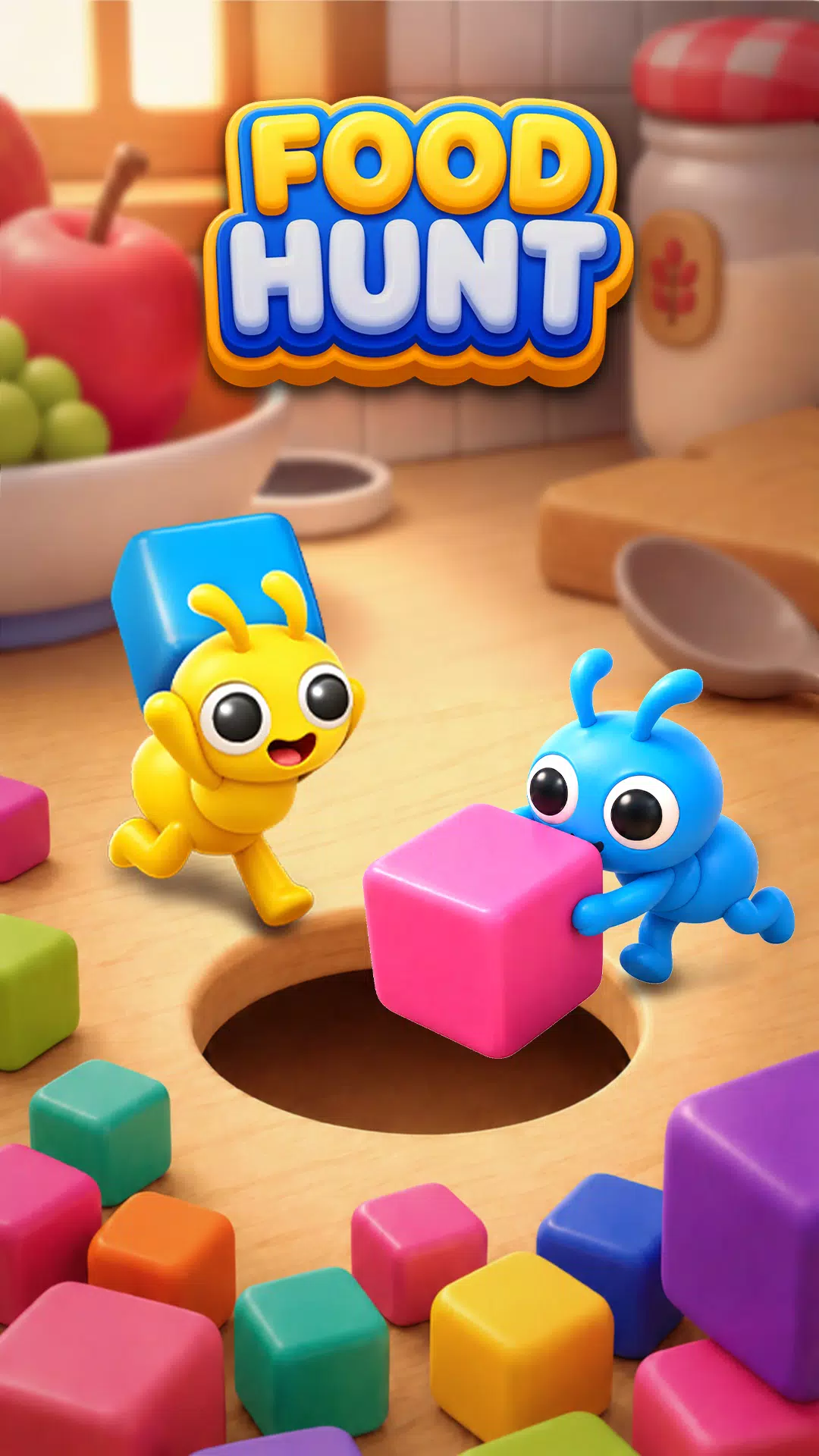
The game favors a warm, pixel-art aesthetic where each completed map reveals a charming food illustration and playful ant animations. Visual polish includes subtle particle effects when clusters break and small character motions that give the colony personality without distracting from gameplay. The color palette is bright but balanced so images read clearly on small screens, and careful pixel work helps each level look like a miniature, hand-crafted picture.
While individual levels are concise, the challenge comes from optimizing moves and hunting for satisfying cascade sequences. Many puzzles support multiple valid solutions, which encourages replay to discover more efficient clears or to experiment with different swarm orders. Occasional levels introduce constraints such as limited moves or locked tiles, adding short bursts of sharper difficulty that contrast with the otherwise relaxed pace. This blend of quick satisfaction and intermittent challenge creates enduring replay value without forcing repetitive grinding.
The user experience focuses on quick launch, responsive touches, and consistent frame pacing so the tactile pleasure of tapping and watching cascades feels natural. Food Hunt: Pixel Puzzle is built to run smoothly on a wide range of devices, and the core puzzle experience does not require a persistent online connection, so you can play while commuting or when offline. Load times are kept to a minimum and settings let you tailor animation or sound to suit battery or performance preferences.
Players who appreciate casual puzzle mechanics, thoughtful spatial planning, and charming pixel visuals will find Food Hunt: Pixel Puzzle approachable yet rewarding. It sits comfortably between very short, pick-up gameplay and puzzles that invite a little strategic forethought, making it a good fit for commuters, casual puzzle fans, and anyone who enjoys small visual rewards for tidy problem solving.