


Ultrafeminine is an indie psychological horror experience that places mood, exploration, and unsettling imagery at the center of its design. From the opening moments players are guided through a tightly controlled atmosphere intended to create persistent unease rather than jump scares, and the first-person-like exploration encourages close reading of environment, sound cues, and fragmented narrative elements. The game addresses mature themes and body-horror aesthetics in a way that supports reflective play: choices in how you investigate or avoid certain spaces influence how the story assembles, and the pacing is deliberately patient to allow the tension to build. This description outlines what to expect in terms of mechanics, controls, progression, presentation, and accessibility so you can decide whether Ultrafeminine fits your preferred style of slow-burn, artful horror.
Gameplay centers on environmental exploration and interpretation rather than combat. Players move through interconnected spaces, examine objects, and solve observational puzzles that rely on pattern recognition and contextual clues. Interactions are simple by design: examine, pick up, and use items in specific places to unlock new scenes or reveal narrative fragments. Some sequences require careful timing or stealth-like movement to avoid triggering intense encounters, while others present optional detours that deepen story context. The mechanics emphasize discovery and the psychological weight of choices rather than a traditional skill-based challenge.
Controls are optimized for touch devices and standard Android input. A minimal on-screen interface keeps the screen clear; virtual movement and contextual action buttons are responsive and customizable in sensitivity. Camera and look controls have adjustable smoothing to reduce motion discomfort, and interaction prompts remain unobtrusive so players can stay immersed in the visual language of each scene. On hardware that supports controllers, many of the same actions are mappable to a gamepad for a more tactile feel, but none of the game’s core content requires external peripherals.
Progress in Ultrafeminine is driven by exploration and the collection of narrative fragments rather than experience points or artificial gating. Discovering key items or reading certain documents opens new areas on the same map and can alter how later encounters are framed. The game encourages backtracking with a reason: previously inaccessible doors or visual anomalies can be revisited once new information is uncovered. This organic progression supports a layered storytelling approach where the order of discoveries influences interpretation and the emotional arc of the playthrough.
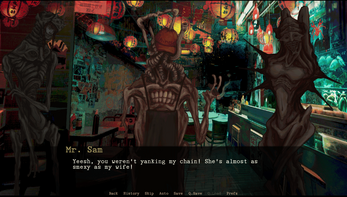
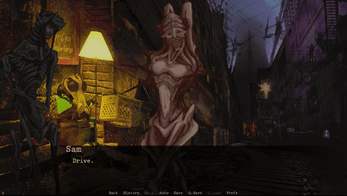
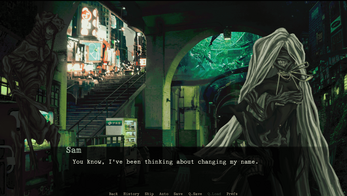
The visual direction emphasizes surreal, body-horror motifs rendered through stylized textures, lighting contrasts, and carefully composed scenes. Levels are crafted as contiguous, atmospheric spaces that blend domestic and uncanny elements to create a persistent sense of dislocation. Rather than relying on discrete levels, the world uses connected rooms and transitional corridors that allow tension to accumulate as you move between quieter, contemplative areas and more intense sequences. Visual cues and environmental storytelling serve as the primary conveyors of plot and mood.
Ultrafeminine includes accessibility options intended to broaden who can play the game comfortably. Subtitles are available for all dialogue and important audio cues, and players can adjust visual contrast, motion smoothing, and audio levels independently. An optional reduced-motion mode minimizes camera sway and rapid visual changes for users sensitive to such effects. Difficulty is not a traditional parameter here, but there are toggles to make observational puzzles more forgiving or to allow a more exploratory pace without the pressure of timed sequences.
The experience is designed for multiple playthroughs because key narrative fragments can appear in different contexts depending on the choices you make and the areas you prioritize. There are a few branching resolutions that hinge on how thoroughly you investigate certain threads, which encourages players to revisit the game to assemble alternative interpretations. The challenge comes from piecing together the story and confronting ambiguous encounters rather than from repeated combat or score-based systems, so replay value rests on curiosity and a desire to unpack the game’s symbolic language.
Ultrafeminine supports offline play and requires no constant network connection, making it suitable for isolated listening and uninterrupted sessions. The ambient sound design and music are integral to the experience and are fully available while offline. Performance scales to a wide range of devices with options to adjust texture detail and shadow quality to preserve smooth frame rates. Save slots allow you to experiment with different choices without overwriting earlier runs, and the interface is kept minimal to let the atmosphere remain the primary focus.
The game contains mature themes, including unsettling imagery and body-horror elements that may be distressing to some players. It is intended for an adult audience comfortable with artistic, thought-provoking horror rather than for younger players or those seeking light entertainment. The design choices are meant to prompt reflection and discussion, and players should approach Ultrafeminine prepared for ambiguous narrative threads and emotionally intense moments rather than straightforward answers.