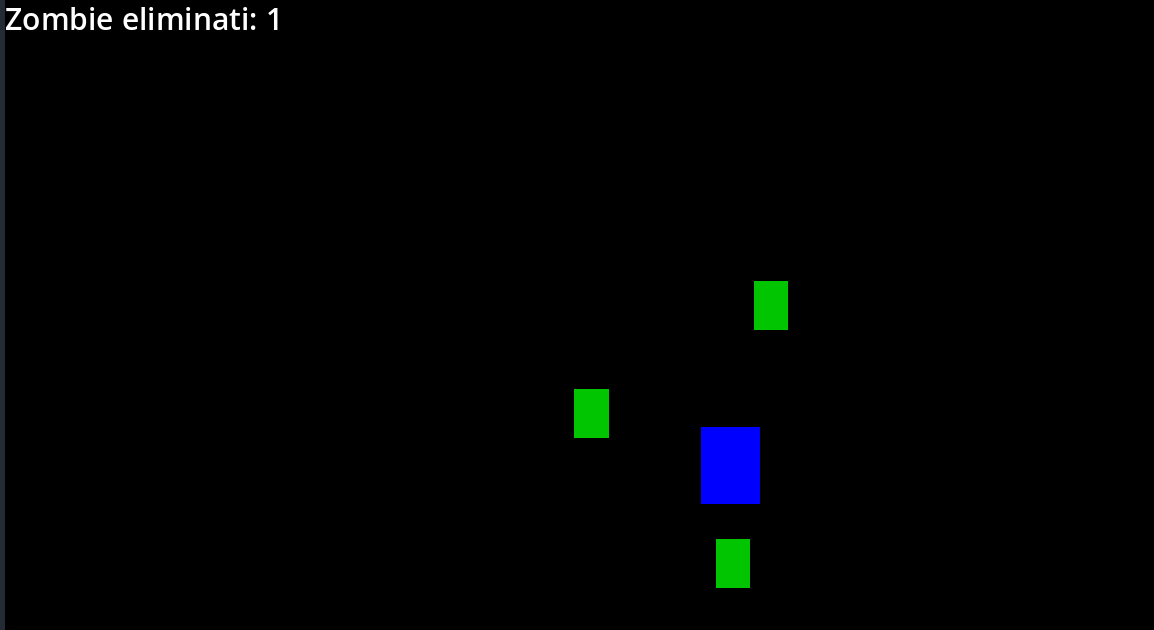
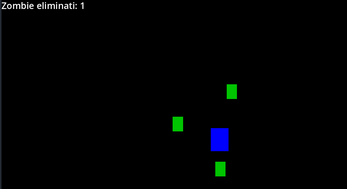
SQUARES VS ZOMBIES (davdalex) is a compact, minimalist 2D survival shooter designed for short, focused arcade sessions where timing, positioning and clean execution determine success. You pilot a single blue rectangle armed with a laser while waves of green zombies converge from multiple directions; the game strips away complex systems so the core loop — move, aim, spawn allies — remains immediate and easy to pick up. With a deliberate emphasis on quick reflexes and readable combat, SQUARES VS ZOMBIES (davdalex) targets players who want crisp, practice-driven runs rather than lengthy progression trees.
The core of SQUARES VS ZOMBIES (davdalex) is a survival arena that balances predictable controls with emergent encounters. Each run places you in a compact map where enemy groups spawn on timed intervals and approach in formations that reward spatial awareness. You can kite foes, funnel them through chokepoints, or create temporary distractions using spawnable support objects; these simple interactions combine to produce varied situations without adding layers of complexity. Enemies scale in number and aggression during a run, and a few tougher zombie types appear occasionally to force quick changes in tactics, making each session feel distinct even though the basic mechanics remain constant.
The control scheme is intentionally minimal: movement with WASD, shooting with the left mouse button, and a context-aware spawn action on the spacebar to place temporary allies or objects. Responsiveness is a priority, so input latency is kept low and visual feedback for hits, projectile trails and spawn effects is immediate and clear. The interface avoids unnecessary menus during play to keep runs uninterrupted, while simple HUD elements report survival time and the current wave so you can judge risk versus reward at a glance. These choices make the game approachable for players new to arena shooters while preserving room for skill development.
Progress is measured per run rather than through persistent account upgrades: your score and how long you survive are the primary metrics. Challenge increases through higher spawn rates, denser enemy patterns and occasional tougher variants that change how you must approach encounters. Because there are no long-term unlocks, the satisfaction comes from improving execution and learning enemy rhythms; subtle changes in spawn timing or your choice of when to deploy allies can turn a short run into a high-scoring session. This run-based system encourages repeat play and experimentation with different tactical approaches.
The visual design favors clarity and performance over decorative detail. Shapes are crisp, colors are limited and enemies are easily distinguishable so you can read the battlefield instantly, even on smaller screens. Arenas are compact by design to concentrate combat and reduce downtime between threats; this keeps the game fast-paced and ensures that projectiles, spawns and movement remain within the player’s field of view. The pared-back aesthetic also helps the title run smoothly on modest hardware, which supports accessibility across a broad range of devices.
Customization in this title is modest by intention: the player avatar remains a blue rectangle and emphasis is placed on mastering core systems rather than cosmetic changes. Replay value derives from emergent variability — different spawn timings, wave compositions and player decisions produce new scenarios each run. The game is designed for offline, single-player play and performs well on lower-end machines; controls are keyboard-and-mouse friendly and visual cues are high-contrast to assist visibility. These factors lower the barrier to entry for casual sessions and for players seeking short, concentrated practice.
SQUARES VS ZOMBIES (davdalex) will appeal to fans of distilled arcade shooters who prefer tight, reflex-driven gameplay over sprawling campaigns or extensive customization. If you expect deep upgrade systems, cooperative modes or extended narrative content, this title’s minimal approach may feel limited after extended play. On the technical side, the game is intended to be lightweight and reliable on typical desktop setups; it focuses on local, offline sessions rather than online features, so it is well suited for quick breaks and focused practice without the need for an account or persistent internet connection.
Start by practicing movement and aim in short runs to learn enemy spawn rhythms, then experiment with different timings for your spawnable allies to discover which situations benefit from defensive objects versus offensive distractions. Prioritize spacing and avoid getting surrounded; learning to kite and control sightlines will reliably extend your runs. Because every session is self-contained, the game rewards steady improvement and small tactical adjustments more than grinding or long-term progression.