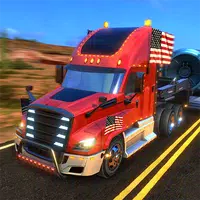
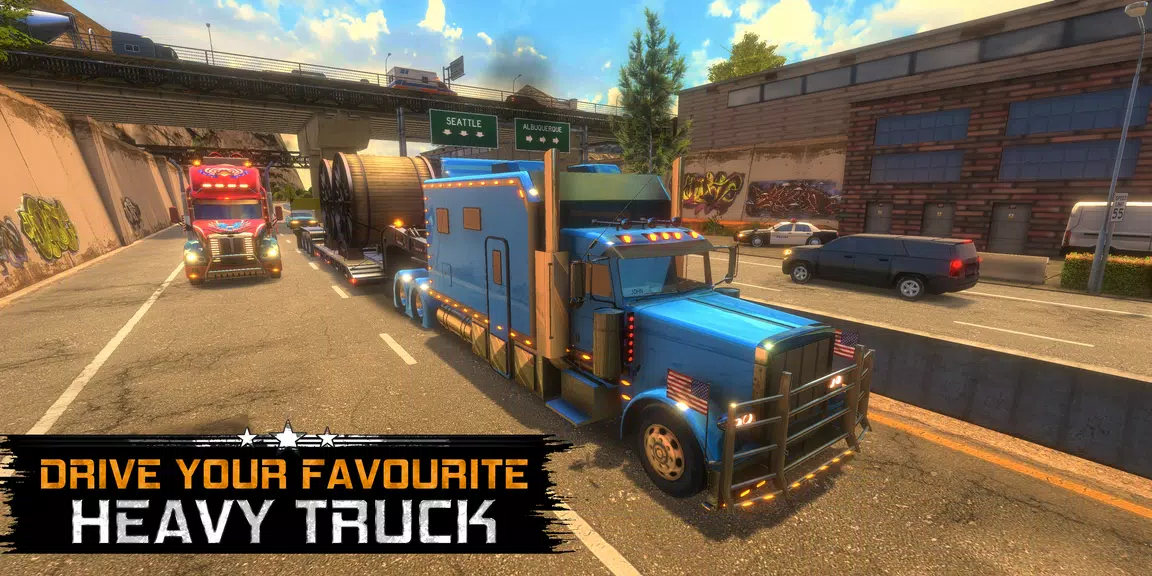
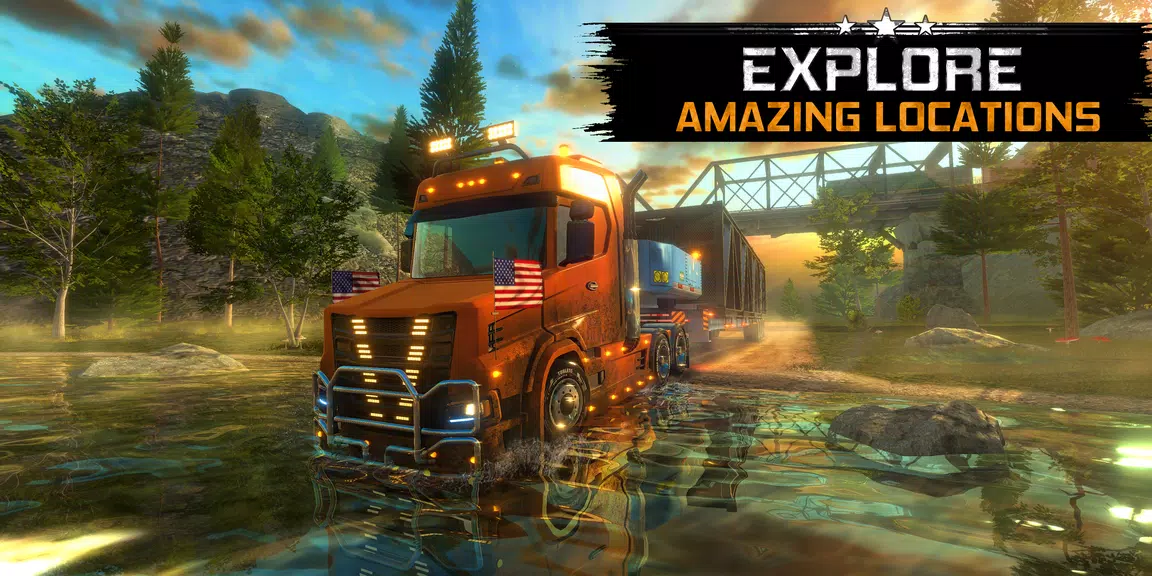
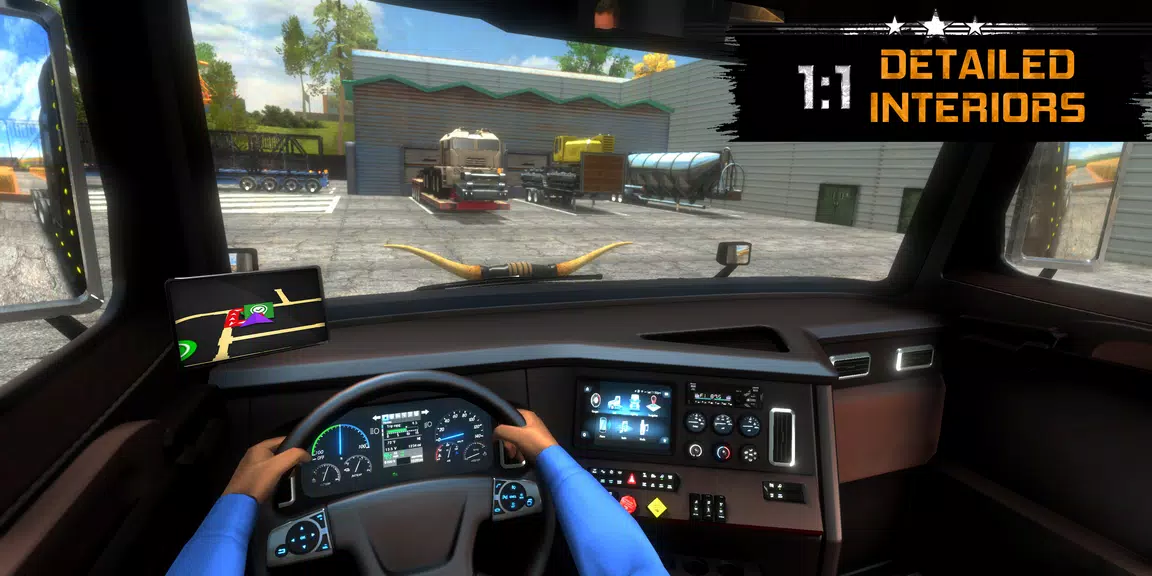
Truck Simulator USA Revolution places you behind the wheel of heavy 18-wheelers for long-haul runs across North America with a mix of single-player career progression and optional online cooperative trips. Truck Simulator USA Revolution emphasizes realistic cabin detail, thoughtful audio design and a roster of American and European-style semis paired with a variety of trailers and cross-border routes that span the United States, Canada and Mexico. The description below outlines the core systems and practical considerations that matter to players who want a balanced driving experience that is approachable for newcomers while offering depth for simulation fans.
The game presents a broad feature set aimed at sustained play: a catalog of trucks modeled with detailed interiors and varied handling characteristics, multiple trailer types suited to different cargos, and a map network that includes urban centers, highways, mountain passes and coastal roads. Lighting and environment rendering have been refined to produce clearer visuals at a distance and more convincing roadside detail up close. Audio work focuses on distinct engine notes, gearbox sounds and cabin ambiance so you can judge load and speed by ear. Career mode gives a structured way to take contracts, earn money and expand your fleet, while online sessions remain optional for players who want to convoy with friends.
Gameplay centers on planning efficient deliveries and adapting driving technique to cargo and terrain. The physics model reflects weight transfer, braking distance and steering sensitivity so heavier loads feel different on grades and in turns. Controls are flexible: touch steering and on-screen pedals support casual play, tilt steering offers a more immersive phone experience, and optional controller support provides finer input for players using gamepads. In-cab instruments display speed, RPM, fuel and waypoint navigation while subtle visual cues help with braking and gear changes. The overall control scheme aims to be responsive without forcing players to master complex manual shifting unless they choose to.
Progression relies on completing contracts, maintaining delivery reliability and reinvesting earnings into upgrades and new trucks. Job difficulty is determined by distance, cargo type, and delivery windows, and the economy models fuel, maintenance and occasional repair costs to encourage planning. Over time you can buy trucks with different handling and efficiency profiles, fit upgrades that change performance or fuel consumption, and accept longer, higher-reward routes that test logistical choices. The reward loop favors careful driving and route planning rather than reckless shortcuts.
Customization affects both appearance and performance, allowing players to personalize paint, accessories and select upgrades that influence handling and fuel efficiency. A variety of trailer classes—flatbeds, tankers, refrigerated units and oversized-load rigs—change how a truck behaves on tight turns and steep slopes. Truck Simulator USA Revolution treats customization as a practical tool to match equipment to a job, so visual personalization sits alongside meaningful tuning that alters real driving dynamics and trip outcomes.
Routes are organized to reflect realistic logistics patterns: short regional runs, mid-length interstate hauls and multi-state cross-border assignments that require attention to fuel stops and border procedures. Cities provide denser traffic and tighter navigation while open highways emphasize steady cruising and fuel management. Day-night cycles, changing weather and variable traffic densities introduce natural difficulty ramps and influence route choice and driving strategy without relying on artificial timers or repetitive obstacles.
Replayability stems from vehicle variety, cargo diversity and dynamic conditions that shift trip characteristics. Cargo weight, weather and traffic patterns all alter how a trip plays out, encouraging players to refine routes and vehicle setups. Challenge systems are grounded in these realistic constraints rather than arbitrary goals, so repeated runs remain engaging as you optimize fuel use, upgrade choices and delivery timing. Cooperative runs add a social element when online play is active, enabling convoy strategies without mandating connectivity.
The interface aims for clarity with readable in-cab instruments, an uncluttered HUD and adjustable assists such as steering sensitivity, braking aids and simplified navigation. Tutorials introduce core mechanics progressively and difficulty settings let casual players enjoy relaxed driving while more experienced players can dial in simulation-like parameters. Career mode supports solo progression offline so you can play without constant network access, and online features are optional for those who prefer social or cooperative runs.
The updated graphics engine improves visual fidelity but includes settings to reduce detail for older hardware to preserve performance. Audio balances preserve important cues such as engine pitch and environmental sounds, which remain useful even on lower settings. Regular updates from the developer may refine physics and content over time, and in-app options help manage data use when connected so you can control background downloads and multiplayer bandwidth. Overall the title focuses on delivering an accessible yet believable long-haul trucking experience on a range of devices.