
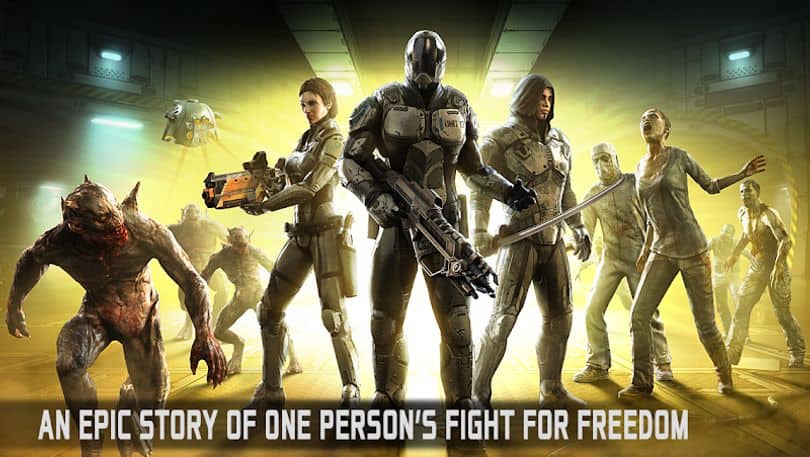
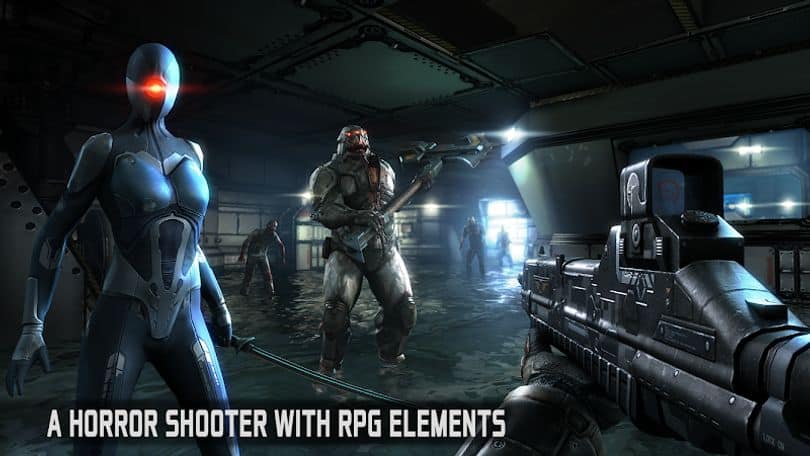
Dead Effect 2 is a futuristic first-person shooter that drops players into claustrophobic sci-fi environments where intelligent machines and mutated creatures present fast, close-quarters threats. In this editor review we describe how the game balances pick-up-and-play controls with deeper weapon customization and steady progression; Dead Effect 2 places a single protagonist in the middle of a tense, atmospheric campaign where tactical choices and incremental upgrades matter as much as raw aim. The description below covers core mechanics, controls and accessibility, progression and customization, visual style and level design, replay value, offline availability and challenge systems to help you decide if this title fits your mobile playstyle.
The core loop centers on short, intense encounters that reward precision and resource management. Combat relies on a straightforward aim-and-fire approach with a responsive reticle and a focus on positioning in confined corridors and ship interiors. Enemies are driven by AI patterns that encourage players to adapt: some foes rush directly while others use cover or ranged attacks, so encounters require choosing the right weapon and timing your shots. The game mixes firefights with occasional scripted moments that heighten suspense, and the steady flow of loot and consumables keeps play sessions rewarding even when levels repeat.
Controls are designed for touchscreens, featuring a centered aiming reticle and clear fire, reload and aim options that new players can master quickly. Sensitivity options and simple button layouts reduce the initial learning curve, while more experienced players can refine their aim and movement to improve survivability. The game’s control scheme also supports varying play preferences: players who prefer conservative tactics can fall back on cover-and-shoot, while aggressive players benefit from lateral movement and quick weapon swaps. Accessibility settings such as adjustable sensitivity and clear HUD elements enhance usability on different device sizes.
Progression in Dead Effect 2 is loot-driven and incremental: completing missions and successful runs grant rewards used to upgrade primary weapons, boost armor and unlock new equipment. The upgrade tree favors meaningful choices rather than random stat inflation, allowing players to specialize a main gun and a secondary weapon for complementary roles. Gear improvements increase survivability and firepower, while consumable upgrades offer temporary but often decisive advantages in tougher sections. The game encourages experimentation by letting you reassign resources to try different loadouts without breaking core balance.
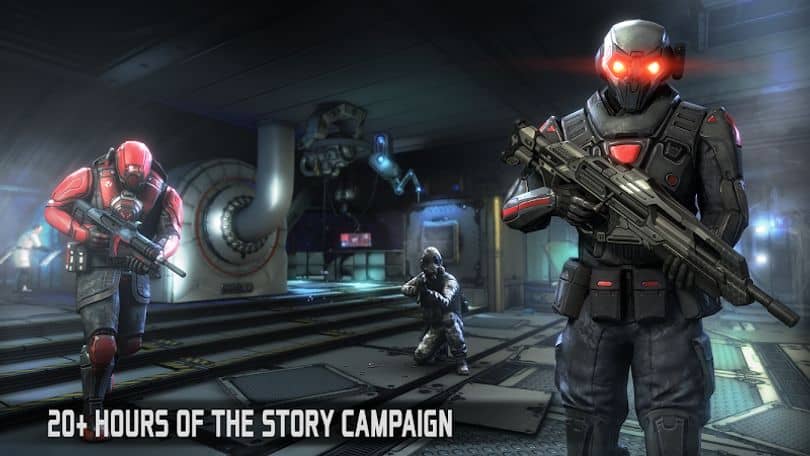
The visual presentation emphasizes a high-tech, dystopian aesthetic with detailed ship interiors, clinical research facilities and dimly lit maintenance corridors that support the game’s tense tone. Levels are structured as a mix of compact arenas and connecting passages that keep encounters varied; objective-driven segments alternate with survival waves and short exploration moments to maintain pace. Lighting and environmental effects are used to direct attention and increase immersion, while enemy design—ranging from mechanized units to mutated beings—adds contrast to the sci-fi setting without relying on repetitive enemy types.
Customization focuses on weapon upgrades, stat improvements and a limited equipment loadout that emphasizes meaningful decisions over inventory micromanagement. The user interface is straightforward and lets players review gear, upgrade paths and mission rewards with minimal friction. Dead Effect 2 is primarily a single-player experience and runs offline for core gameplay, which makes it a convenient option for sessions without a stable internet connection. Save and checkpoint systems reduce frustration by preserving progress between runs, and the game’s pacing works well for both short burst play and longer sessions.
Replayability comes from variable enemy placement, upgrade builds and increasingly difficult mission tiers rather than from multiplayer modes. Difficulty ramps are deliberate: early levels are accessible to newcomers while later stages require careful resource management, tactical weapon use and timing. The reward economy encourages replaying levels to farm upgrades and test different strategies. Challenge systems rely on enemy variety and scaling difficulty rather than introducing unsupported features; this keeps the single-player loop focused and consistent for long-term play.
If you value atmospheric solo shooters with loot-driven progression and tight touchscreen controls, Dead Effect 2 delivers a compact, well-paced experience. The game does not attempt to be an open-world shooter or to add multiplayer functionality, so expectations should align with its focused single-player design, progressive upgrades and tense, corridor-based combat. Overall, the title offers a clear learning curve, meaningful customization and solid replay potential for fans of sci-fi first-person action.