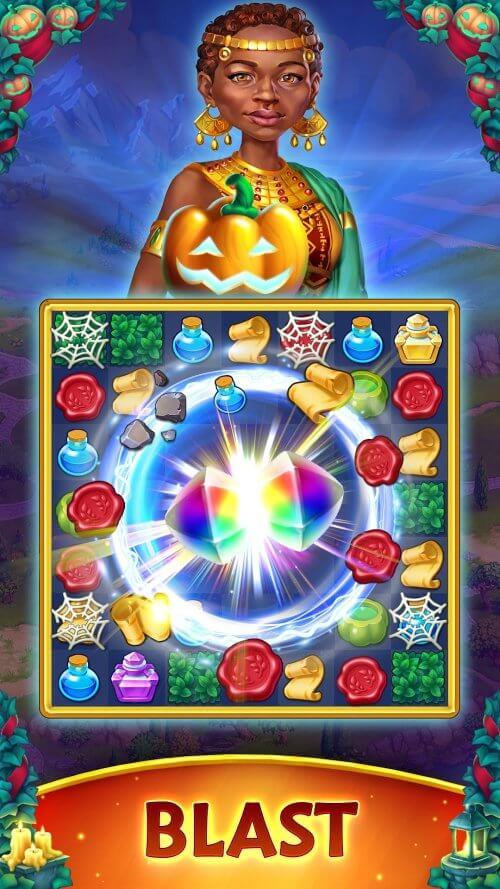
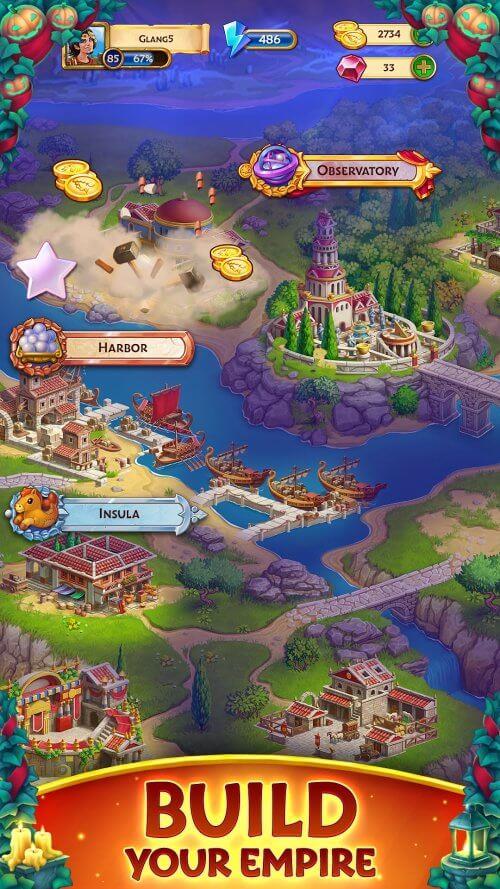
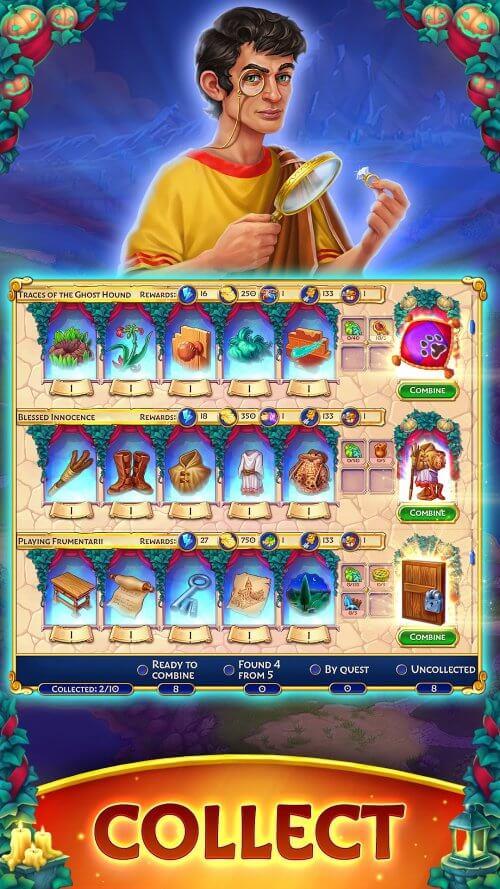
Jewels of Rome invites you to restore a ruined Roman town through match-3 puzzles and city-building tasks. Jewels of Rome mixes short puzzle sessions with long-term restoration, and Jewels of Rome begins by teaching core mechanics through simple resource levels that lead into more complex stages that reward planning and boosters.
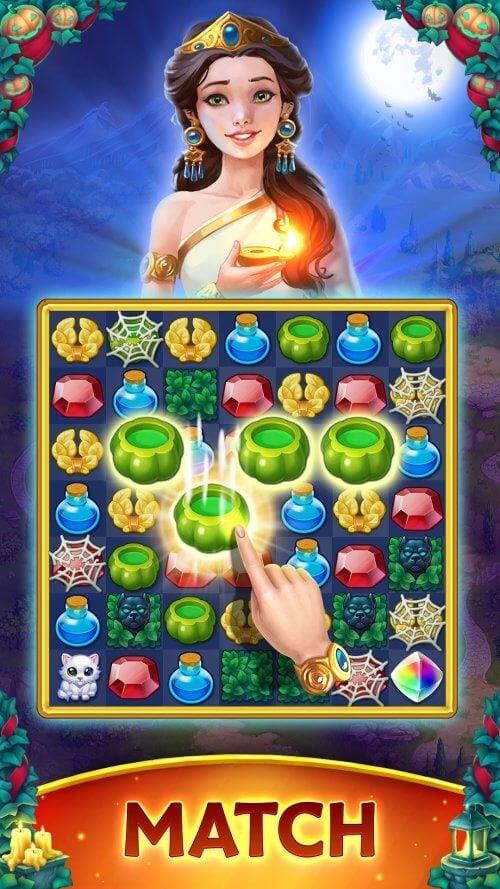
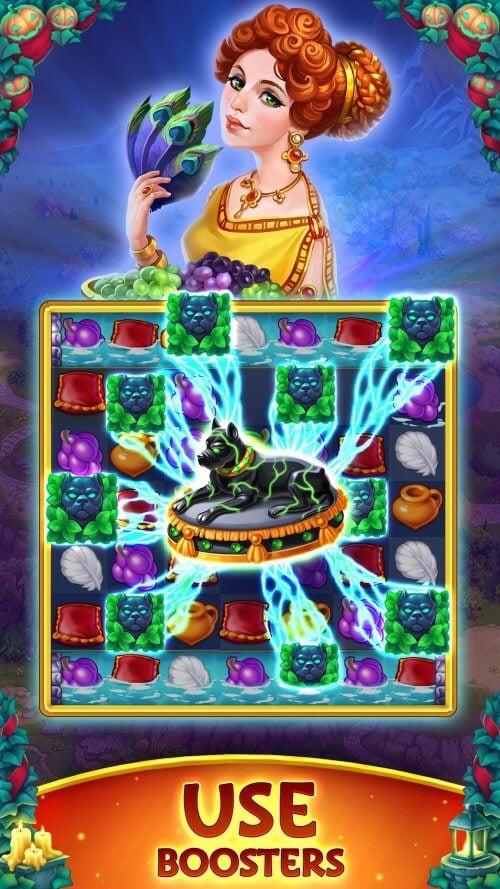
The core of the experience is familiar match-3 gameplay refined with level objectives and environmental obstacles. Swap adjacent gems to match three or more, form larger combinations to generate special pieces, and trigger chain reactions that clear tiles and debris. Levels present goals such as collecting building materials, freeing trapped tiles, or removing enemy tokens, and new mechanics are introduced progressively so strategies evolve naturally. Boosters appear as earned rewards or optional purchases and can be combined for amplified effects; used correctly they shift how you approach otherwise stubborn puzzles without overriding the need for skillful play.
Controls are optimized for phones and tablets: tap and drag to swap pieces, tap special items to activate boosters, and rely on clear visual cues for available moves and remaining turns. An in-game tutorial eases new players into core mechanics, while settings offer sound and music controls plus visual indicators to help track objectives and important items on the board. These accessibility choices reduce confusion during fast stages and make the game approachable for players with different experience levels and dexterity.
Progression in Jewels of Rome ties puzzle success to visible town development. Completing levels earns resources, experience points, and stars that unlock new buildings, ornamentation, and restoration projects. Levels are organized into chapters and landmarks that follow a narrative arc; each chapter introduces twists on earlier mechanics and raises the challenge gradually. Milestone stages require applying learned strategies and managing earned resources to advance the restoration campaign, while returning to earlier levels lets you improve star ratings and gather additional materials.
The visual presentation favors a stylized, colorful take on Roman architecture and streetscapes. Buildings transition from cracked facades to renovated structures as you invest materials from puzzle rewards, and decorative options—fountains, mosaics, statues—allow a measured degree of personalization for rebuilt districts. These cosmetic choices are primarily unlocked through gameplay, which gives the town a sense of ownership and shows how small victories accumulate into visible urban change.
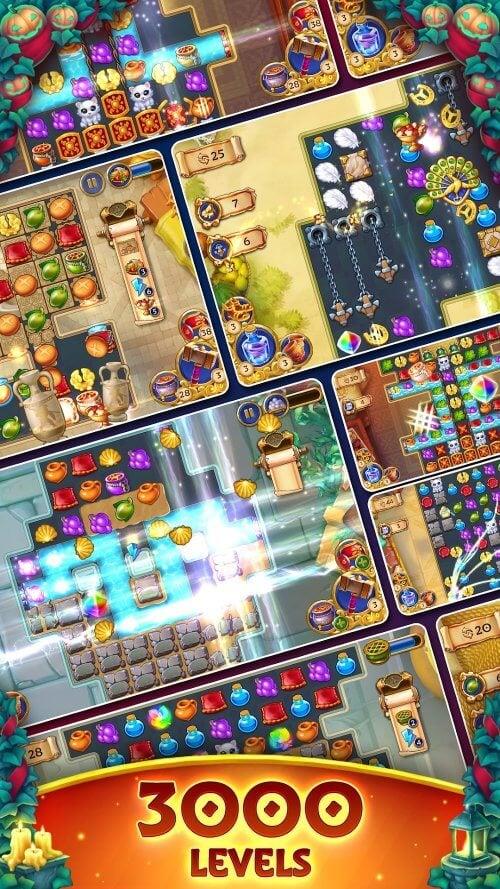
Replayability is built on hundreds of handcrafted levels, optional challenges, and multi-stage restoration projects that give long-term purpose beyond immediate puzzle completion. Players who enjoy optimization can revisit stages to increase star counts, test different booster combinations, or pursue more efficient material collection. The interplay between short-session puzzle rewards and the larger restoration goals motivates recurring play and provides a steady sense of progression as neighborhoods recover their character.
Jewels of Rome is designed for casual play sessions and longer commitments alike, running smoothly across a wide range of Android phones and tablets while preserving colorful animations and atmospheric sound. Many levels are suitable for offline play during commutes or short breaks, although features that sync progress across devices may require an internet connection. Performance settings balance visual fidelity with responsiveness so the game remains playable on lower-end hardware without losing the intended Roman ambiance.
Difficulty ramps up through the introduction of new obstacle types and level objectives that demand planning, resource management, and creative use of boosters. Optional challenge modes and tougher levels are available for experienced players who want higher-risk puzzles without imposing that difficulty on newcomers. Timed stages or limited-move scenarios appear periodically to increase tension and reward precision, while the overall design keeps a balance between skillful play and well-earned assistance from power-ups.
The game is free to download and play, supported by optional in-app purchases for boosters, extra lives, or materials that can accelerate restoration. These purchases are not required to enjoy the core progression but may shorten the time needed for certain cosmetic projects or difficult levels. Players focused on the city-building side should expect the match-3 mechanics to remain central, yet the combination of narrative, puzzles, and visible town improvements provides a satisfying mix for both short sessions and sustained play.