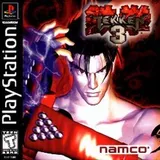
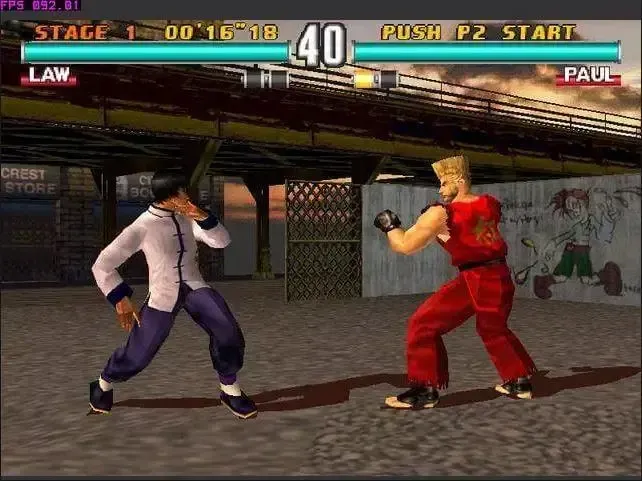
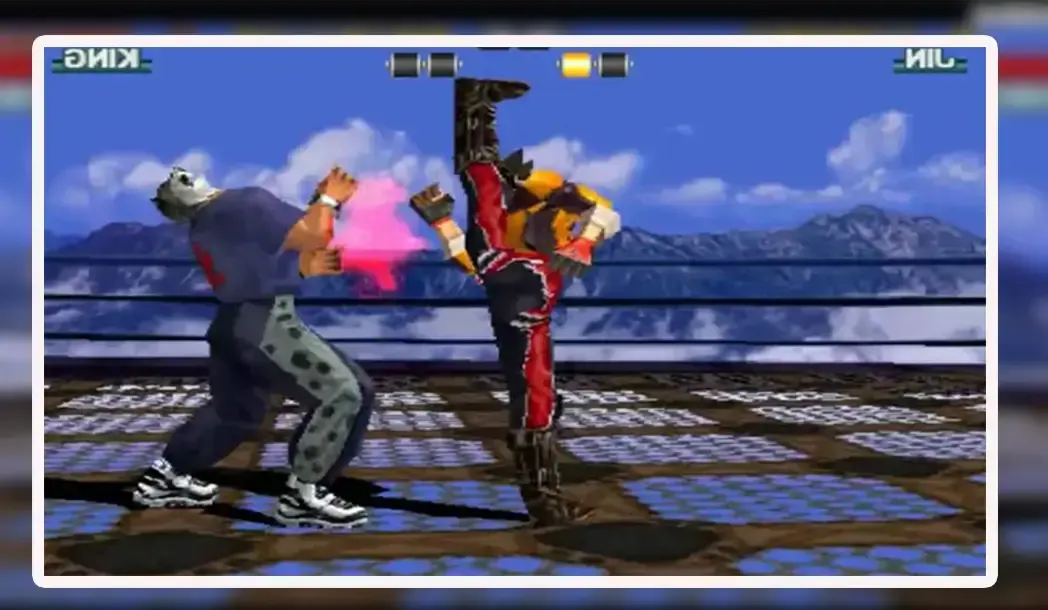
Tekken 3 arrives as a fast-paced fighting experience that balances accessible mechanics with clear visual presentation; Tekken 3 welcomes players who want immediate pick-up-and-play action as well as those who enjoy learning deeper timing and combos. The opening bouts demonstrate the title's approachable controls and polished stage environments, and the game keeps a steady mix of short matches and extended encounters to suit quick sessions or more focused practice. For players looking for a classic-sounding fighting experience with modern clarity, Tekken 3 presents a coherent package that feels both familiar and refreshingly playable.
At its core, Tekken 3 emphasizes responsive inputs, varied stage pacing, and a straightforward rule set that lets players concentrate on timing, positioning, and counterplay. Matches are designed around clear hit reactions and readable animations so you can learn through observation as well as repetition. The game supports layered difficulty so early fights remain friendly to newcomers while later stages introduce more demanding opponents and scenarios that reward studying opponent patterns.
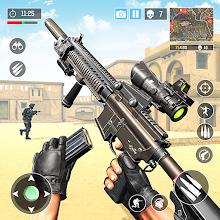
Controls in Tekken 3 are presented with accessibility in mind: simple taps and directional inputs cover basic attacks and movement, while combined inputs execute stronger moves and limited combos. The touch-friendly layout aims to reduce clutter, and commonly used actions are mapped to intuitive on-screen controls so new players can enter the action without a steep hardware learning curve. Players who prefer a different control feel can often adjust sensitivity and button spacing in the settings, making the experience more comfortable across devices.
The progression in Tekken 3 centers on mastering individual stages and increasing difficulty tiers rather than relying on complex unlock mechanics. As you advance, encounters gradually introduce harder opponents and longer matches that require strategy beyond basic attacks, such as managing distance, using defensive options, and capitalizing on openings. This progression model rewards repetition and improvement: scoring better or finishing encounters faster typically yields performance feedback that encourages refining your approach for higher challenge runs.
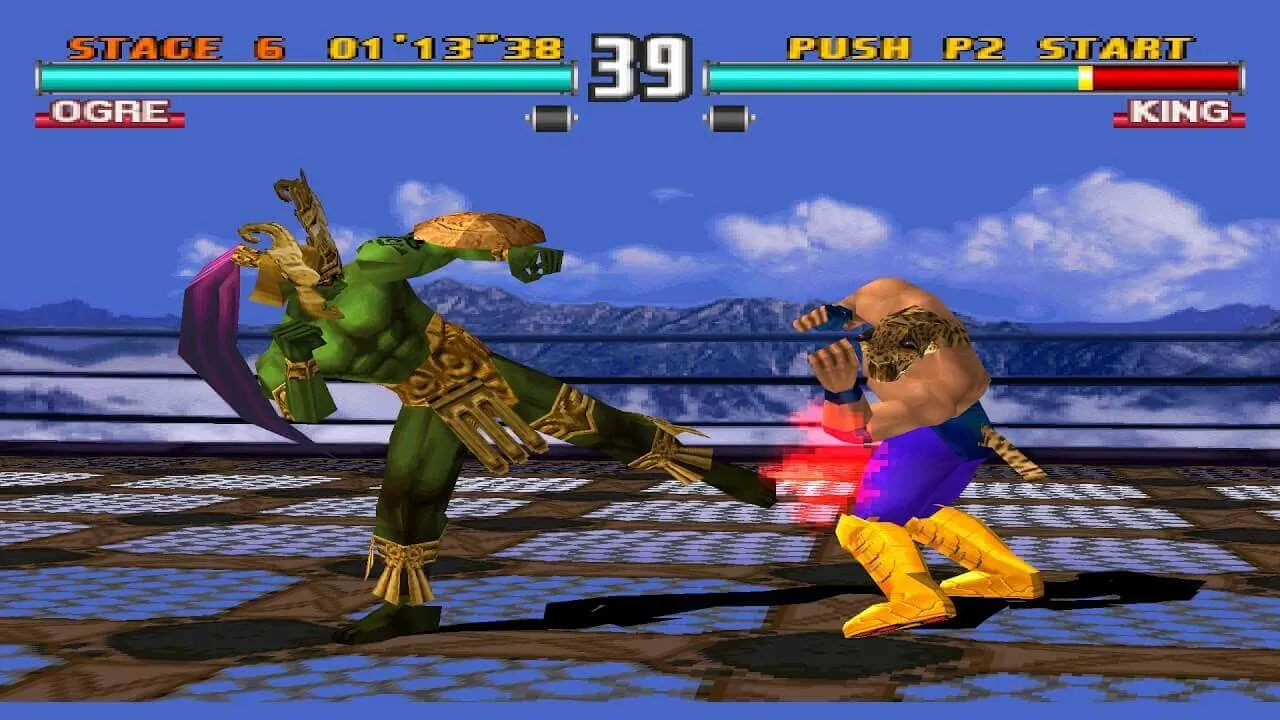
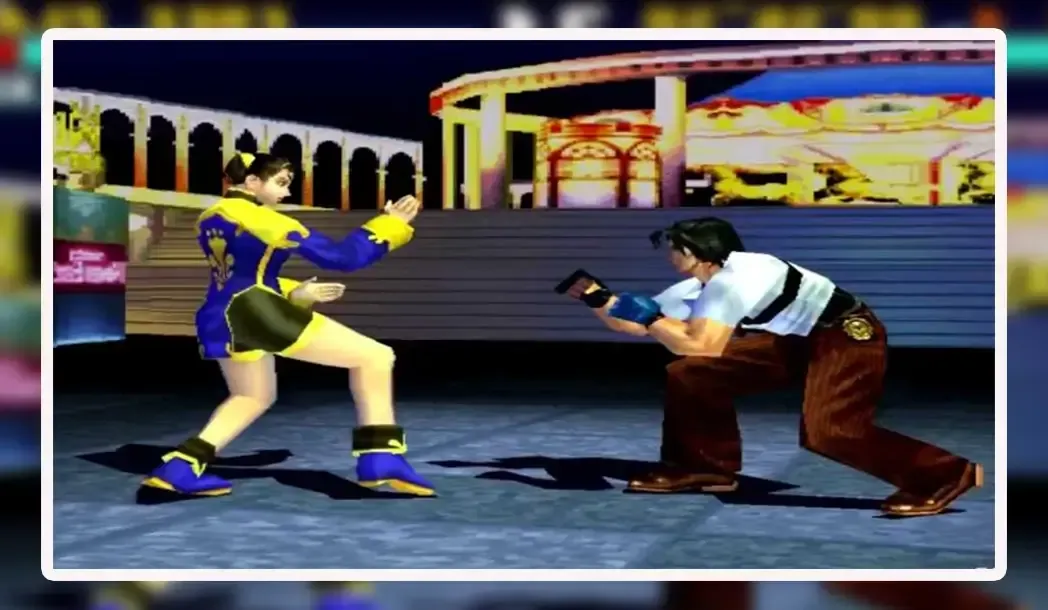
Visually, Tekken 3 favors polished, readable graphics that make each match easy to follow under pressure. Stages vary in pacing and layout, providing different sightlines and environmental elements that influence movement and engagement. The art direction focuses on clarity so hit reactions, recovery cues, and character stances are visible even on smaller screens. This clarity helps players recognize patterns and react appropriately, which is an important part of the game's learning curve.
Tekken 3 includes practical options to tailor the experience for individual players: adjustable control layouts, visual preference settings, and difficulty choices that make the game approachable across a wide audience. The interface emphasizes readable menus and straightforward options to lower the barrier for newcomers while still allowing more experienced players to fine-tune their setup. These accessibility decisions are intended to keep matches focused on skill and timing rather than menu navigation.
Replay value in Tekken 3 comes from its mix of quick bouts and deeper encounters that invite mastery: revisiting stages to shave time, improve combos, or better counter specific patterns keeps play sessions engaging over the long term. The game is designed so single-player sessions provide a satisfying loop of practice and reward, making it well-suited for offline play when you want focused training or casual fights. Between varied stage structures, layered challenges, and a clear control scheme, Tekken 3 aims to deliver steady replayability without relying on online systems or external matchmaking.