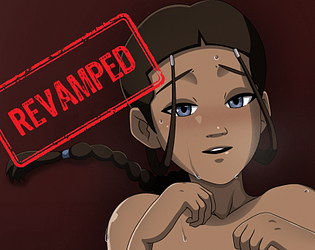

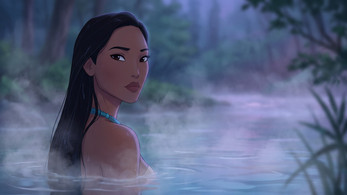
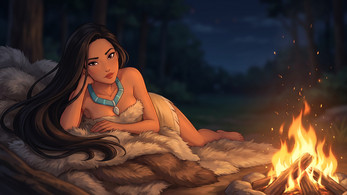
Charmed Tales: Colors of the Wind - Chapter 2 is a compact, standalone narrative chapter that revisits a familiar folktale with an intentionally adult, comedic twist, placing you in the role of Thomas as he navigates awkward, character-driven encounters on Powhatan land. Charmed Tales: Colors of the Wind - Chapter 2 blends dialogue-led interaction, handcrafted animation, and a full original soundtrack to create a short, approachable experience you can pick up and play in a single sitting or return to later. The chapter balances satirical humor with neutral, mature themes and remains non-explicit while offering moments of gentle, character-focused intimacy and timing-based gameplay.
Charmed Tales: Colors of the Wind - Chapter 2 delivers six distinct scenes that emphasize story, timing, and interpersonal chemistry rather than complex mechanics. Each scene uses expressive, frame-by-frame art and focused dialogue to build tone and character, supported by original music cues that shape pacing. You’ll meet a cast that includes a bold heroine, an opinionated willow, and a mischievous raccoon, and the chapter’s handcrafted visuals and short runtime make it easy to experience the whole story without a long time commitment.
Gameplay centers on conversational choice and rhythm. Controls are deliberately simple: tap or click to advance lines of dialogue, choose from multiple-choice responses to steer interactions, and use on-screen tempo controls when a timing sequence appears. These options work naturally with touchscreens, mice, and trackpads, and the interface keeps mechanics unobtrusive so the focus remains on character reactions and comedic timing. Interaction moments vary from purely narrative choices to light timing challenges that reward attention to beat and pacing.
Progression is scene-based: you move through six compact chapters and observe how different choices alter tone, reactions, and later lines. The structure encourages replay because alternate dialogue selections and tempo adjustments reveal new reactions, subtle variations in animation, and different musical transitions. Playthroughs remain short enough to repeat, and the chapter design emphasizes exploration of character permutations rather than grind, making multiple passes both practical and rewarding for players curious about alternate outcomes.
The visual presentation favors hand-painted assets and intentional, frame-by-frame animation that give each scene a storybook quality and support the satirical retelling. The soundtrack is woven into scene transitions and interactive beats, with a memorable vocal highlight near the chapter’s conclusion intended to leave an impression without overstatement. Visual cues and musical motifs are used to signal interactive moments, helping players sync choices with the story’s rhythm.
The chapter is structured as six self-contained scenes that can be approached in sequence or revisited for variation. Scene lengths are deliberately varied to preserve pacing: some encounters are dialogue-heavy and character-focused, while others introduce short, music-driven sequences that act as light challenges. This level structure supports both relaxed reading-style play and attentive runs that focus on timing and alternative lines, letting you customize the tempo of your experience.
Accessibility options let you tailor the experience to your needs: adjustable audio volume, captions for all spoken lines, and clear visual indicators during interactive moments are available from the settings menu. Control sensitivity and tempo settings can be adjusted where interactive beats occur so players can match the pace to their comfort. These options help ensure that the narrative and comedic content remain accessible to a wide range of players.
The chapter is self-contained and playable offline after installation, making it convenient for short sessions without a network connection. Save states are supported so the game resumes where you left off, and the simple control scheme and modest technical requirements make the chapter compatible with a broad range of Android devices. The standalone nature means newcomers can jump in without prior knowledge of the wider series.
Challenge is intentionally light and focused on timing rather than reflex-heavy gameplay: music-driven beats introduce small timing windows where pace affects reactions, and dialogue choices shape later responses from characters. These systems are designed to enhance player agency by offering meaningful variations in tone and consequence without becoming a barrier to story exploration. The result is a narrative-first experience where player decisions and tempo choices meaningfully influence character chemistry.
This chapter targets mature players who prefer character-led comedy, conversational choice, and handcrafted visuals over action-oriented gameplay. Charmed Tales: Colors of the Wind - Chapter 2 keeps navigation simple and readable, presents adult-themed humor in a neutral, non-explicit way, and closes with an open ending that hints at future installments for players who want more. The game’s short runtime, replayable branches, and accessible design make it suitable for both casual sessions and focused replays to uncover alternate reactions and lines.