
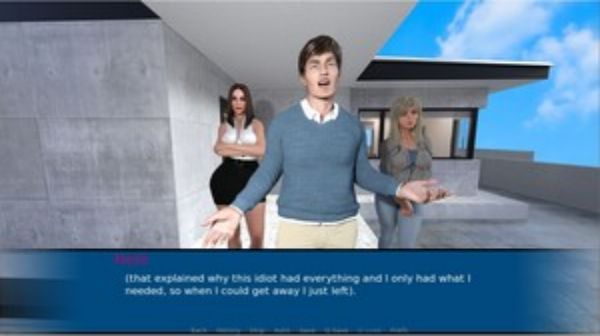

Pink House Rework places you in the middle of a gritty, personal drama where a man framed at his previous job must rebuild after losing his money, home and spouse. Pink House Rework unfolds as a narrative-driven experience that focuses on trust, betrayal and a protagonist’s difficult choices when he seeks refuge with an adoptive brother and feels compelled to reclaim what was taken from him. The game frames an emotionally charged arc about consequence and moral consequence rather than sensationalized action, inviting players to explore a tense story of rivalry, desperation and the costs of revenge.
Pink House Rework emphasizes a compact, character-led narrative with branching decision points that alter relationships and story outcomes. Players will encounter scenes that test loyalties, provoke difficult conversations and force pragmatic or ruthless responses; those choices ripple through the chapters and determine which paths remain open.
The title presents a confined cast and setting, allowing writers and designers to dig into motive and psychological fallout. Interpersonal conflict centers on the protagonist’s dynamic with his adoptive brother and the wider social circle around them, offering moments of negotiation, confrontation and reflection rather than gratuitous content.
Gameplay in Pink House Rework is primarily choice-driven. Players advance through a sequence of scenes and chapters, making dialogue selections and tactical decisions that change the tone and access to later events. The game balances scripted narrative beats with decision nodes that update relationship states, unlock information, and open alternative encounters; this structure supports careful reading of characters and the consequences of player actions.
The controls are intentionally simple and accessible: tap to progress through text and select dialogue options, swipe to navigate menus and timeline segments, and use contextual prompts for investigative or situational choices. The interface is designed for comfortable one-handed play, with clear prompts and a readable text font. A save and resume system lets players pick up mid-chapter, and a scene recap option helps users revisit past choices to understand branching paths.
Progression in Pink House Rework is chapter-based, with each chapter presenting a self-contained set of events that contribute to an overarching narrative. Relationship meters and decision logs track who you’ve aligned with and what information you’ve uncovered, influencing access to future scenes. Multiple endings are available based on accumulated choices, so progression rewards thoughtful play and repeated exploration.
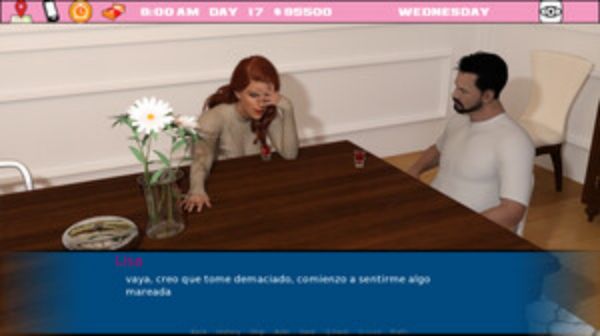
The game favors an atmospheric, moody visual style that supports its mature themes: subdued color palettes, cinematic framing and expressive character portraits set the tone for tense interpersonal drama. Level design is scene-focused rather than large-scale exploration; each environment is crafted to highlight dialogue and character interactions, with occasional small puzzles or choice-based sequences that reinforce story beats.
While Pink House Rework does not focus on character cosmetic systems, it offers meaningful narrative customization through choices that shape character attitudes, alliances and outcomes. Replay value comes from experimenting with alternate strategies of persuasion, confrontation or restraint to see how different sequences resolve, encouraging several playthroughs to unlock all endings and hidden scenes.
The game supports offline play so the full single-player narrative can be experienced without a persistent internet connection. Accessibility options include adjustable text size, contrast settings and a paced text mode for readers who prefer slower presentation. Difficulty or tone toggles let players emphasize a more contemplative experience or a tougher, consequence-heavy route.
Challenge in Pink House Rework comes from managing relationships, timing sensitive choices and interpreting limited information during critical moments. The game is aimed at players who appreciate mature, character-focused storytelling and moral ambiguity rather than action-oriented mechanics. Content is presented for mature audiences in a neutral, narrative context and avoids explicit material.
Pink House Rework is a focused narrative title that rewards thoughtful decisions, attentive reading of character motives and multiple playthroughs to uncover its full story. With accessible controls, chapter-based progression and an emphasis on atmosphere and consequences, it delivers a compact but impactful experience for players interested in dark, interpersonal drama and the long shadow of betrayal.