
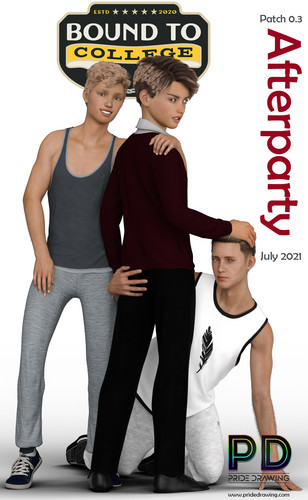
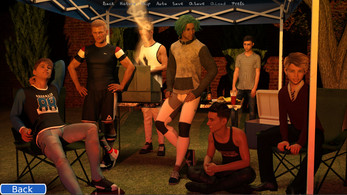
Bound to College is a story-driven visual novel that places you in the shoes of a second-year student balancing coursework, social life and personal choices. Bound to College opens with an introductory arc that introduces core characters such as Ned, Vincent, Julian and the emerging Ron, and sets up a system where your decisions influence grades, reputation and relationship pathways. The presentation is intended for mature players; the description notes that Bound to College includes adult themes and explicit content that some users may find intense, so reader discretion is advised.
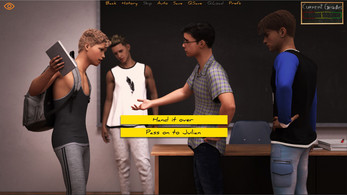
Play sessions progress through a branching narrative that responds to your choices at key moments. Dialogue options, timed decisions and event-based choices shape how characters respond to you and which story branches become available. The game blends social simulation with visual novel structure: you allocate time between studying, socializing and pursuing personal relationships, and those allocations affect your academic standing, campus reputation and which endings you can reach.
The control scheme is designed for touch devices with straightforward tap-to-advance dialogue, selectable response buttons and a clear on-screen menu for saving, loading and adjusting preferences. An auto-play mode and a skip-unseen or skip-read option help speed through routes you have replayed, while a visible relationship and grade tracker gives a quick summary of current progress without interrupting the story flow.
Bound to College uses several interlocking progression systems: a grade mechanic that reflects study choices, reputation meters that capture peer perceptions, and affection or friendship meters that determine access to romance and friendship scenes. Academic performance is not just cosmetic — poor results can trigger probation or expulsion risks that change available chapters, while strong performance can unlock exclusive narrative branches. Progress is saved with multiple save slots and an autosave feature so you can experiment with different approaches.
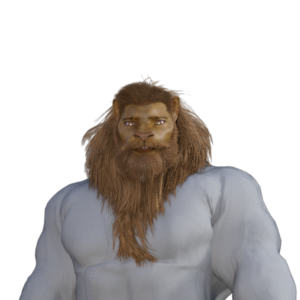
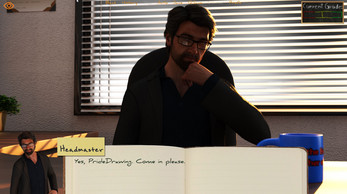
The visual approach combines character-focused scenes with detailed 3D-influenced art and expressive portraits for key interactions. Scenes are staged to emphasize character reactions and mood, and a collectible gallery stores unlocked images and character poses that you discover along different routes. Background art reflects campus spaces such as lecture halls, dorms, cafes and weekend locations, helping convey the rhythm of college life.
Content is organized into chapters or in-game weeks that present a compact set of choices and events, allowing comfortable play sessions while preserving narrative momentum. Each chapter typically contains study-related decisions, social encounters and at least one branching moment that has meaningful downstream consequences. The chapter design makes it easy to pause and return later without losing context.
While the game focuses on narrative choices rather than deep avatar editing, players can shape the protagonist through dialogue tone, study priorities and route decisions. These choices influence how other characters perceive you and which scenes are unlocked. Save/load features and multiple endings provide room to explore different personalities and strategies without long-term penalties to experimentation.
Replayability is a central design goal: multiple romance paths, friendship outcomes and academic endings invite players to replay with different priorities. Challenge arises from time management and risk-reward decisions — balancing study time against social opportunities can lead to dramatically different outcomes, and unlocking gallery content requires pursuing alternate approaches and making different relationship choices.
The interface includes adjustable text speed and options to enable or disable auto-advance, making the experience adaptable to reader preferences. The game is playable offline once installed, letting you continue story progress without a persistent connection. Basic accessibility considerations such as legible fonts and clear contrast have been applied to make reading extended scenes comfortable on mobile screens.
Developed as a solo hobby project by an independent creator with 3D art and programming experience, Bound to College is released for free with ongoing updates shaped by community feedback. The developer maintains an open feedback channel to prioritize improvements and regularly uploads incremental builds that add story depth, polish art assets and expand character routes.
Current builds let players begin steering relationships with Ned, Vincent and Julian while Ron is being expanded in ongoing updates. The gallery already contains a selection of secret images unlocked through specific routes, with new scenes and characters planned in future releases. Expect continued iteration focused on narrative branching, visual polish and expanded progression options as the developer refines the project.