
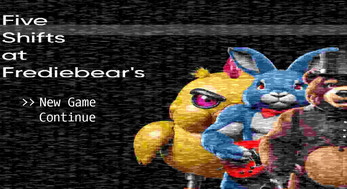
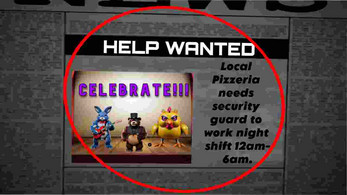
Five Shifts at Frediebear's is an early fan-made horror experience created with FNAF Maker 1.6.6 that places you on short, tense night shifts in a small, atmospheric location. This release is an unfinished, test-only build from a solo creator; it is intended as a compact playtest that showcases an initial approach to pacing, scare design, and visual tone. Players interested in fangame development, experimental horror mechanics, or the raw feel of an early build may find it useful to explore and to report bugs or impressions back to the author.
The project emphasizes moody atmosphere and checkpoint-style progression across multiple shifts rather than a fully polished campaign. Five Shifts at Frediebear's presents a FNAF-inspired night-shift premise where tension is built through limited resources, intermittent information, and unpredictable animatronic behavior. The build demonstrates what can be produced with FNAF Maker 1.6.6 in a focused, bite-sized package and is deliberately compact to encourage short play sessions and iterative testing.
Gameplay follows a classic night-guard pattern adapted to an experimental fangame setting: players monitor a set of surveillance views, manage scarce defensive measures, and react to audio and visual cues as the shifts progress. The mechanics are intentionally simple to keep each session short and to expose system behaviors during testing. Expect an emphasis on timing, observation, and choosing when to use limited protections; mistakes and unexpected interactions are part of the test experience and can reveal edge cases the developer may address in later updates.
Controls are streamlined for quick sessions and mirror point-and-click or tap-based interactions common to night-guard horror titles. Input focuses on selecting camera feeds, toggling lights or doors, and using audio cues or sound baits where available. The test build includes basic settings for adjusting sound volume and visual contrast to help players tailor the experience to their device and hearing preferences. Because this is an early release, advanced remapping and extended accessibility features are limited, but the developer welcomes suggestions for improvements that could be added in future updates.
Progression is structured around individual shifts that gradually increase in difficulty, testing players’ reaction and management skills rather than offering complex leveling systems. Each completed shift serves as a checkpoint, with later shifts introducing more aggressive behaviors or fewer available resources. The challenge system is designed to expose how AI patterns and resource constraints interact; as an unfinished build, it intentionally surfaces difficult scenarios so testers can report balance issues and stability concerns.
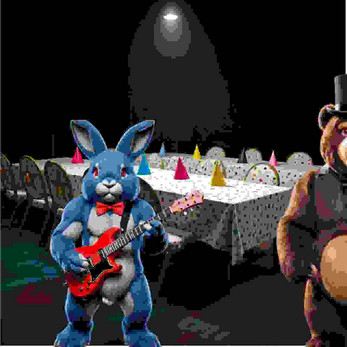
The visual presentation in this build favors a modest, analog horror aesthetic with intentionally raw textures and intermittent visual anomalies that reflect its work-in-progress nature. Level structure is compact: a small number of rooms and camera angles that allow quick navigation and focused tension. The design choices prioritize clear sightlines for monitoring and abrupt transitions to create jump-scare moments, while also leaving room for future content expansion in later iterations.
Customization options are conservative in this experimental release; players can tweak audio and display settings to suit their preferences and devices. There are no extensive character or mechanic customizations in this test build, which helps keep the project manageable for early-stage development. The author intends to consider additional user-driven settings in future builds based on community feedback.
Replay value comes from experimenting with different defensive choices, learning animatronic movement patterns, and trying to survive each shift with fewer resources. Because the build is small and designed for short sittings, players can run multiple attempts quickly, observing how small changes in strategy affect outcomes. The user experience is deliberately raw: occasional glitches and rough edges are expected and are part of the feedback loop between players and the solo developer.
This build is playable offline and does not require an internet connection to run, making it convenient for testing on the go. Stability varies because the game is an early prototype; crashes, visual artifacts, and inconsistent behavior can occur. Testers should be prepared to send logs or descriptions of issues if they want to help the developer prioritize fixes.
Five Shifts at Frediebear's was created by a single, first-time fangame developer who explicitly labels this release as an unfinished, testing-focused build. It was produced with FNAF Maker 1.6.6 and the developer plans to iterate based on community feedback. Play this version expecting experimental content, and consider providing constructive bug reports and usability notes to support future refinements.