




TimeLust puts players in the shoes of Luke, a relaxed university student who discovers a time-reset ability and uses it to revisit moments from his first year while exploring multiple relationship paths and mature themes. This narrative-driven visual novel centers on player choice, experimentation, and repeated playthroughs: decisions have lasting consequences, and scenes can be revisited to refine strategy and discover new outcomes. The description below explains how TimeLust structures its gameplay, what players can expect in terms of progression and controls, and how the developer supports replayability and accessibility.
TimeLust combines a scene-based time-reset mechanic with branching narrative design. Players can rewind to key scenes rather than restarting the entire story, allowing targeted experimentation with dialogue options and choices that influence relationship meters and long-term character arcs. Each romantic route contains distinct personalities and situations that unfold differently depending on decisions and accumulated relationship progress. Multiple endings are available, with new scenes and possibilities gradually unlocked across runs as players learn from earlier attempts, encouraging exploration without forcing repetitive grinding.
Interaction in TimeLust is built around simple touch controls and an intuitive interface designed for mobile play. Choices are selected by tapping dialogue options, and a dedicated rewind control opens a scene history that lets you jump back to previously encountered decision points. The game includes a backlog to review past lines, adjustable text speed, and a skip option for previously read text to speed up subsequent runs. Manual save slots and an autosave feature let players preserve progress before important decisions, while straightforward menus keep navigation between scenes and story chapters clear and predictable.
Progress through TimeLust is driven by relationship meters, scene flags, and branching checkpoints rather than character leveling. As you make choices, affinity with different characters shifts, unlocking private scenes or changing later dialogue. Replaying a day with new information can open alternative routes and lead to different endings; the game records which events you have experienced and uses that history to introduce fresh options in later playthroughs. This system rewards careful observation and experimentation: small conversational differences often yield new results, and the rewind-and-refine loop is central to uncovering the full narrative.
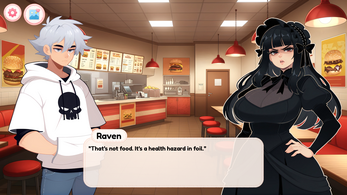
The presentation leans on 2D character portraits and illustrated backgrounds that establish mood and setting across campus locations and private scenes. Chapters are organized around days and key events, with clearly signposted decision points that branch the story into distinct routes. Visual cues and subtle UI animations help show when a choice will significantly alter a relationship path. While the art emphasizes character expressions and scene composition, the interface remains uncluttered to keep focus on story and player decisions.
TimeLust offers a range of settings to tailor the experience for different players. Adjustable text size and dialogue speed, content visibility toggles to hide or warn about mature scenes, and a flexible save system make the game approachable for a wide audience. The game is single-player and can be played offline once installed, so progress does not require a persistent internet connection. Controls are designed for touch screens, but the clear visual prompts and simplified menus make it accessible for players new to narrative games as well as veterans who prefer rapid replay.
Challenges in TimeLust arise from understanding cause and effect rather than reflex-based mechanics. The primary difficulty is strategic: identifying which choices lead to desirable outcomes and learning to use the rewind feature efficiently. Players who enjoy methodical problem-solving and narrative experimentation will find satisfaction in discovering hidden scenes and alternative endings. TimeLust does include mature content and thematic material intended for adults, and the game provides content warnings and optional filters to help players manage what they encounter.
TimeLust was created by independent developer UnknownWhiteRaven, who maintains a creator support page and engages with the community for feedback and updates. The developer continues to refine balance, tweak branching logic where appropriate, and respond to quality-of-life requests from players. If you enjoy branching storytelling with a focus on character-driven choices and a built-in rewind mechanic, TimeLust offers a compact, replay-focused experience that emphasizes learning from mistakes and unlocking new narrative possibilities across multiple runs.