

College Brawls 2 drops players into frenetic, close-quarters fighting across a chaotic college campus, blending short rounds with deeper boss encounters and a simple progression loop that rewards practice and exploration. College Brawls 2 opens with two playable protagonists — Ken, who leads a five-stage campaign, and the newly added Anko, who brings a three-stage arc — and it supports inviting friends for co-op or versus matches as well as a VR mode for a more immersive experience.
The game centers on fast brawling and character growth: you master combos, manage health and KI pickups, face distinct boss patterns, and use earned rewards to upgrade characters and weapons. A VR option changes camera and input responsiveness to increase presence, while friend-invite functionality lets you drop into matches with others for cooperative or competitive play. The latest update highlights Anko with three stages and four bosses and adds additional animations and images to improve presentation.
Combat in College Brawls 2 focuses on rhythm and positioning rather than complicated menus. Basic attacks chain into combos, consumable KI powers enable special moves, and resource pickups scattered through levels restore HP or boost abilities. Boss encounters mix pattern recognition with tactical choices: some bosses punish predictable aggression, while others require timed dodges and targeted counterattacks. Short stage lengths make each round approachable, and the campaign structure lets players practice specific mechanics between tougher fights.
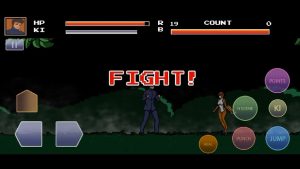
Controls are designed for touch and simple controllers: light and heavy attack inputs chain into combos, with a dedicated dodge/parry gesture and a special move button that uses KI. Control sensitivity and input timing are exposed in options so players can tailor responsiveness. The game also includes accessibility-minded choices such as adjustable difficulty tiers, readable font sizes for UI text, and VR comfort toggles to reduce motion sickness during immersive sessions.
Progression is straightforward and transparent. Earned rewards from stages and bosses can be spent to upgrade character stats, unlock new combo moves, and improve weapons. Upgrades have clear impacts on playstyle—some enhance defensive options, others increase damage or KI efficiency—allowing players to emphasize speed, power, or survivability. These choices make each replay feel meaningful without overwhelming players who prefer to focus on action rather than deep RPG systems.
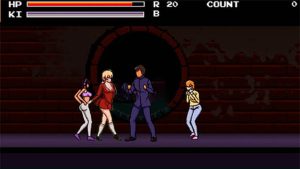
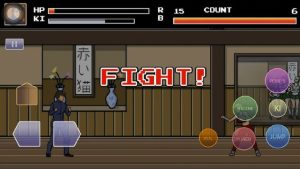
The game presents a stylized campus with varied locations that serve as compact arenas: courtyards, dorm lobbies, rooftops, and lecture halls each host different enemy types and hazards. Animations are used to communicate attack telegraphs and boss tells, so visual clarity matters when reacting to threats. New content in recent updates adds extra animations and images for key scenes, improving readability and aesthetic variety across Ken’s and Anko’s stages.
Inviting friends into matches lets you experience College Brawls 2 cooperatively or in versus mode, with flexible drop-in play that keeps rounds short. VR mode reconfigures camera and HUD elements to work comfortably in headset view and emphasizes spatial awareness for close-quarters fights. Both modes retain the same core mechanics, so skills learned in single-player campaigns transfer directly to multiplayer and VR sessions.
Short stage design and distinct boss encounters encourage repeated runs to refine combos and upgrade build choices. The mixture of single-player campaigns and friend-invite matches creates different ways to replay content: players can practice alone to beat a boss pattern, then bring a friend to tackle the same challenge cooperatively. Single-player content is playable offline, allowing users to progress through Ken’s and Anko’s campaigns without a constant network connection.
Some players may find boss difficulty spikes demanding; that design encourages careful resource management and learning enemy behaviours rather than relying solely on upgrades. The UI communicates remaining HP and KI clearly, and short stage lengths make retrying less frustrating. Overall, the title balances accessible pick-up play with moments that reward attention and practice, making it a good fit for casual sessions and focused runs alike.
The current release expands character options by adding Anko with three stages and four bosses, refines animations across Ken’s five-stage campaign, and includes additional imagery to better showcase combat moves and stage variety. Small balance adjustments address known difficulty spikes to smooth progression while retaining challenge for players seeking tougher encounters.