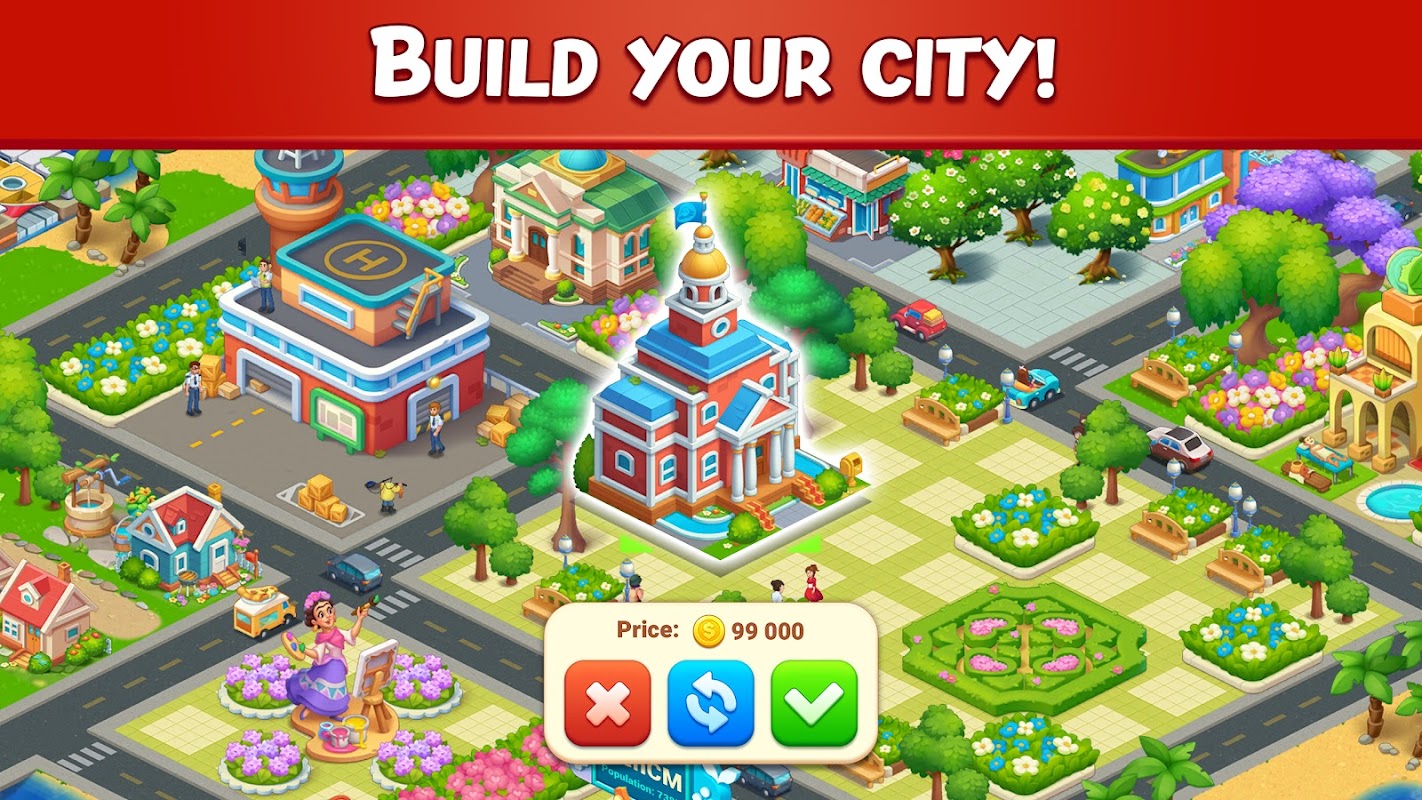
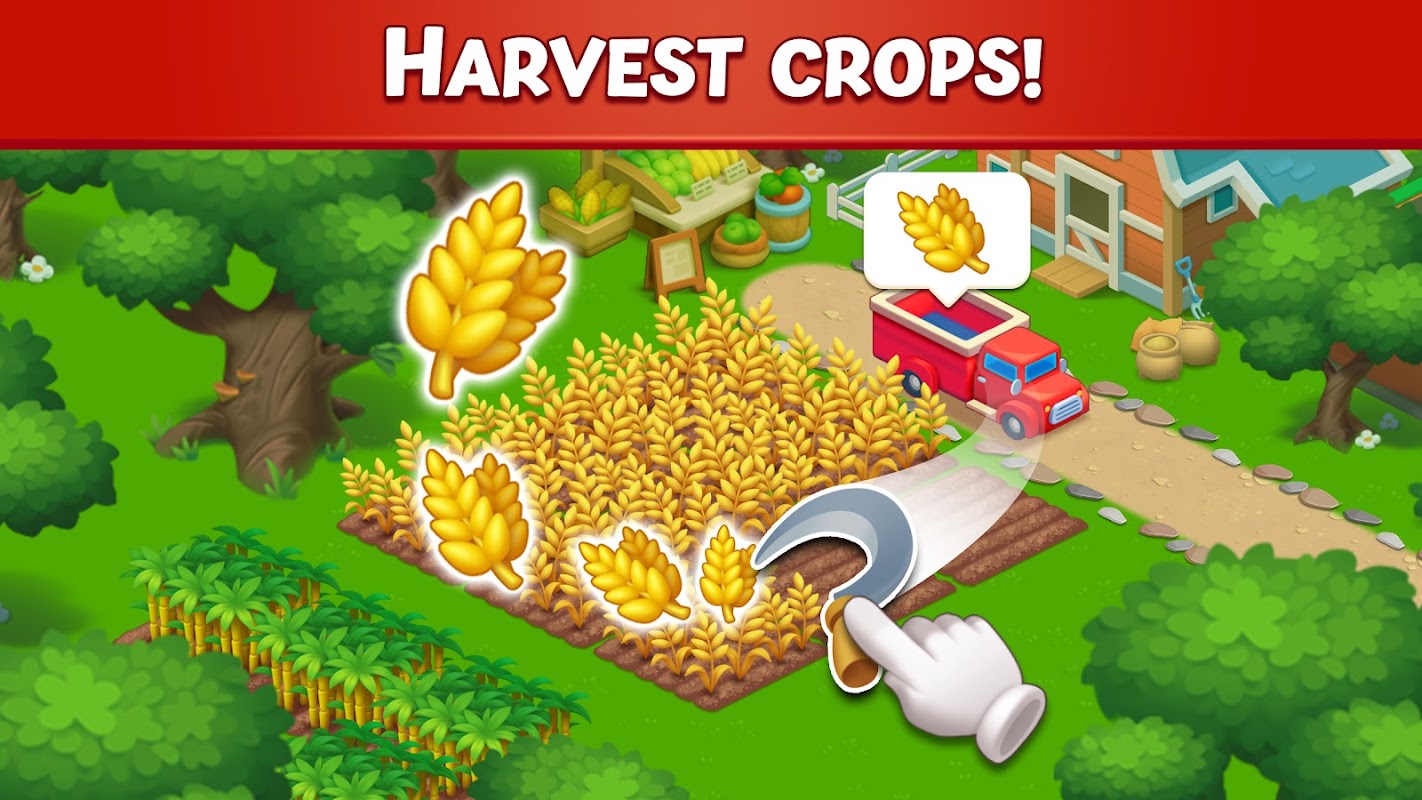
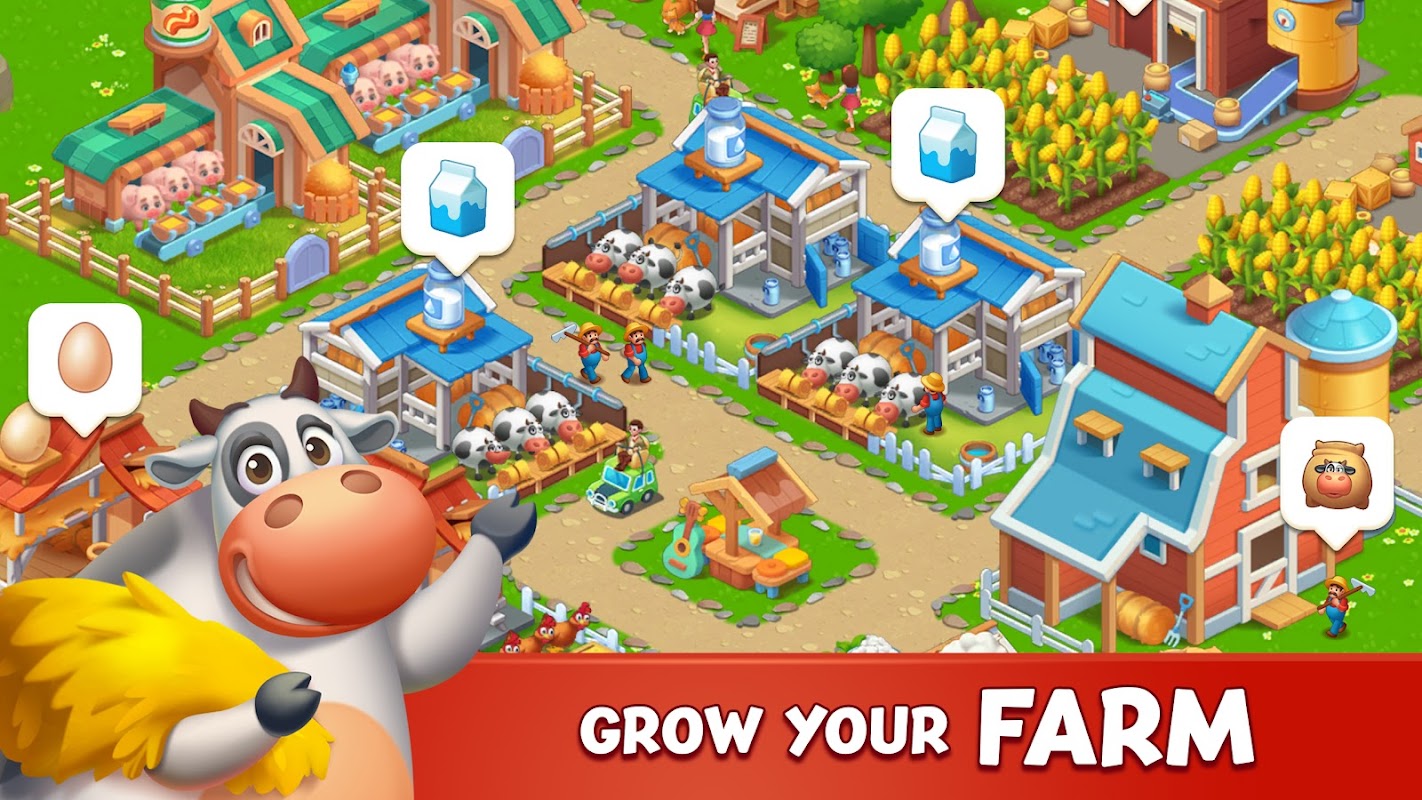
Farm City : Farming & City Building places you in charge of a modest homestead with the ambition to grow it into a bustling agricultural town. The game blends farm management and town planning in a relaxed 2D cartoon environment, where crop cycles, production chains and town services interact to create steady goals and hands-on mechanics. New players will find an approachable tutorial and a light storyline that explains each system, while returning players can fine-tune layouts and production to improve efficiency and aesthetic appeal.
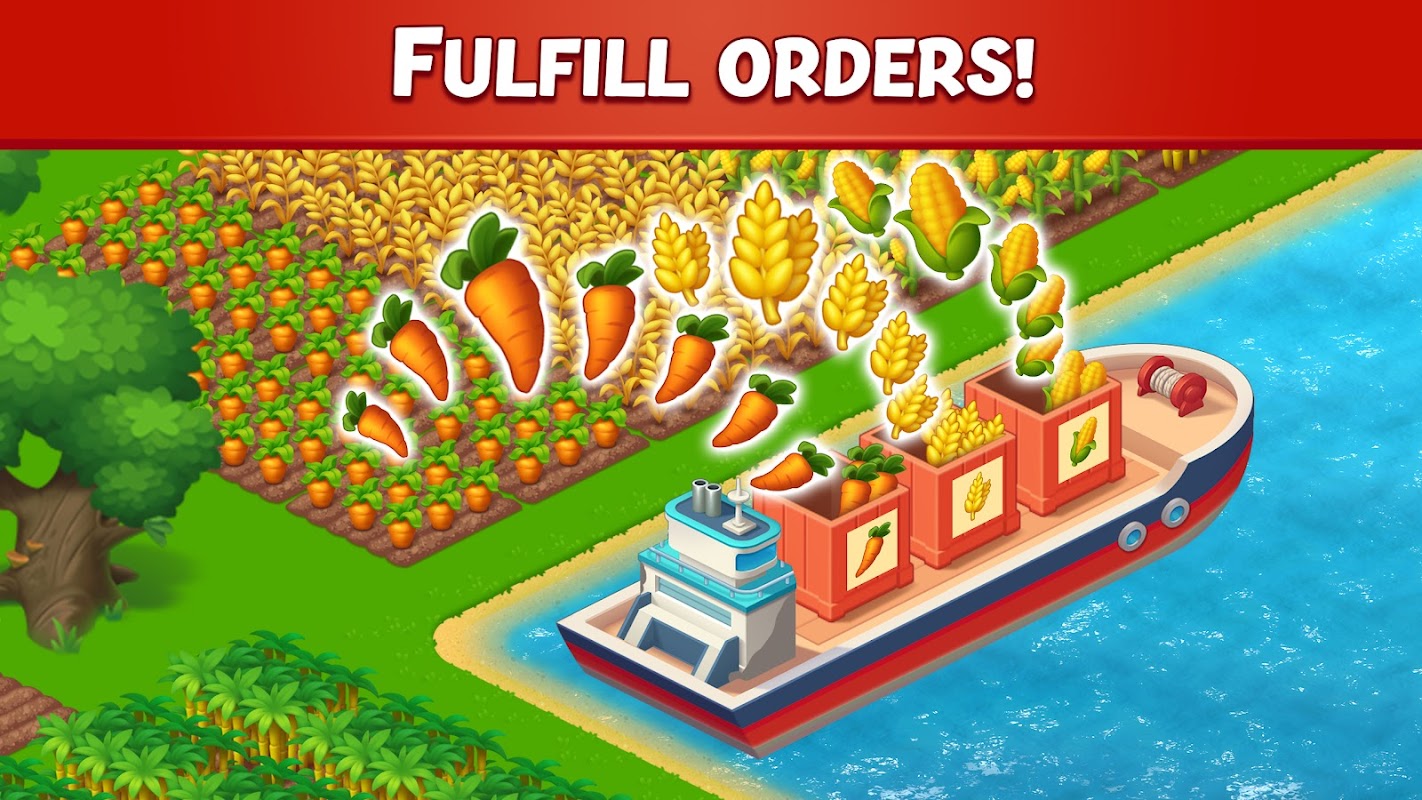
As you play Farm City : Farming & City Building you’ll encounter a variety of systems that work together: sowing and harvesting seasonal crops, processing raw produce into goods, and arranging buildings to support services like markets and workshops. The game offers drag-and-drop placement for buildings, a resource economy that rewards planning, and events that introduce limited-time crops or mini-challenges. Simple trading mechanics let you exchange goods with neighbors and balance supply and demand without requiring constant online interaction.
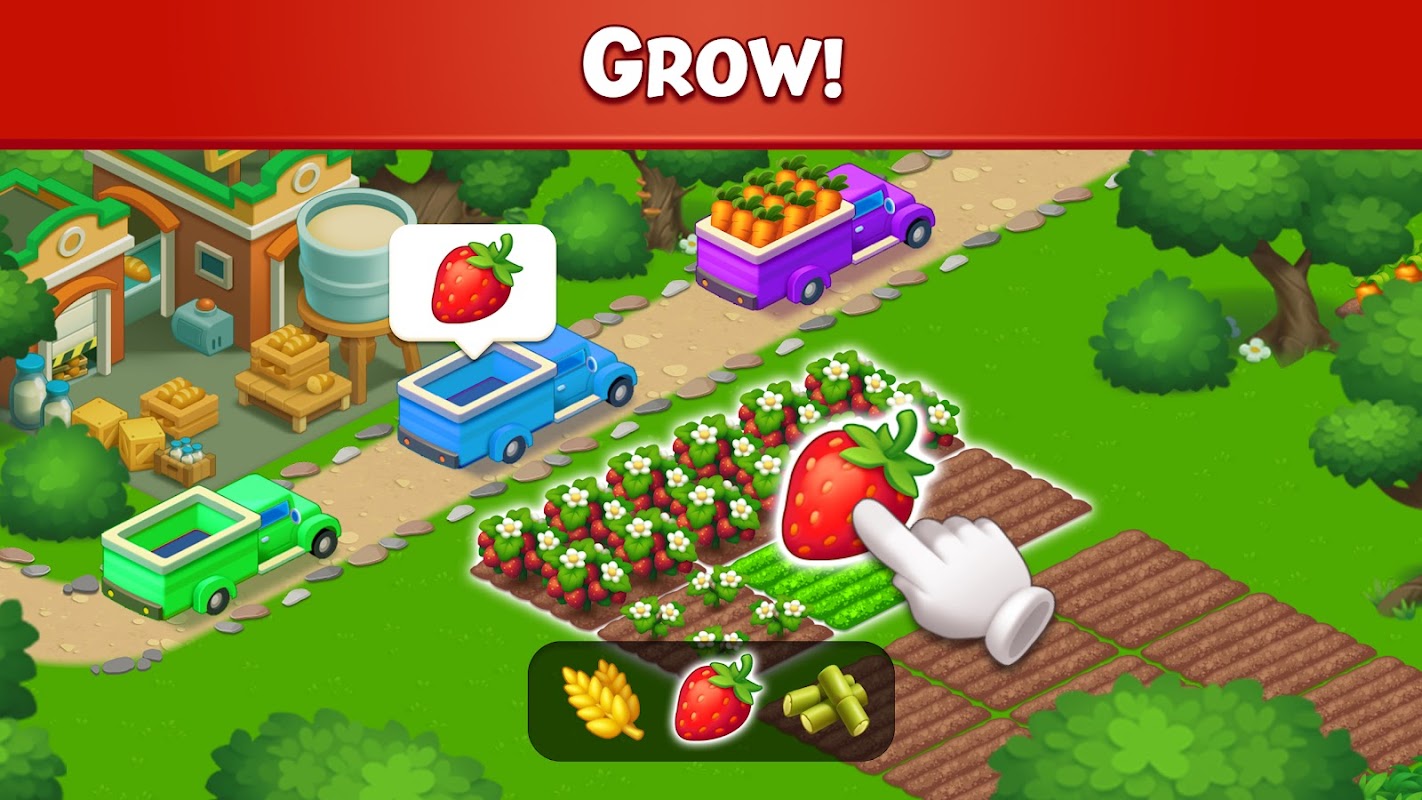
The core loop centers on planting, collecting and routing resources through production lines. Controls are optimized for touch devices: tap to select fields or buildings, drag to place structures, and use contextual menus to upgrade or assign production tasks. Timers are visible on plots and processing buildings so you can prioritize work at a glance. For players who enjoy micromanagement, the interface supports batch actions like harvesting multiple adjacent fields and queuing production items for efficient throughput.
Progression balances short-term tasks with long-term city development. Completing storyline missions unlocks new building types and production recipes, while upgrading workshops increases capacity and unlocks deeper crafting tiers. Challenge systems include seasonal events, limited-time objectives and optional underground exploration where you can discover minerals used to improve specialized facilities. Resource gating is deliberate: some upgrades require repeated gathering, which encourages planning and investment rather than instant advancement.
The visual approach is intentionally clear and inviting, with bright 2D graphics that emphasize readability and personality rather than photorealism. Buildings and crops are distinct so it’s easy to monitor activity at a glance, and decorative options let you personalize both farm plots and communal town squares. Layout customization affects efficiency as well as aesthetics; careful placement of workshops and storage reduces transit time and improves production cycles, giving players a satisfying design puzzle to solve.
Farm City : Farming & City Building supports light cooperative interactions: you can visit neighboring farms, offer or accept help, and trade goods to fill production gaps. These social features enhance progression when neighbors are active, but core gameplay remains fully available offline so players can manage crops and complete many tasks without a network connection. The design keeps cooperative benefits optional rather than mandatory, allowing solo play at a comfortable pace.
Accessibility choices focus on clear feedback and adjustable pacing. Timers and production queues are presented clearly, and simple automation options reduce repetitive tapping for long-running tasks. Replay value comes from experimenting with different production chains, changing town layouts, and taking part in rotating events and mini-games that introduce new mechanics or seasonal resources. The combination of casual management and layered optimization encourages both relaxed sessions and deeper strategic play.
Expect periods of repeated resource gathering as you expand and specialize production; this is part of the intended progression curve and rewards thoughtful planning. Multiplayer benefits depend on active neighbors, so those who prefer solo play may progress differently than cooperative players. Managing multiple production lines can become involved, but the game includes tutorials and incremental upgrades to help you scale complexity at your own pace.