
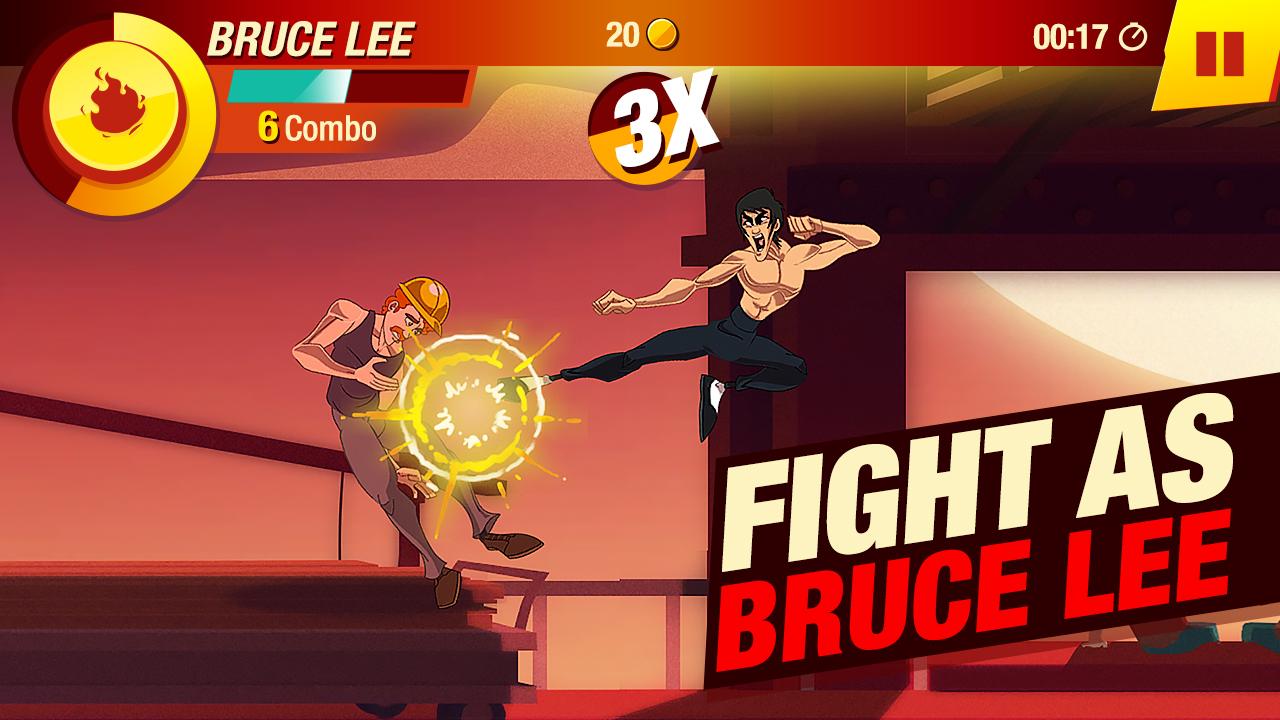
Bruce Lee: Enter The Game places the player in the shoes of the legendary martial artist for a focused 2D action-adventure beat 'em up experience that emphasizes quick touchscreen combat and arcade-style pacing. In the first moments you encounter responsive tap-to-move controls, swipe-based strikes and dedicated dodge and charged moves that are easy to pick up but offer depth for timing and combo execution. The introduction keeps gameplay tightly paced across short missions and boss fights, making Bruce Lee: Enter The Game a natural choice for fans of retro action on mobile.
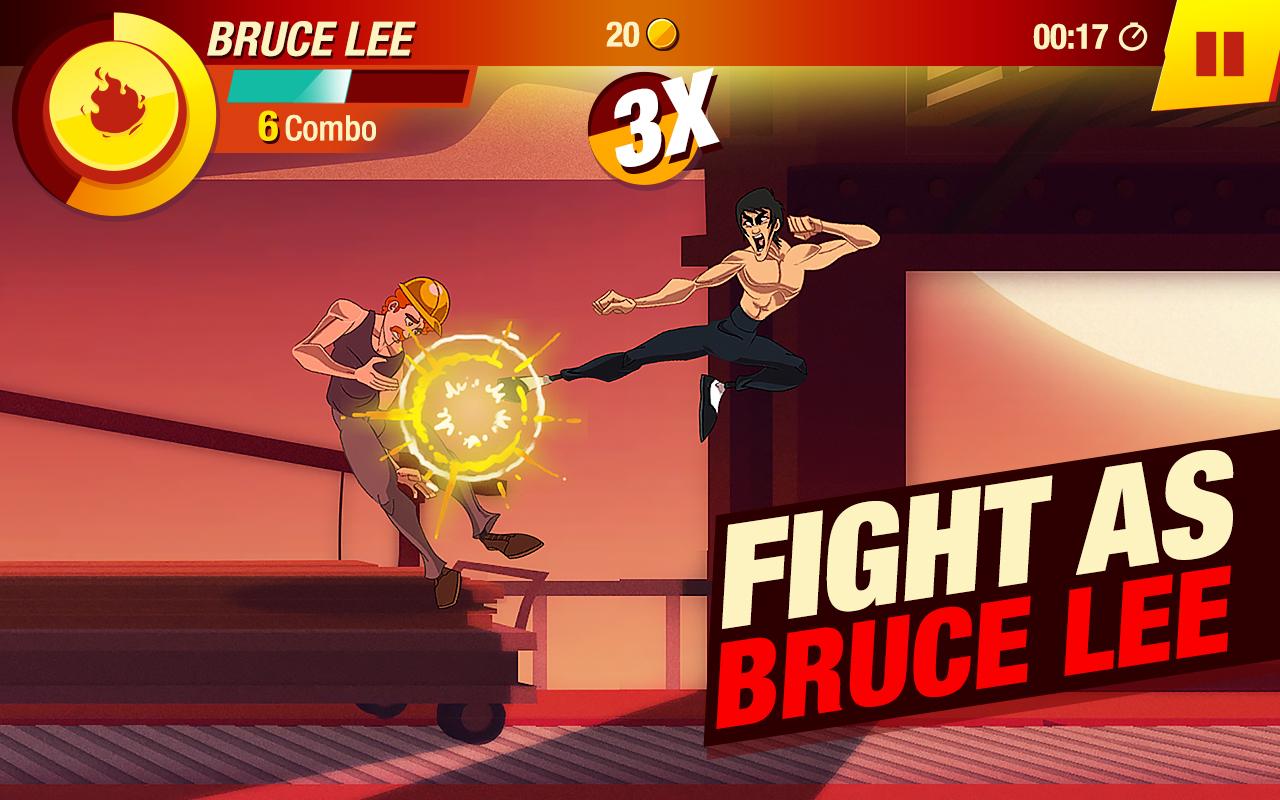
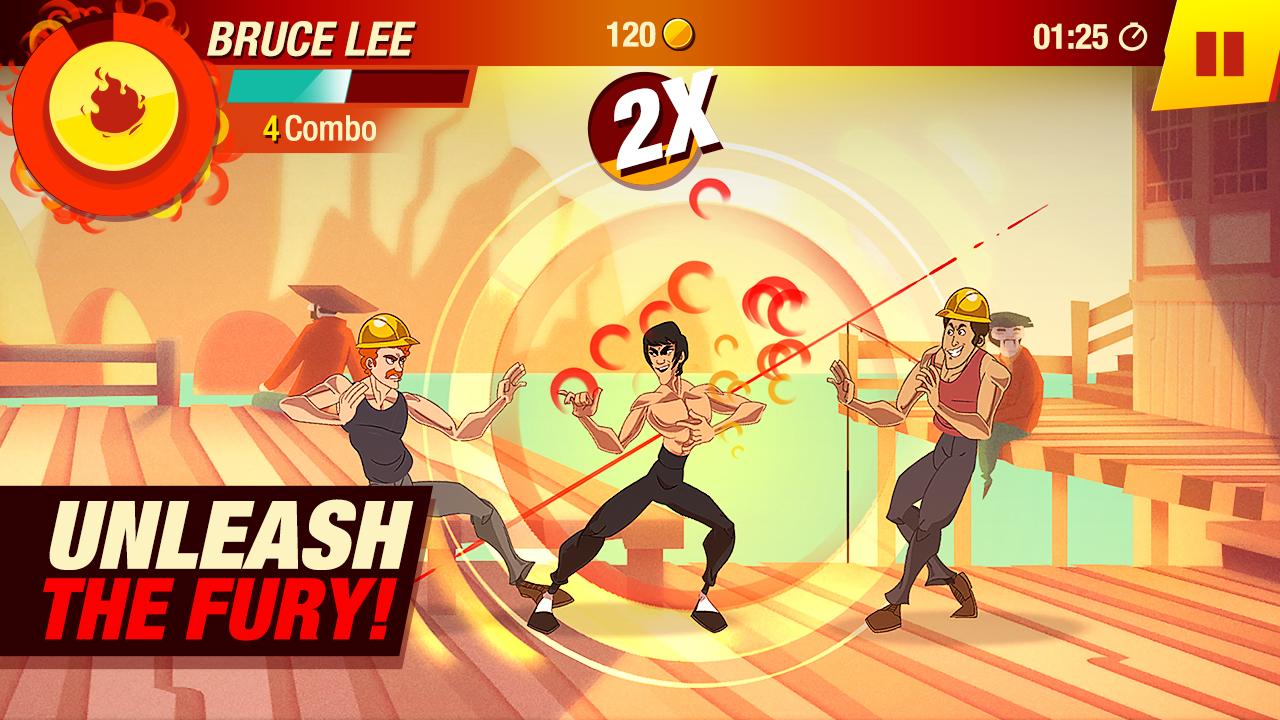
The core combat system in Bruce Lee: Enter The Game relies on intuitive touch gestures: taps to reposition, directional swipes to chain light and heavy attacks, and holds for charged techniques. Dodges are executed with a quick swipe away from enemies, while special moves can be triggered after charging or by using in-game items. Combat encounters are designed around reading enemy patterns and exploiting openings rather than relying on button-mashing, which makes timing and positioning important as difficulty ramps up.
Controls have been tuned for mobile play with simple inputs that translate well to smaller screens. Button layouts are minimal so new players can learn the basics in minutes, and more experienced players can refine timing to pull off combos and stun chains. Accessibility options are sensible: touch sensitivity and control size suggestions are recommended in the settings to accommodate a wide range of devices and hand sizes, helping players maintain comfort during extended sessions.
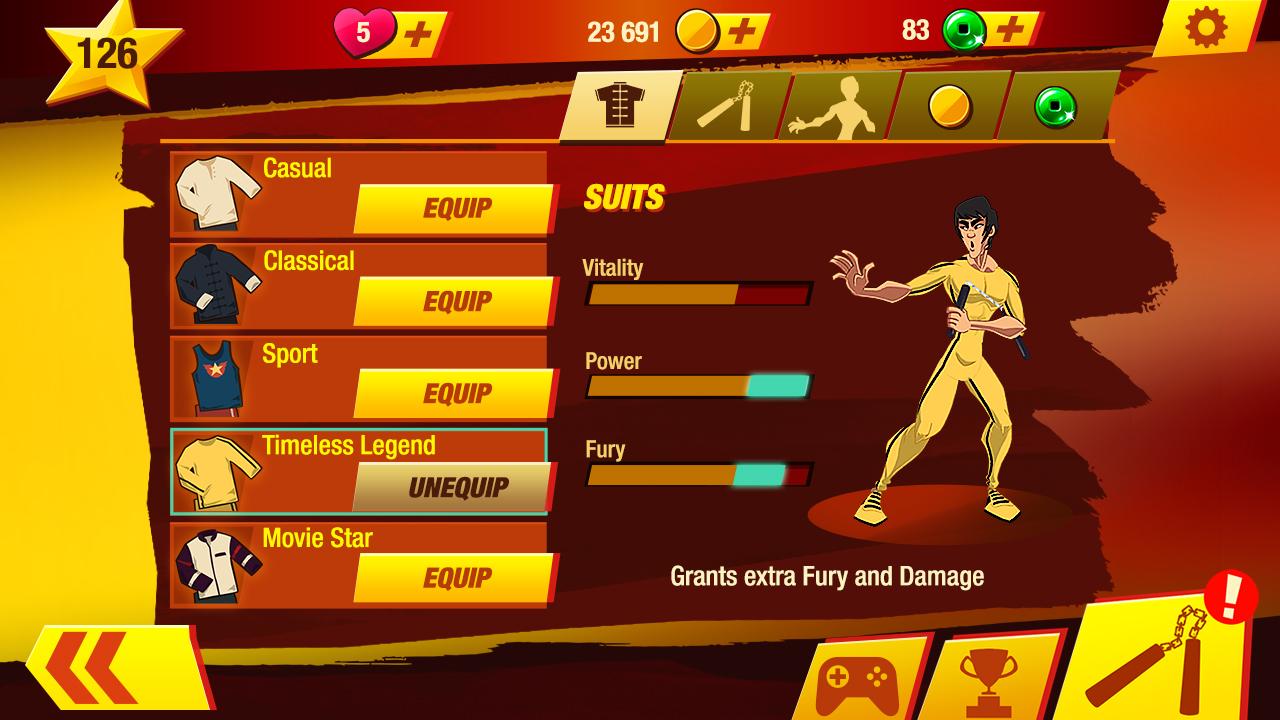
Between levels you earn currency and experience to upgrade a selection of skills that affect damage, defense, and move cooldowns. Items and unlockable uniforms provide modest stat changes or cosmetic variety, and certain weapons—like special nunchucks—unlock as part of campaign milestones. The progression system is straightforward: upgrades feel meaningful without forcing long grinding, and the ability to tailor loadouts to preferred playstyles increases the incentive to revisit earlier stages with new builds.
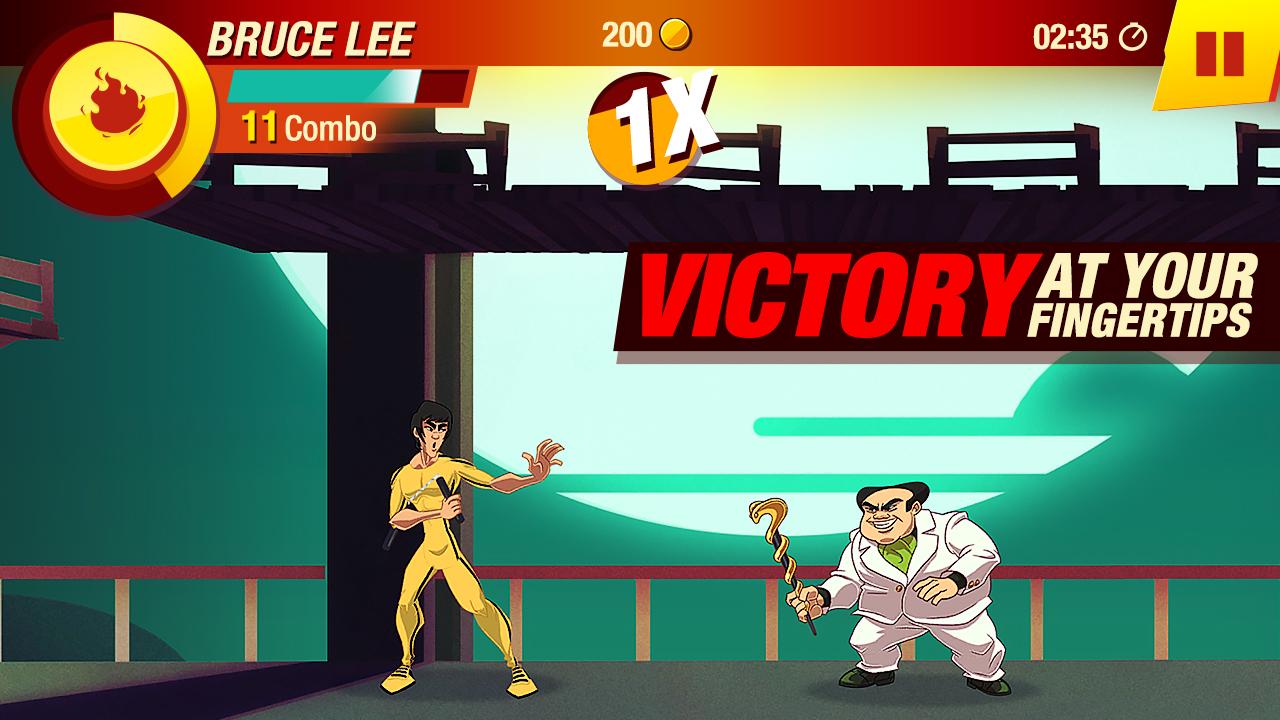
The campaign spans over 40 stages that include urban alleys, dojo interiors and boss arenas, each stage offering compact objectives and short mission variants such as protecting a mentor character or surviving a timed assault. Boss encounters are designed with distinct attack patterns that encourage learning and adaptation rather than relying on sheer power. Difficulty is reasonably paced, with later levels introducing faster enemy types and layered attack sequences that test reflexes and strategy.
Visually the game leans into retro 2D cartoon aesthetics and bold, readable character silhouettes that make enemy telegraphs easy to read on a mobile screen. Backgrounds are stylized and colorful, evoking classic arcade cabinets without overwhelming the foreground action. Sound design complements the visual approach with punchy impact effects and short musical cues that emphasize momentum during combat, all contributing to a cohesive arcade feel.
Replayability comes from a mix of progression, unlockable equipment and the compact nature of stages that encourages repeat attempts to shave time or perfect a run. Short missions and optional objectives add secondary goals beyond reaching the level end, and collectible uniforms or weapons provide reasons to revisit earlier stages once new abilities are obtained. The single-player design keeps play sessions self-contained and suitable for offline play anytime.
The game is optimized for steady performance on a wide range of devices and supports offline single-player play so you can enjoy the campaign without a network connection. Frame rates remain consistent during most encounters, and load times between short stages are minimized to preserve arcade pacing. These choices make Bruce Lee: Enter The Game practical for quick sessions during commutes or longer play periods at home.
Players who enjoy timing-based action will appreciate the emphasis on learning enemy patterns and refining controls. Early advice is to focus on mastering dodge timing and conserving charged moves for boss windows, while experimenting with different unlockable weapons to discover combinations that suit your approach. If enemy patterns feel repetitive, revisiting levels with upgraded skills often reveals new tactical options and extends the game's longevity.