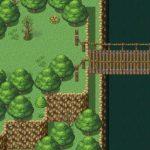





Never Trust Reality is a psychological puzzle-adventure game that blends surreal visuals with logic-driven challenges. Players navigate shifting environments, piece together fragmented narratives, and solve puzzles that change form as you interact, delivering an unpredictable mix of exploration and brain-teasing mechanics.
At its core, Never Trust Reality plays like a narrative-driven puzzle title where perception is a gameplay mechanic. The game places you in scenarios that look familiar at first glance but twist rules and physics to keep the player guessing. Expectations are routinely subverted so progress depends as much on observation and interpretation as it does on raw problem solving.
Levels are designed around mutable rules: objects can behave differently depending on context, and solutions often require changing the environment rather than using a single tool. Puzzle types include pattern recognition, object-arrangement, timing windows, and meta-puzzles that connect scenes. The interface emphasizes direct interaction — move, rotate, combine — while occasional hints use environmental storytelling rather than explicit tutorials.
There are several interlocking systems that define the challenge in Never Trust Reality. A dynamic state engine changes properties of items and terrain based on player actions. A memory system tracks discovered clues and makes some puzzles accessible only after prerequisite observations. The narrative module stitches loosely connected vignettes into a coherent arc, letting the player fill in blanks gradually.
Rather than focusing on many playable characters, the game centers on a single protagonist whose understanding of the world deepens as you solve puzzles. NPCs and environmental echoes reveal bits of backstory; progression unlocks new areas that introduce advanced mechanics. Level difficulty ramps smoothly, encouraging experimentation without abrupt spikes that would frustrate most players.
The visual design mixes minimal interface elements with richly detailed foregrounds, creating contrast that reinforces the game’s unreliable reality theme. Animations are subtle but purposeful, often hinting at hidden mechanics. Sound design plays a significant role — ambient cues and musical changes signal shifts in rule sets or upcoming challenges, helping players anticipate transformations.
Never Trust Reality includes adjustable difficulty settings and optional hint systems to support varied play styles. Control sensitivity and text sizing can be modified in the settings menu. While the core experience rewards exploration, accessibility options ensure that players who prefer a more guided approach can still enjoy the main narrative and puzzles.
These habits reduce repeat trial-and-error and turn apparent randomness into a solvable system.
The game performs reliably on mid-range Android hardware thanks to optimized asset streaming and lightweight particle effects. Frame pacing stays consistent during complex scenes, and battery usage is reasonable for extended sessions. A reduced graphics mode is provided for older devices, preserving gameplay mechanics while lowering visual fidelity.
Never Trust Reality rewards curiosity. Puzzles are inventive and layered, and the narrative encourages replay to catch subtleties missed on a first run. The feeling of uncovering a hidden rule or making a surprising connection offers steady satisfaction that keeps players engaged beyond initial completion.
Installation is straightforward from the store: download, accept permissions, and complete a brief intro sequence that introduces basic interactions. Early levels act as a sandbox to build confidence before more intricate systems are introduced. Expect a 30–60 minute learning curve to grasp the game’s core twist mechanics.
Final note: Approach Never Trust Reality with an experimental mindset and patience. The design rewards the observant player and turns uncertainty into a central source of enjoyment rather than frustration.