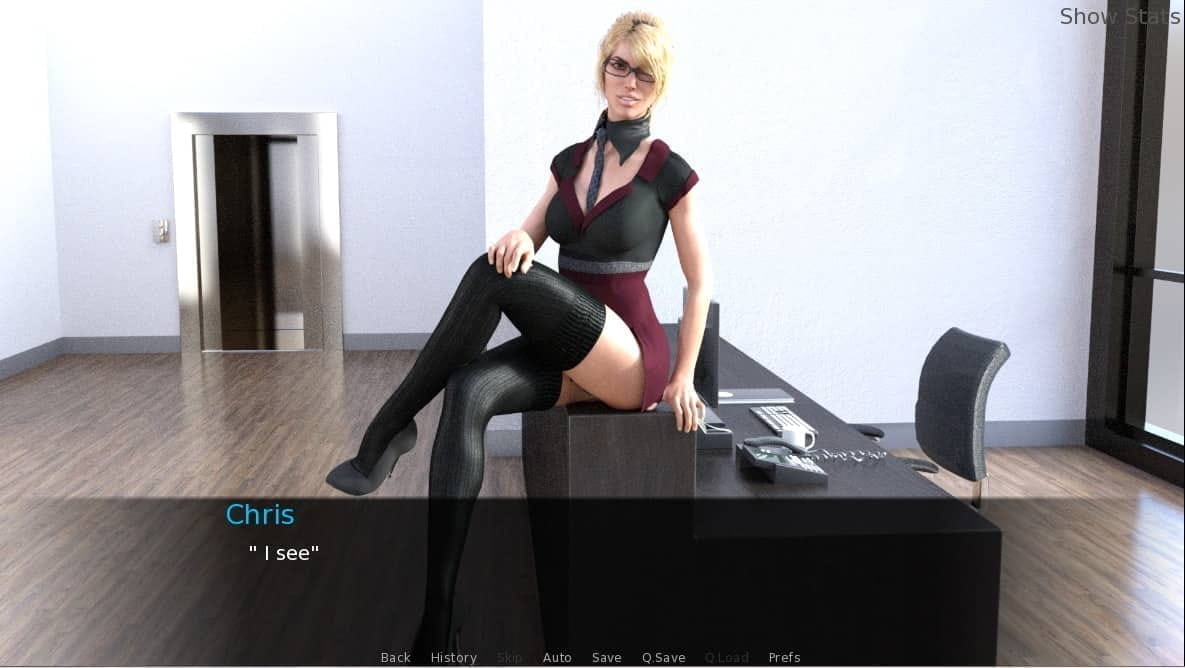
Dreaming of Dana places you in the role of a privileged heir who returns to work in his family firm and must navigate boredom, responsibility, and the complicated history that shaped his life. Dreaming of Dana opens with a slow-burn narrative that focuses on character interactions and workplace dynamics rather than action, inviting players to explore choices that affect career trajectory, personal reputation, and emotional growth.
The game centers on family dynamics and professional tension: the protagonist's sister, Dana, is a central figure whose presence forces difficult conversations and a re-examination of long-standing issues. Rather than presenting romantic relationships within the family, the story treats sibling ties as emotional and narrative catalysts. Outside the family circle, the narrative introduces a varied cast of colleagues and acquaintances with whom the player can build professional alliances, friendships, and adult romantic relationships—all portrayed in a mature, character-driven manner. The writing emphasizes consequences, moral ambiguity, and slow character development.
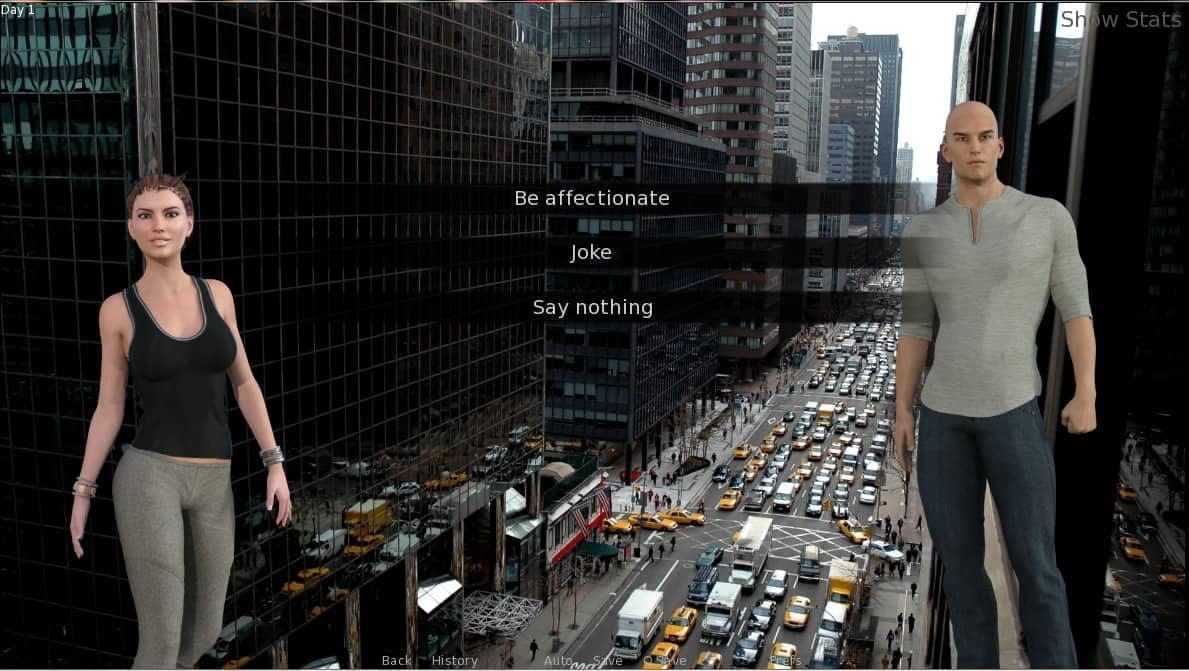
Dreaming of Dana is built around choice-driven storytelling. Gameplay primarily consists of branching dialogue trees, scene selections, and decision points that change how NPCs perceive the protagonist and which story branches become available. Controls are optimized for touch devices: tap to advance text, swipe to review recent scenes, and long-press to view contextual information about characters or past choices. An intuitive save/load system allows quick checkpoints between scenes, and an auto-play option helps players experience long dialogue sequences hands-free. Text speed, skip unread text, and a backlog of previous lines give players control over pacing.
Progression in Dreaming of Dana is narrative-first. Choices influence a set of implicit meters—professional reputation, trust with specific characters, and emotional state—that in turn unlock new assignments, scenes, and relationship paths. Chapters are structured episodically: each chapter resolves several workplace and personal beats and then opens up new opportunities based on prior decisions. Multiple endings reflect different balances between career success, personal reconciliation, and the development of relationships with non-family characters, giving the title significant replay value for players who want to explore alternate outcomes and hidden scenes.
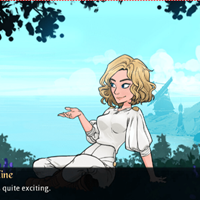
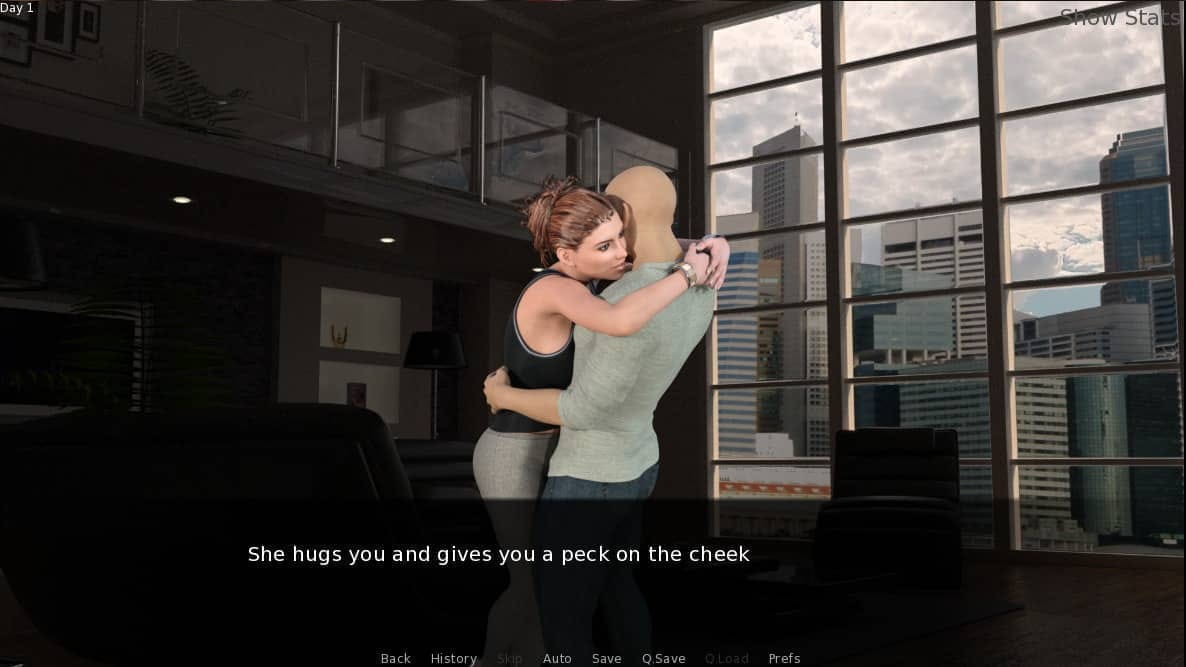
The visual presentation favors detailed character illustrations and atmospheric backgrounds that reflect the office, corporate events, and private moments. Scene transitions use cinematic fades and dialogue overlays to emphasize mood. A subdued soundtrack and ambient effects underscore tension and introspective scenes without overwhelming the writing. UI elements are clean and readable, with attention to contrast and legibility for extended reading sessions.
While the game does not focus on complex mechanics, it offers several ways to tailor the experience. Players can adjust text size and background opacity, choose auto-play timing, and enable a compact UI for smaller screens. The interface is designed for one-handed play on phones and responsive on tablets. Save slots and chapter bookmarks make it easy to return to specific decision points, and contextual hints help new players understand how choices affect long-term outcomes.
Dreaming of Dana supports offline play after the initial download, allowing the full narrative to be enjoyed without a persistent network connection. Accessibility options include adjustable font sizes, color contrast settings, and an option to simplify dialogue choices for players who prefer fewer branching options. The game aims to perform smoothly on a range of devices and handles low-bandwidth situations gracefully.
The game presents challenges through interpersonal dilemmas, career decisions, and the consequences of misjudged actions rather than through combat or timed mechanics. Players will weigh short-term gains against long-term reputation, manage workplace responsibilities, and decide how transparent to be about personal history. The tone is mature and reflective: difficult themes and adult situations are explored in a non-explicit, narrative-focused way suitable for an audience looking for story-driven drama.
Dreaming of Dana is intended for adults due to mature themes and complex interpersonal content; explicit sexual descriptions are not part of the presentation and family relationships are framed non-romantically to focus on emotional conflict and reconciliation. The game suits players who appreciate branching stories, strong character work, and slow-burn drama rather than fast-paced gameplay or action-oriented systems.