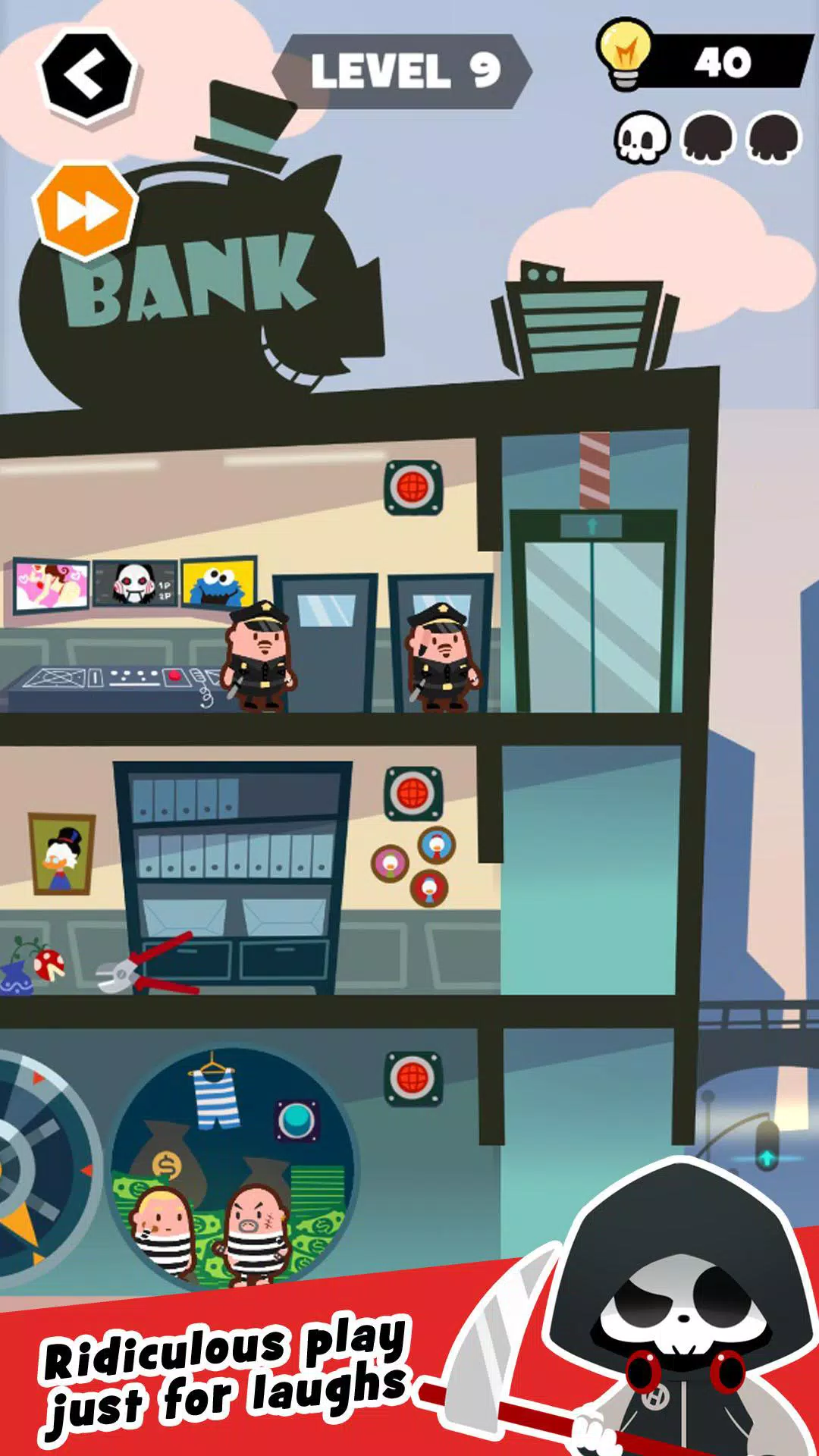
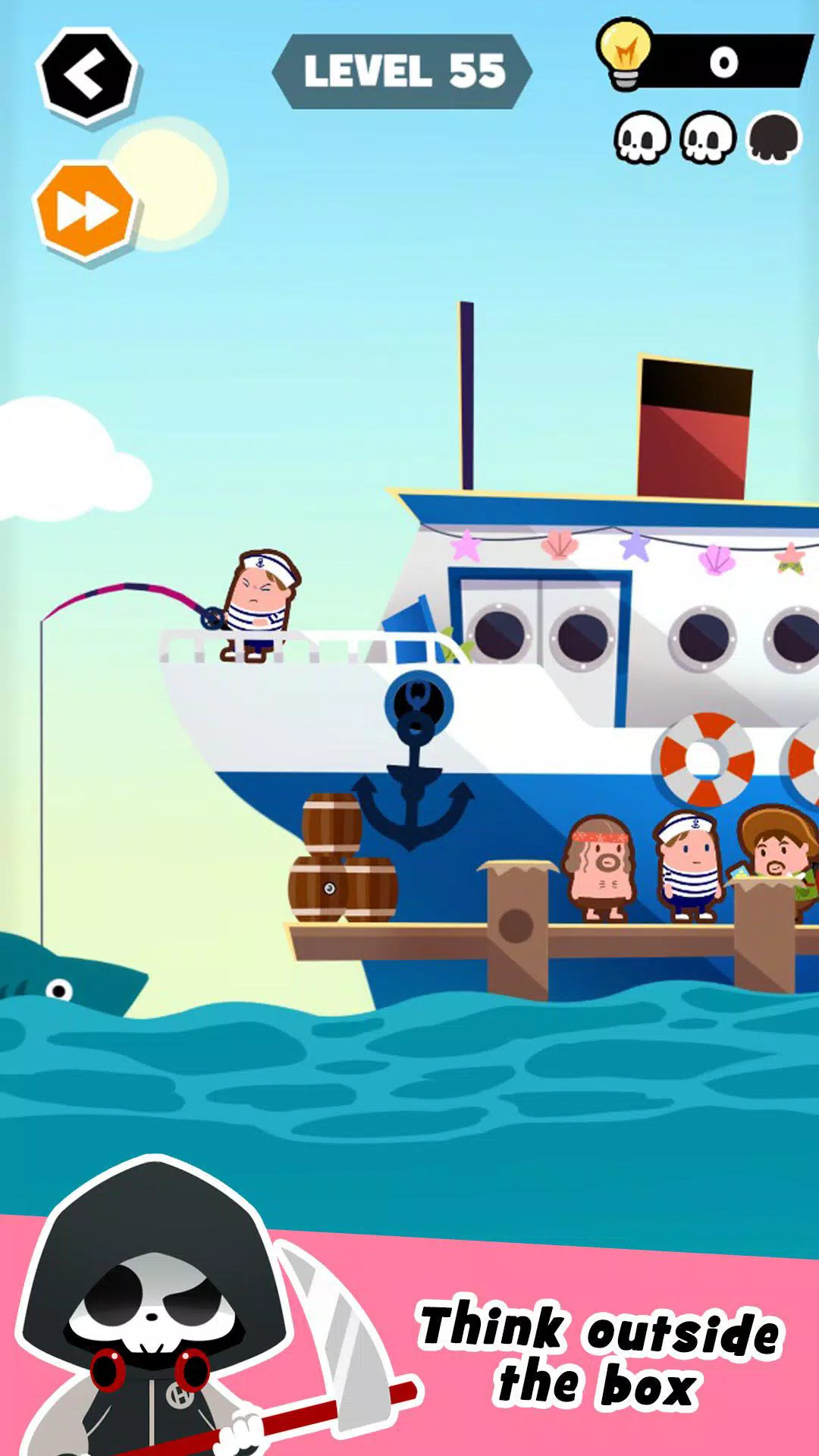

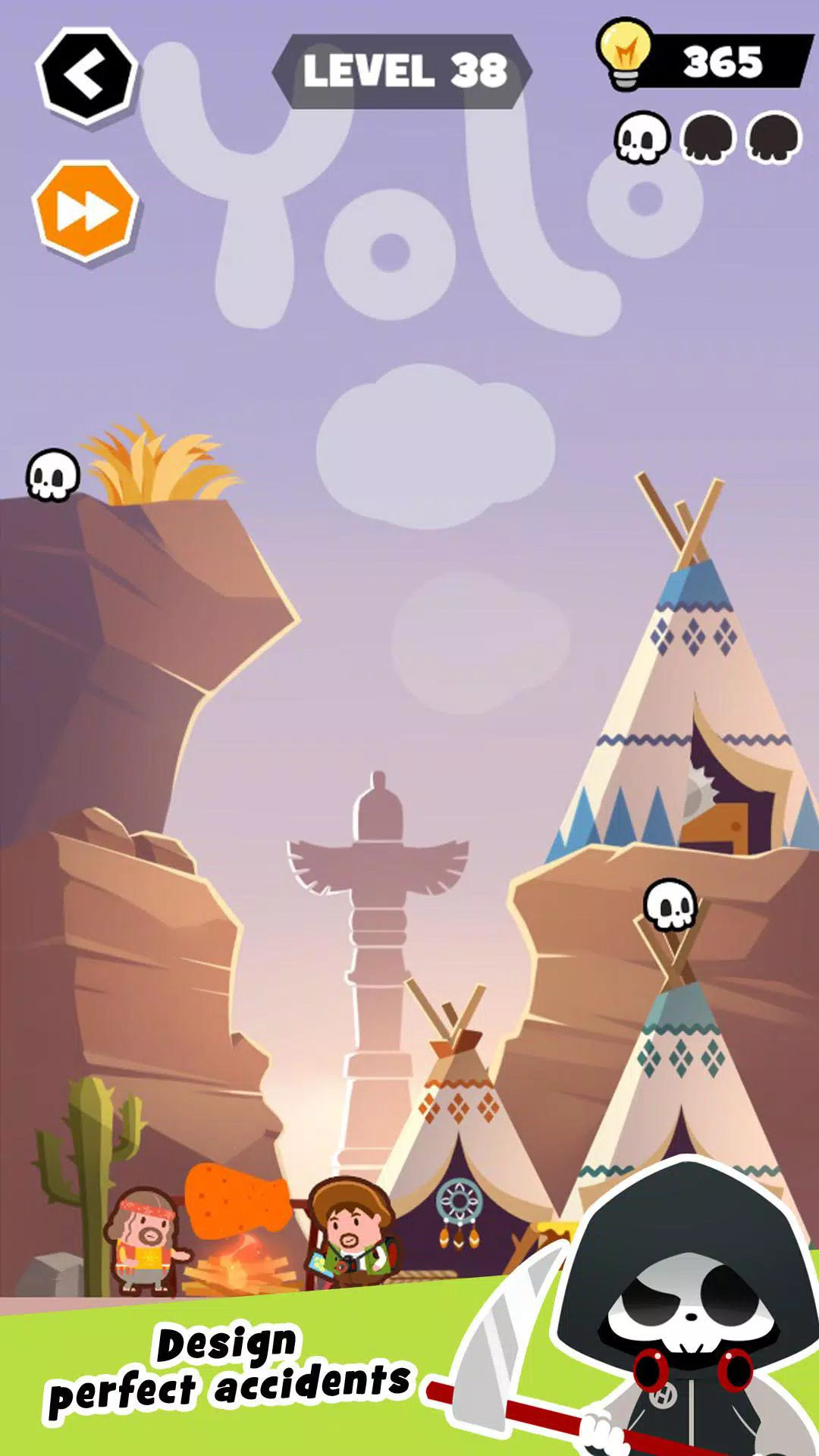
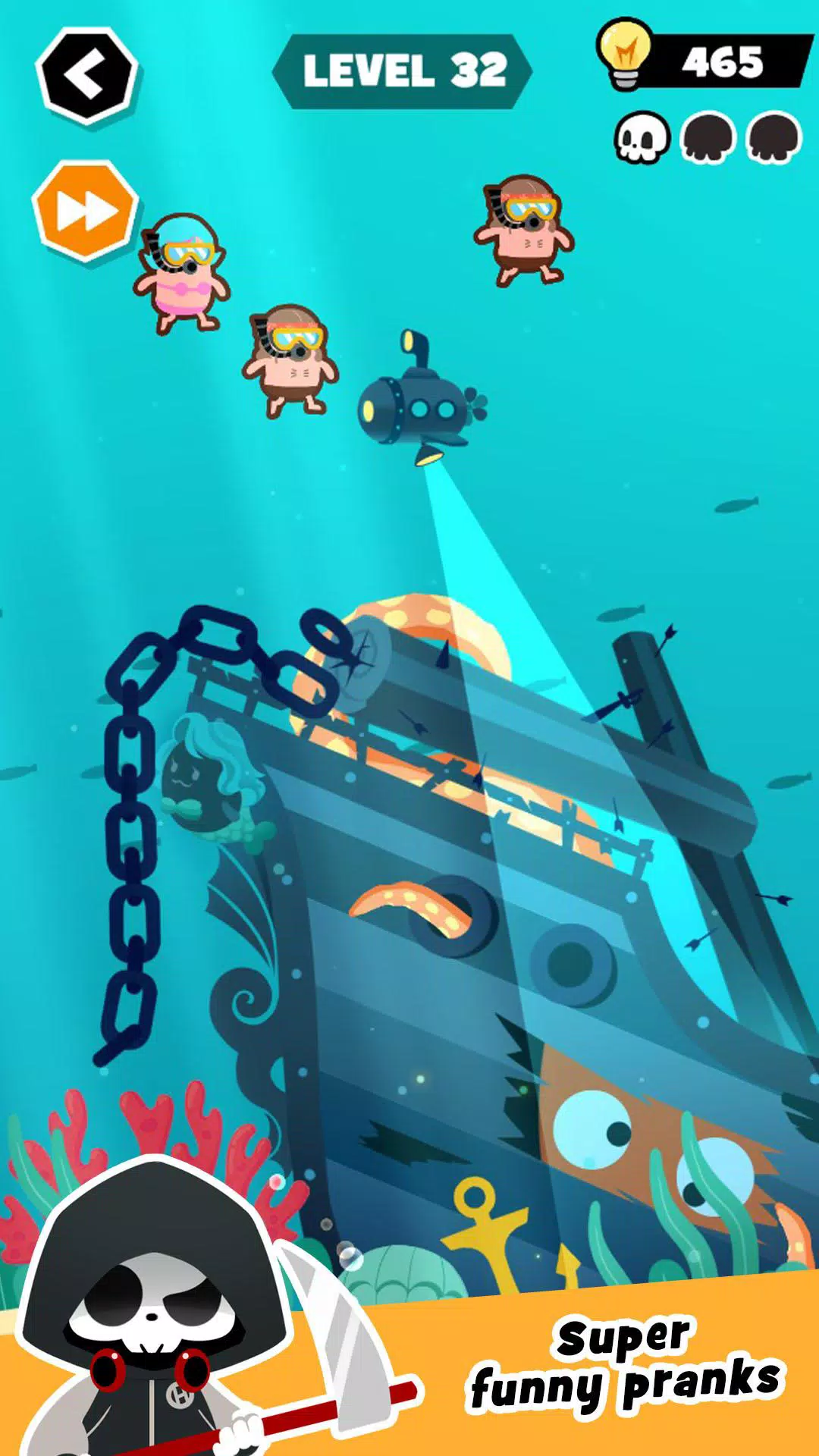
YOLO? is a tongue-in-cheek puzzle game that casts you as a pragmatic Grim Reaper tasked with staging believable accidents to progress through compact scenes; YOLO? blends physics-driven interactions with simple touch controls so players can inspect, drag and trigger objects until a satisfying chain reaction resolves the tableau. The tone is deliberately playful rather than graphic, encouraging creative problem solving and lateral thinking as you read environmental clues, reposition props and test cause-and-effect relationships in each level.
Gameplay focuses on short, self-contained environmental puzzles where small actions produce larger outcomes. Tap to examine items for hints, drag to reposition props, and use context-sensitive taps to activate mechanisms such as levers, supports or timed triggers. The physics are predictable but forgiving: slight adjustments to angle, timing or force can change the sequence of events, so experimentation is rewarded. Controls remain intentionally lightweight to keep the emphasis on observation and planning rather than complicated input sequences, and the interface surfaces only the most relevant interactions so new players can learn by doing.
Levels are presented as discrete 2D scenes that grow in complexity at a measured pace. Early stages introduce single-step setups and teach basic cause-and-effect, while later levels layer multiple interaction points, hidden triggers and environmental constraints that require multi-stage planning. Success in a scene yields points or coins that unlock additional levels and occasional optional challenges, creating a steady learning curve. Level design encourages revisiting earlier puzzles with new techniques once you have mastered more advanced interactions.
An integrated hint system provides graduated nudges when a solution proves elusive; hints cost in-game points so players must weigh immediate help against preserving resources for future puzzles. Most scenes support several valid solutions, and replaying a level often reveals alternate chains or more efficient approaches. Optional challenges—such as completing a scene without hints, finishing faster, or discovering all hidden props—add replay value and let players set personal goals without turning progression into a gate.
YOLO? employs a clean, low-detail 2D presentation that emphasizes interaction and readability. Art and animation are understated and lightly humorous, helping to keep the mood approachable despite the macabre premise; animations are used sparingly to communicate motion and consequence rather than shock. Visual cues indicate interactivity without cluttering the scene, and the interface places essential actions within easy reach so sessions are comfortable on phones and tablets alike. The overall experience is designed to feel calm, encouraging deliberate observation over reflexive tapping.
The game includes several accessibility-minded options and customization settings to accommodate different play styles: adjustable touch sensitivity, readable hint text, and toggles to reduce motion or emphasize contrast for visibility. Scenes are compact and designed for short play sessions, so most puzzles can be attempted offline without a persistent connection—handy for travel or intermittent play. Difficulty is shaped by puzzle complexity and available hints rather than harsh timers, and players can choose to pursue optional challenges or enjoy a relaxed pace.
Replay value comes from the multiple-solution design and the deliberate concealment of some props that invite experimentation. As you become familiar with the game’s physical logic, you will find more efficient or elegant solutions in previously completed scenes. Periodic level updates are planned to introduce new mechanics and fresh tableaux that expand the variety of interactions while maintaining the same puzzle-first design philosophy.
Players who enjoy lateral thinking will appreciate how YOLO? reframes a morbid premise into tidy mechanical puzzles that reward observation and planning. The simple controls and steady progression keep the focus on discovery, though the premise may not appeal to everyone even when presented non-graphically. Heavy reliance on hints can slow advancement if overused, and some trial-and-error is intentional to encourage creative solutions. The developer actively maintains the app with performance optimizations and level additions, and plans to refine touch responsiveness and accessibility options over time to broaden device compatibility and player comfort.