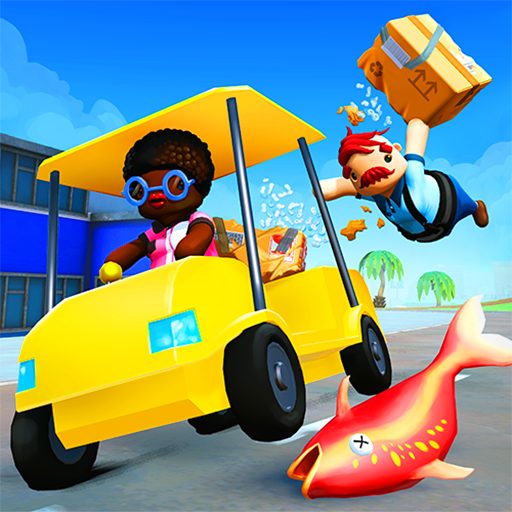





Guide for Totally Reliable Delivery Service game offers a concise, practical walkthrough for mastering physics-driven deliveries, maps, and cooperative mishaps. This guide highlights strategies, control setups, and route planning to help players improve times, avoid common pitfalls, and enjoy the chaotic sandbox mechanics of the original title.
The Guide for Totally Reliable Delivery Service game breaks down core systems into clear, actionable sections. Readers will find explanations of vehicle handling, character interactions, map shortcuts, and mission objectives. It emphasizes repeatable techniques that reduce frustration and increase success across solo and multiplayer sessions.
At its heart, the game relies on emergent physics: momentum, grip, and ragdoll interactions shape every delivery. This guide explains how those systems interact, showing which maneuvers exploit momentum for speed and how to avoid common crashes. Understanding the underlying physics helps players turn chaotic moments into deliberate tactics.
Maps are full of verticality, environmental hazards, and hidden shortcuts. The Guide for Totally Reliable Delivery Service game outlines high-value routes, timing windows for moving obstacles, and areas where improvisation pays off. For time-sensitive deliveries it suggests alternative paths and fallback options if a vehicle is damaged.
Different vehicles have distinct acceleration, turning, and durability profiles. The guide categorizes popular vehicles and recommends load placement to maintain balance during sharp turns. Advice includes quick repair strategies, optimal cargo arrangements, and when to abandon a vehicle for faster travel on foot.
Cooperative play multiplies the chaos but also the opportunity for coordinated runs. This guide recommends roles—pilot, loader, navigator—and communication cues that streamline complex deliveries. It covers how to tow teammates, manage shared objectives, and synchronize jumps or boosts to clear tricky sections together.
Fine-tuning controls and camera settings can dramatically improve spatial awareness. The guide suggests sensitivity adjustments, ideal camera distances for vehicles versus on-foot, and keybindings that reduce input lag. It also offers performance tips to stabilize frame rates on a variety of devices so gameplay remains responsive during hectic sequences.
Customization in the game is both cosmetic and functional. The guide explains how to unlock outfits, stickers, and vehicle skins, while noting which cosmetic items have practical advantages like improved visibility or player identification in crowded scenes. It encourages creative expression without sacrificing readability in multiplayer sessions.
The guide highlights ways to increase longevity: time trials, custom challenges, and community maps. It explains how to approach progression goals without grinding, using skill development to naturally unlock more difficult objectives and cosmetic rewards.
New players will benefit from a short practice routine: learn basic vehicle control in an open area, attempt a low-stakes delivery solo, then join a cooperative session to observe different playstyles. The Guide for Totally Reliable Delivery Service game includes quick-start checklists and a recommended first-week improvement plan to accelerate learning.
Adopt a mindset of experimentation and patience. Many memorable successes come from trying unconventional approaches and learning from each messy failure. With practical control tweaks, strategic route choices, and better teamwork, the guide helps players convert chaos into satisfying, repeatable deliveries.