



7Sins School is a narrative-driven simulation game set in an academy where player choices shape relationships, reputation, and story outcomes. It blends character-driven quests, social mechanics, and branching dialogues to create a dynamic campus experience focused on strategy, progression, and player agency across episodes and events.
The heart of 7Sins School lies in its decision-based mechanics. Players navigate a day-to-day schedule, balancing classes, social interactions, and personal objectives. Each choice affects character affinities and unlocks new narrative branches, turning simple conversations into strategic opportunities. Resource management is subtle but meaningful, with attention, reputation, and favors functioning as currencies that influence access to scenes, allies, and special events.
Characters in the game are varied and expressive, each with unique motivations and story arcs. Progression is driven by relationship milestones, completed tasks, and episodic achievements. As you advance, new dialogue options and locations open up, creating a sense of steady growth. Leveling up relationships often yields perks such as exclusive storylines, cooperative quests, or gameplay modifiers that change how the campus reacts to your choices.
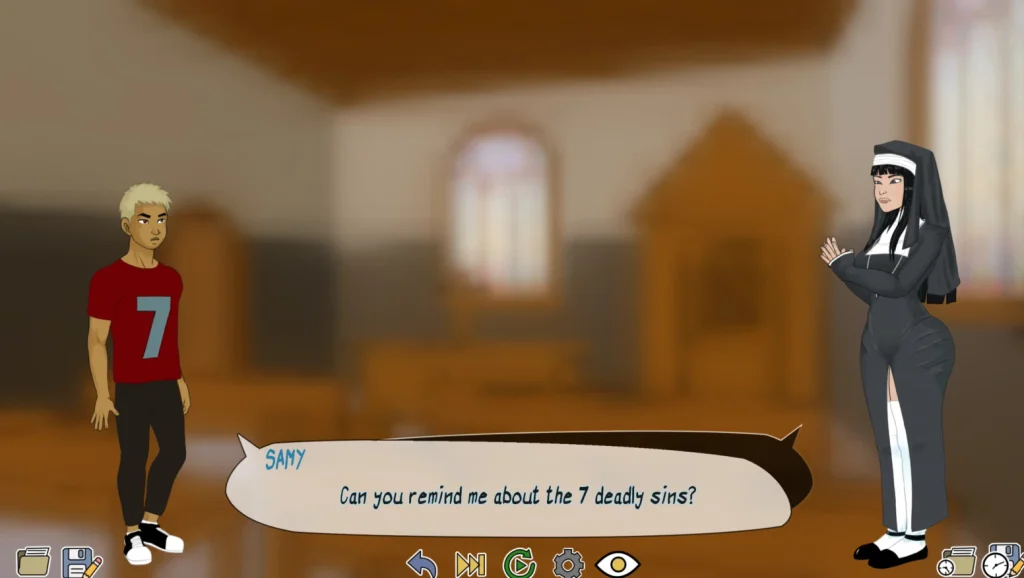
Dialogue choices are central to the experience. The narrative adapts to your decisions, with multiple endings and mid-game divergences that reward experimentation and replay. Branches are influenced by prior choices, timing, and accumulated resources, so the same scene can play out differently on a second run. This structure encourages players to explore alternative approaches to conflicts and alliances, making each playthrough feel personalized.
Visually, the game favors stylized character art and clean UI elements that keep attention on interaction rather than flashy effects. Menus are organized around daily routines, character lists, and event logs. The interface is designed to present consequences clearly while maintaining immersion, with contextual prompts that explain how decisions will impact relationships and available actions.
Customization in 7Sins School centers on choices rather than deep avatar editing. Players shape their in-game persona through dialogue, extracurricular activities, and alliances. Selecting a study focus or participating in particular clubs steers the narrative and unlocks tailored content. The game rewards creative approaches, allowing multiple routes to reach similar goals depending on playstyle.
Effective play hinges on balancing short-term gains with long-term reputation management. Prioritize building reliable relationships early to access assistive options during challenging scenarios. Watch for event timers and resource caps that can block preferred paths if ignored. Experiment with dialogue combinations to reveal hidden triggers; some outcomes require specific actions to be taken in sequence across several days.
Designed for mobile devices, the game runs smoothly on a wide range of hardware when animations and background processes are kept modest. Touch controls are responsive and menus load quickly, which helps when pacing is dictated by daily schedules. Battery and data usage are typical for story-based titles, and options exist to limit background downloads or reduce animation quality for older devices.
Replay value is a key strength. With branching narratives, character-specific quests, and periodic events, there are many reasons to revisit the campus. Small changes in approach produce different social dynamics, and developers often release new episodes that expand both story and mechanics, keeping engagement fresh.
Beginners should take time to explore conversation options and observe the effects of their choices. Follow a few character threads to discover how alignment and favors work, then broaden to other arcs once you understand resource flow. Save frequently where possible and consider trying different strategies to uncover hidden content and alternative endings.
7Sins School offers a blend of narrative depth and interactive strategy that appeals to players who enjoy character-driven simulations. Its focus on meaningful decisions, relationship systems, and episodic content creates a living campus setting that rewards curiosity and deliberate planning.