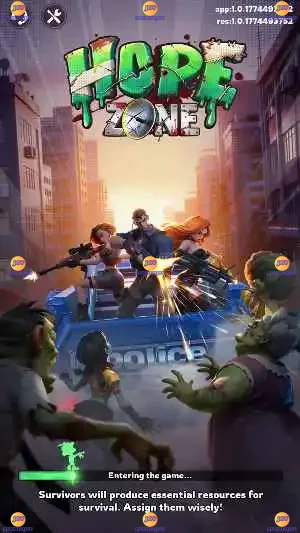

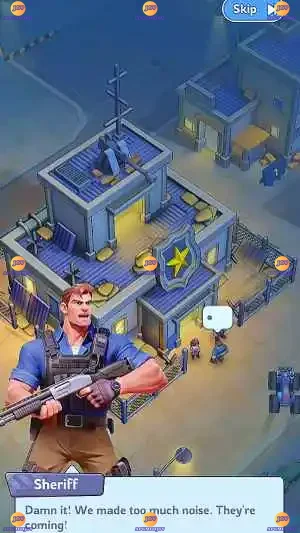

Hope Zone is a mobile post-apocalyptic strategy game in which you guide the last surviving settlement after a mysterious virus collapses civilization. In Hope Zone you balance base-building, survivor management, research and tactical raids as mutated threats evolve around your perimeter. The introduction explains core goals: develop infrastructure, keep morale up, and explore the wasteland for clues while preparing for increasingly dangerous enemy variants.
The game blends city-building with tactical encounters: players construct and upgrade shelters, production facilities and defensive emplacements while assigning survivors to roles such as scavenger, engineer, medic or guard. A dual technology tree encourages different long-term choices between scientific advancement and military specialization, and late-game alliance warfare and PvP offer competitive objectives for groups of players who opt into online play. Enemy design shifts over time—mutations produce faster, armored or boss-class opponents—so raids and defensive plans must adapt.
Hope Zone is controlled through common mobile gestures: tap to select buildings and survivors, drag to assign workers or reposition defensive units, and pinch-to-zoom to examine the base layout. Combat encounters combine real-time decision-making with pause-and-plan options—players can issue orders, trigger abilities and reposition teams before engagements escalate. Expeditions into the wasteland use a mission-based structure with clear objectives and variable difficulty, allowing both focused short sessions and longer playthroughs.
Progression in Hope Zone moves across several layers: base construction and resource chains unlock new building tiers; survivor experience and relationships influence performance and unlock personal story beats; and research investments open technologies that change how you approach defense, medicine and exploration. Challenge systems include escalating enemy mutations, timed events and expedition modifiers that change resource yields or enemy behavior, providing tactical variety without introducing artificial grind mechanics.
Players shape their settlement's layout to optimize production and defense, placing workshops, farms and watchtowers to suit their strategy. Survivors can be assigned roles and basic equipment choices that alter their effectiveness on raids and in resource production. Cosmetic customization is focused on base appearance and survivor outfits that reflect progression rather than pay-to-win advantages, emphasizing strategic set-up over pure stat increases.
Hope Zone presents a muted, atmospheric visual style with detailed environments that emphasize a lived-in post-apocalyptic world—weathered architecture, sand-swept streets and improvised fortifications define the aesthetic while UI elements remain functional and readable. Level structure alternates between the home settlement, discrete expedition zones and occasional story-driven locations; each expedition map provides distinct hazards and rewards that encourage exploration and planning.
Replayability comes from branching survivor story arcs, randomized expedition elements and the evolving enemy mutation system, which together encourage different strategies in subsequent runs. The game supports multiple pacing options: short scavenging missions for brief sessions and deeper settlement development for longer play. While the opening hour delivers dense tutorials and many new systems, later gameplay rewards deliberate planning and investment in research or military specialization.
The mobile interface is designed for one-handed play on larger screens but can be managed on smaller devices; players should expect some micromanagement to be more comfortable on tablets. Basic single-player features such as base management, survivor progression and offline expeditions remain accessible without a constant connection, while alliance warfare and PvP require an online connection. The game includes settings to adjust camera zoom, notification frequency and ad preferences to tailor the experience; players report that UI scale and text size options help on compact displays.
Some early users report an initially steep learning curve and cluttered screens when many systems are active, and the free-to-play model includes ads that can affect immersion for certain players. The developer, StarFortune, has acknowledged community feedback about matchmaking and population balance and has been issuing updates since the March 2026 launch to address stability and fairness. If you value strategic depth, emergent storytelling and adaptable tactical encounters, Hope Zone offers a layered single-player campaign with optional competitive content for connected players.