
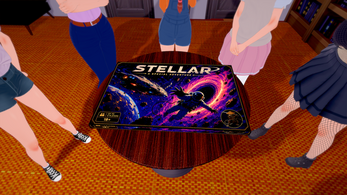




Stellar: A Space Adventure puts you at the helm of a customizable starship exploring procedural galaxies, completing missions, and engaging in tactical combat. This immersive space roguelike blends exploration, ship-building, and resource management into a single experience that challenges strategy and rewards careful planning on every voyage.
Stellar: A Space Adventure emphasizes exploration and decision-making. Players navigate diverse star systems, scan anomalies, and accept contracts from factions. Each jump can reveal trading posts, derelict vessels, hostile fleets, or rare resource nodes. Encounters feel meaningful because choices—retreat, negotiate, fight, or scavenge—affect your crew, ship integrity, and long-term progression.
One of the game's strongest draws is the depth of ship customization. Equip engines, shields, weapons, and utility modules to shape a playstyle that suits you. Modules have trade-offs: heavier turrets enhance firepower but reduce maneuverability, while advanced scanners increase rewards at the cost of power draw. The upgrade tree encourages experimental builds, and swapping modules between missions keeps loadouts fresh.
Combat in Stellar: A Space Adventure mixes real-time movement with tactical decisions. Positioning matters—using asteroid fields and nebulae for cover changes the dynamic of every skirmish. Energy management is central: reroute power to shields when under fire, or divert to engines to break formation. Enemy types require varied responses, from swarm drones where area-of-effect weapons excel to capital ships where focused fire and boarding tactics shine.
Progression is driven by mission rewards, salvage, and faction reputation. Recruit specialists to unlock passive bonuses and active abilities that alter ship behavior. Crew members can be trained or replaced, and morale influences performance in prolonged campaigns. Resource gathering and inventory management are steady concerns; balancing repair parts, fuel, and rare components forces players to plan ahead and prioritize objectives.
The game generates varied star charts so no two runs feel identical. Side missions and story nodes provide narrative hooks and optional pathways that influence faction standings and available technology. Randomized events, along with branching mission outcomes, grant high replay value for players who enjoy refining strategies and discovering new combinations of modules and crew skills.
Visually, Stellar: A Space Adventure mixes stylized ship designs with vibrant cosmic backdrops. Visual cues in combat and exploration are clear, helping players assess threats and opportunities quickly. The soundtrack supports the sense of wonder and tension; audio cues assist in situational awareness. The interface keeps important information accessible: ship status, active missions, and resource counts are presented with minimal clutter.
Controls are optimized for touch devices, with intuitive swipe and tap gestures for navigation and targeting. On mid-range hardware the game maintains stable frame rates, while higher-end devices deliver smoother animations and richer effects. Adjustable graphics and battery-friendly options allow the experience to be tailored to performance or visual fidelity.
New captains should begin by focusing on a balanced ship build: reliable shields, a maneuverable hull, and a versatile weapon suite. Early missions are ideal for learning resource management and crew roles. Save salvage for upgrades that complement your preferred tactics rather than chasing every new component that appears.
Stellar: A Space Adventure offers a satisfying loop of exploration, tactical combat, and incremental growth. Its procedural galaxies and modular ship systems invite experimentation and reward thoughtful play. For players who enjoy crafting strategies, adapting to changing circumstances, and piecing together emergent stories across runs, this title delivers a deep and replayable space experience.