






Overpowering horseability places you in a neon-dripped, near-future city where a single odd encounter turns routine survival into a tense, choice-driven narrative. Overpowering horseability foregrounds moral dilemmas and resource scarcity over reflex-based combat, inviting players who prefer atmospheric storytelling, careful observation, and decisions with real permanence. The first scenes set tone and stakes quickly: exploration uncovers clues, conversations reveal motives, and some choices close off paths forever, so attention to environmental detail rewards patient play.
The game centers on branching narrative sequences that blend exploration, inventory management, and consequential decision-making rather than arcade action. Short, focused scenes require you to read visual cues, examine objects, and decide how to allocate limited supplies—medicine, energy cells, improvised tools—each of which can alter immediate outcomes. Encounters with the game's central creature and a handful of memorable characters play out as moral puzzles: choices influence relationships, unlock or block side scenes, and steer the story toward different endings. Time-limited moments raise tension but are balanced by scenes that allow deliberation, so pacing shifts organically depending on narrative needs.
Controls are designed specifically for touch: tap to interact with items and people, swipe to move through cinematic beats, and single-touch selection for dialog and action prompts. The user interface minimizes clutter, keeping dialogue and critical visual elements readable on small screens, while contextual prompts only appear when relevant. An optional guided tutorial demonstrates basic gestures, and a set of sensitivity and pacing options lets players slow down timed choices or adjust how quickly in-game text advances to match their reading speed.
Progression unfolds in episode-like chapters that feel like a serialized novella, each composed of several interconnected scenes. Rather than linear levels, the structure branches based on decisions: choosing one approach may open hidden scenes or character backstories while permanently locking others. Checkpoints are placed at major narrative junctions so you can resume from the last chapter, and all saves remain local to your device to support offline play. The chapter format also helps reduce load times by streaming just the assets needed for the current section.
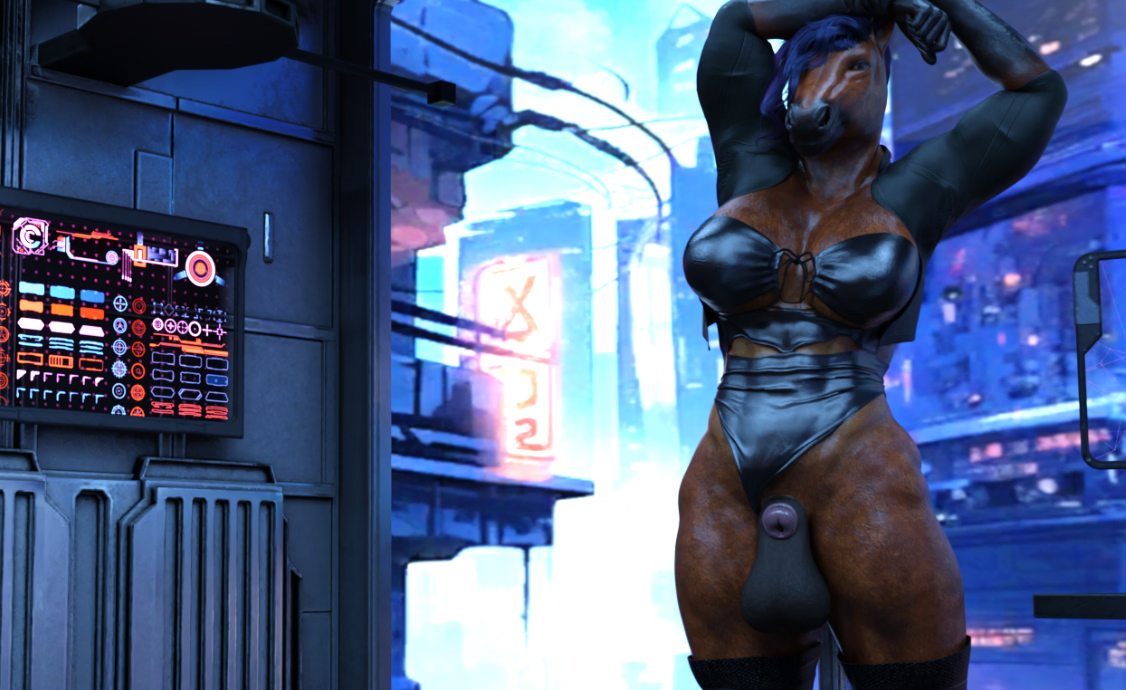
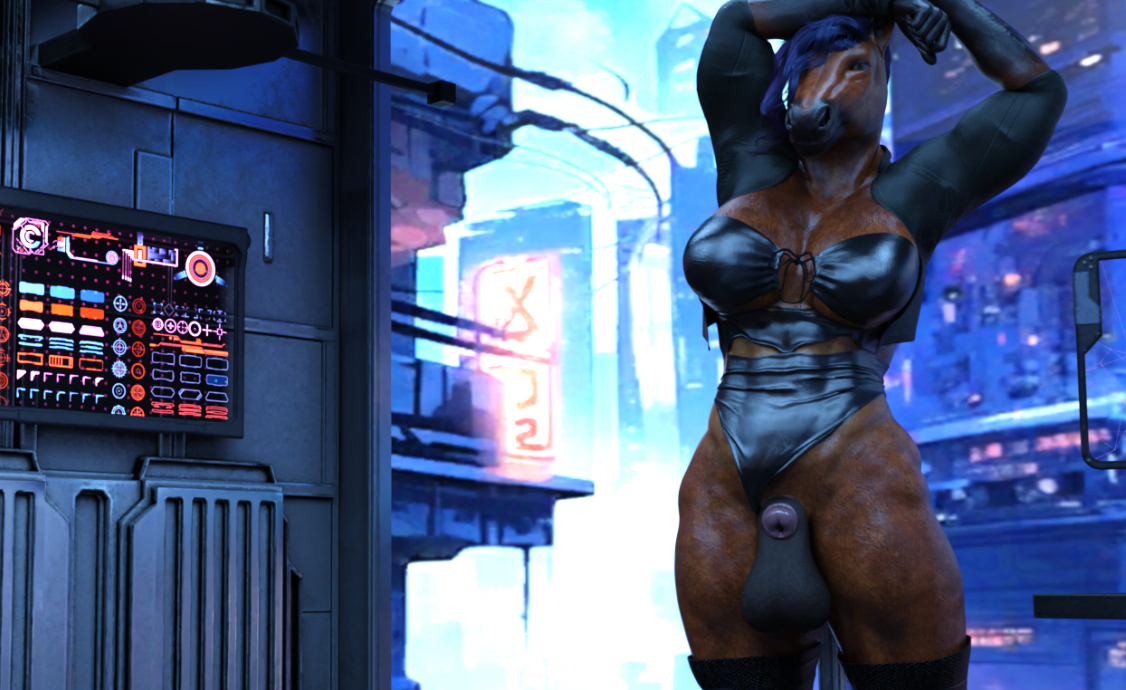
Visually, the title favors a contrast-rich neon palette and stylized silhouettes that emphasize mood over photorealism. Urban decay melds with cyber-technology set pieces to create memorable backdrops for each scene, and lighting plays a big role in conveying information—shadows hide clues, neon reflections signal interactive objects, and color shifts underscore emotional beats. Customization focuses on presentation and accessibility: adjust HUD opacity, change subtitle size and font, toggle cinematic letterboxing, or enable a simplified visual mode to reduce motion and complex effects without changing narrative content.
Replayability is built into the branching design and multiple endings. Overpowering horseability encourages revisiting chapters to discover alternate consequences, hidden sequences, and character arcs that only appear under specific conditions. Challenge is layered through scarce resources, optional high-risk choices with irreversible results, and difficulty settings that alter resource scarcity and the strictness of timed events. The result is a game that rewards curiosity and careful planning rather than mechanical dexterity.
The user experience emphasizes readability and inclusivity: dialogue pacing can be adjusted for a more leisurely or brisk flow, audio levels are configurable, and where voice is present it is balanced with text rather than replacing it. Accessibility features include multiple text sizes, contrast presets for different types of color blindness, control sensitivity options, and a toggle to slow or disable timed prompts. In-game tooltips and an optional glossary explain thematic or technical terms so newcomers to the genre can follow the story without prior knowledge.
This single-player experience is fully playable offline with local save support and performance settings that let you prioritize visual quality or smoother frame rates. Chapter-based streaming minimizes initial load times and keeps memory use reasonable on a wide range of devices, while battery-friendly visual options extend mobile play sessions. Local saves ensure your choices and progress remain private and available without a network connection.
Designed for players who appreciate moody narratives and ethically complex decisions, Overpowering horseability delivers a measured, atmospheric journey through a stylized urban landscape. It balances thoughtful puzzle-like encounters with branching storytelling, offering meaningful replay value and a variety of presentation options so each player can tailor the experience to their comfort and device capabilities.