
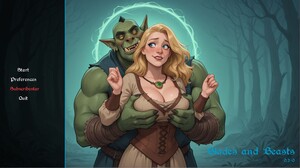




Blades and Beasts places you in a savage, supernatural world where you take on the role of the Hunter, facing relentless waves of creatures with only a trusty blade and a growing roster of recruited allies. The game mixes fast-paced melee combat with trial-based stages that build toward dramatic boss encounters; when those bosses fall they can be persuaded to join your cause, adding a tactical layer to the action. This introduction covers what to expect from the early release, how combat and progression work, and how the game is designed to remain engaging over repeated runs.
Blades and Beasts offers tight, timing-focused melee encounters that reward precise attacks, parries, and evasive moves rather than button mashing. Trial-based stages present sets of escalating waves that lead to multi-phase bosses with distinct patterns and visual identities. The recruitment mechanic turns defeated bosses into companions, allowing you to experiment with different ally combinations and create synergies that change how later trials play out. As an early build, the project focuses on the core loop of confrontation, capture, and team building while leaving room for future content expansion.
Combat centers on close-quarters swordplay with an emphasis on rhythm and spacing. Basic attacks chain into short combos while charged strikes and directional dodges open windows to deal heavier damage. Bosses introduce specific counters that encourage learning their tells: some phases punish aggressive approaches while others force you to adopt defensive timing. The recruitment twist is not automatic; defeated foes present choices and trade-offs, and adding a powerful boss to your roster may change your preferred playstyle. Encounter variety is driven by enemy types, boss phases, and environmental hazards that can alter the tactical landscape.
The control scheme is optimized for touch devices with intuitive gestures and on-screen controls. A virtual attack button handles light and heavy strikes via taps and holds, while a separate dodge or roll control lets you avoid telegraphed attacks. Context-sensitive prompts appear for special interactions during boss phases and recruitment moments, and control sensitivity can be adjusted to suit different players. The layout aims to keep core actions accessible with optional advanced inputs for players who prefer precise timing or combo chains.
Progression in Blades and Beasts emphasizes gradual improvement through successive trials. Players unlock new stages, abilities, and upgrade paths as they complete trials and recruit allies. Advancement comes in the form of skill upgrades and equipment enhancements that reinforce preferred playstyles, and recruited companions bring unique traits that synergize with your Hunter. The game highlights clear short-term goals within each trial and longer-term targets across the campaign, so steady progression feels meaningful even in the early release.
The art direction leans into moody, supernatural aesthetics: stark lighting, stylized creature designs, and compact arenas that focus attention on combat encounters. Bosses are crafted to be visually distinctive so their behaviors are easier to read, and visual effects are used sparingly to keep attack telegraphs clear. The overall presentation supports readability and immersion, balancing atmosphere with functional clarity so players can anticipate and react to threats without visual clutter.
Levels are organized as trials that escalate in intensity, each composed of multiple wave segments and a final boss. Some arenas include environmental features that can be used offensively or defensively, creating situational choices during fights. Challenge scales by introducing tougher enemy patterns, faster timing windows, and layered boss mechanics. Optional difficulty modifiers are suggested within the game to increase replay variety, encouraging players to revisit stages with new strategies and recruited allies.
Customization focuses on how you assemble your team and tune the Hunter’s capabilities. Weapons and upgrades alter attack speed, reach, and special properties, while companions provide complementary abilities or passive bonuses. The recruitment system invites experimentation: swapping allies changes encounter pacing and opens up new tactical options. Cosmetic changes and modest visual customization for the Hunter and allies help personalize the experience without affecting core balance.
Replay value comes from trying different party compositions, mastering boss patterns, and tackling harder variants of trials. The game includes accessibility options such as adjustable difficulty levels, control sensitivity, and visual cues for attack windows to support players with different skill sets. Blades and Beasts is designed around single-player play and is suitable for short sessions, with systems intended to function without requiring a constant online connection so you can play offline when needed.
Version 0.2 establishes the core loop for Blades and Beasts: survival against waves of creatures, climactic boss fights, and the recruitment twist that lets defeated bosses join your ranks. This early release focuses on polishing combat responsiveness, clarifying boss telegraphs, and expanding the roster of recruitable opponents while leaving space to add more stages, modifiers, and customization options in future updates.