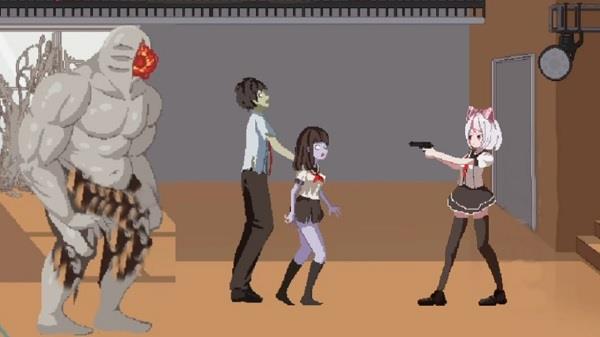


Syahata's Bad Day drops you into a compact, tense 2D pixel side-scroller where a lone protagonist must race through zombie-infested zones to reach a distant shelter. Syahata's Bad Day mixes retro visual sensibilities with escape-focused gameplay: every level is designed around movement decisions, stealth versus speed trade-offs, and narrow margins for error that turn a short play session into a memorable, atmospheric challenge. The game is currently in early beta and the developer is actively collecting player feedback to refine levels and mechanics.
The core loop centers on escaping each area under pressure rather than open-ended combat. Levels push you to read enemy patterns, use the environment to block sightlines, and choose the fastest or safest path to the shelter. Encounters are deliberately punishing: getting caught creates immediate consequences that force you to restart the run or return to the most recent checkpoint. This design emphasizes quick runs with clear risk-reward decisions and encourages learning by repetition.
Controls are designed to be intuitive for touch screens while remaining responsive for precision play. A simple virtual control scheme covers run, jump, and a short dash/evade input; control sensitivity and button layout can be adjusted in the settings to suit different hand sizes and play styles. The input responds to precise timing so platforming feels tight, with responsive jump arcs and clear feedback when you interact with platforms, traps, and environmental objects.
Progression in Syahata's Bad Day is level-based and focused on iterative improvement rather than persistent upgrades. Each stage contains checkpoints to reduce repetition for longer runs, and later stages increase in complexity with layered hazards, more aggressive enemy patrols, and narrower escape windows. Players can unlock new level variants and harder route options by completing objectives such as finishing under a time limit or discovering hidden exits, which extends the campaign without changing the core escape intent.
The visual presentation uses authentic 2D pixel art with deliberate color palettes and layered backgrounds to build atmosphere. Parallax layers and carefully framed foreground elements create a sense of depth in otherwise compact stages, while pixel-level animation communicates character motion and enemy behavior clearly. Ambient sound design and a restrained soundscape heighten tension during runs without overwhelming the gameplay, keeping the focus on movement and timing.
Levels are compact and puzzle-like, designed to be completed in short sessions but with meaningful choices on each run. The design favors multiple routes—some fast but exposed, others slower but safer—so players must balance speed and caution against enemy patrols and environmental traps. Challenge systems include time trials, stealth objectives, and hidden collectibles that reward mastery and encourage replay without adding unrelated mechanics.
While the game centers on a single protagonist to keep the narrative and pacing focused, there are modest cosmetic options that can be unlocked through play to personalize the appearance of your character. Replay value is driven by level permutations, optional objectives, and the satisfaction of shaving seconds off runs; finding shortcuts and mastering enemy patterns provides long-term motivation for players who enjoy improving their performance run after run.
User experience emphasizes clear feedback, stable performance on a range of devices, and straightforward menus for fast sessions. Accessibility options include adjustable control sensitivity and configurable difficulty settings so players can tailor the challenge. The game is playable offline, letting you run levels without a network connection and saving progress locally so you can practice and provide feedback from any setting.
As an early beta release, Syahata's Bad Day may include bugs, balance issues, and incomplete content; these are expected and actively tracked by the developer. Players are invited to report issues, suggest level ideas, and share impressions about pacing and difficulty. Feedback from the community will guide further updates to level design, controls, and polish while preserving the tight, escape-driven experience at the heart of the game.