
Stains of Blue is a choice-driven visual novel built for mature audiences that emphasizes character, consequence, and mood over explicit description. Stains of Blue lets players shape multi-layered interpersonal stories by choosing a heroine's personality, setting the tone for scenes, and guiding the relationship dynamics; narrative branches and dialogue change in response to those choices, and a playable demo is available to sample the writing and mechanics before supporting the full release.
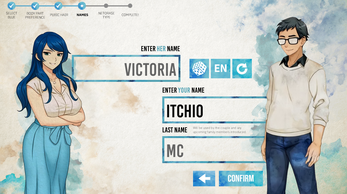
The game presents five distinct heroine types, each offering a different emotional outlook and story branch so your decisions have visible, varied outcomes. Relationship customization tools let you define the nature and boundaries of the central pairing, altering how scenes unfold and how supporting characters respond. Rather than fixed sequences, the writing adapts to player-selected tones and focuses, producing variations in scenes and dialogue without explicit depiction of intimate acts. The title also supports a range of interpersonal scenarios — from quiet romance to tension-filled conflict and explorations of trust and temptation — letting players tailor the narrative atmosphere to their comfort level.
Stains of Blue is driven by branching choice mechanics: each decision adjusts relationship meters and unlocks or blocks future options, so choices carry weight across scenes. The game uses a scene-adaptive system that changes text, character reactions, and scene outcomes based on the heroine type and relationship settings you pick. Replayability is built in through multiple routes, tone modifiers, and conditional branches that become accessible only after certain combinations of choices, encouraging experimentation without forcing adult detail. Players can expect clear feedback on consequences, with visible relationship indicators and summary screens that help track why particular directions opened or closed.
The interface is optimized for touch devices: tap to advance text, select choices from a clean menu, and use long-press gestures to review previous lines. A standard save/load system supports multiple slots, and an autosave feature captures progress between major scenes. Text speed and display options can be adjusted to suit reading preferences, and a skip function allows replaying skipped content while keeping unread text safe. Menus are straightforward and the flow from scene to choice to outcome is designed to be intuitive for both newcomers to visual novels and experienced players.
Progression in Stains of Blue is story-centric rather than level-based: you unlock new narrative branches and scene variations by exploring different personality combinations and relationship parameters. Character-focused progression rewards attention to dialogue and dialogue choices rather than numerical grinding. Customization extends to narrative emphasis — you can prioritize romantic development, interpersonal tension, or emotional reconciliation — and those settings materially change the tone of scenes and the options available. Because many paths are mutually exclusive, the title encourages multiple playthroughs to see alternative endings and character arcs.
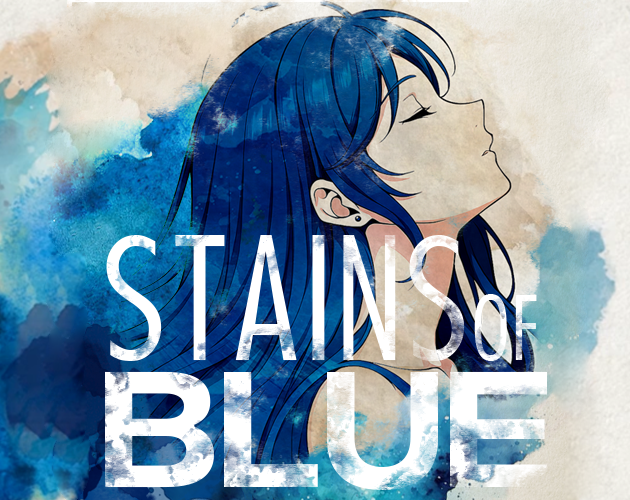
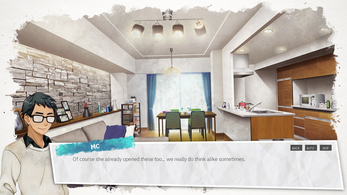
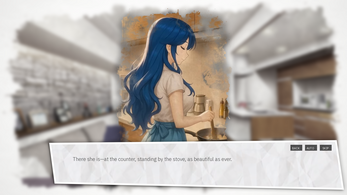
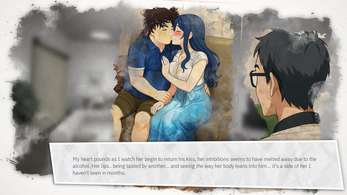
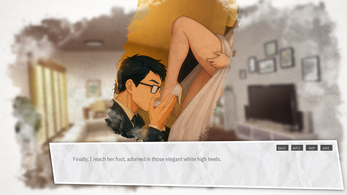
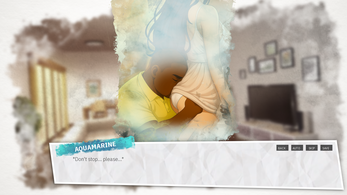
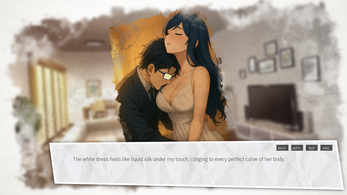
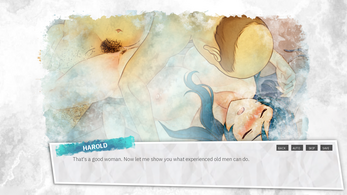
The presentation favors illustrative character art, expressive portraits, and a cohesive blue-toned color palette that reinforces the game’s mood. Scenes are accompanied by an ambient soundtrack and simple sound cues to support immersion without overwhelming the writing. Artwork is used to highlight emotional beats and scene transitions rather than explicit content, and a gallery system records unlocked illustrations and scene snapshots for later viewing. Overall the aesthetic aims for a mature, restrained look that complements the narrative focus.
Stains of Blue includes adjustable text size, contrast options for readability, and controls to pause or speed reading for accessibility. The demo and core single-player experience are playable offline once installed, so users can experience the narrative without an active connection. The project is in active development and the developer plans additional content, quality-of-life improvements, and expanded story branches over time; early supporters may receive access to incremental updates, and ongoing patches will refine the writing and interface based on player feedback.