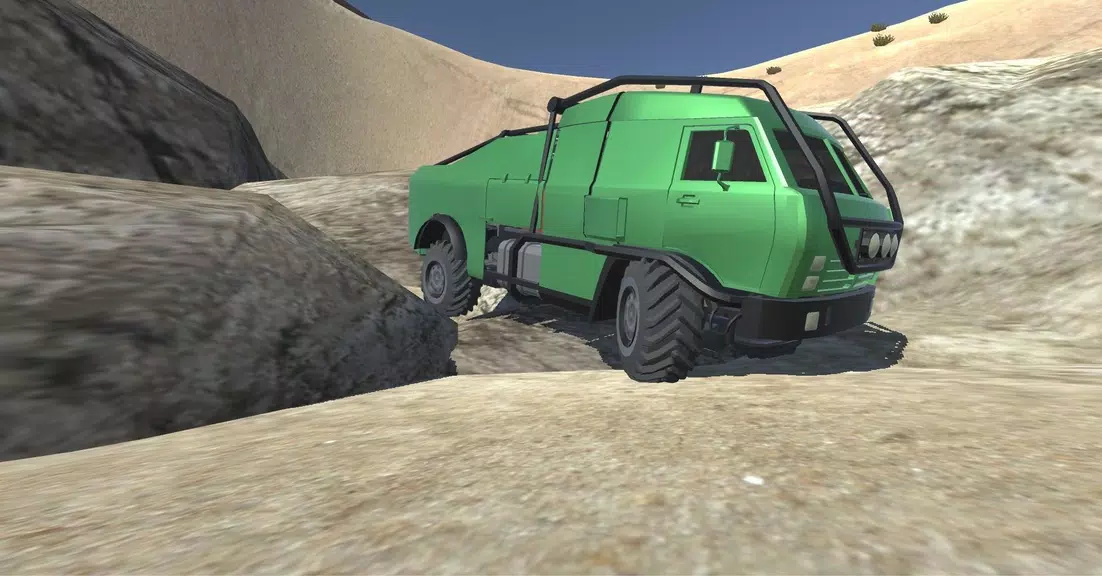
Off-Road Desert Expedition delivers a rugged vehicle-simulation experience that focuses on realistic handling, varied desert environments, and tactical preparation. Off-Road Desert Expedition places you behind the wheel of a range of purpose-built off-road machines as you negotiate dunes, rocky canyons, and sudden weather shifts across wide, interconnected maps. This editor overview explains the gameplay systems, control options, progression mechanics, and design choices that shape the core experience.
At its center the game models traction and momentum with a physics-driven engine: tire slip, suspension travel, and weight transfer all influence how vehicles respond on sand, gravel, packed dirt, and exposed bedrock. Players must learn throttle modulation, timed braking, and gear selection to avoid digging in or rolling on steep slopes. Terrain deformation is persistent in many areas, so ruts and tracks left on previous runs affect subsequent attempts and encourage route planning.
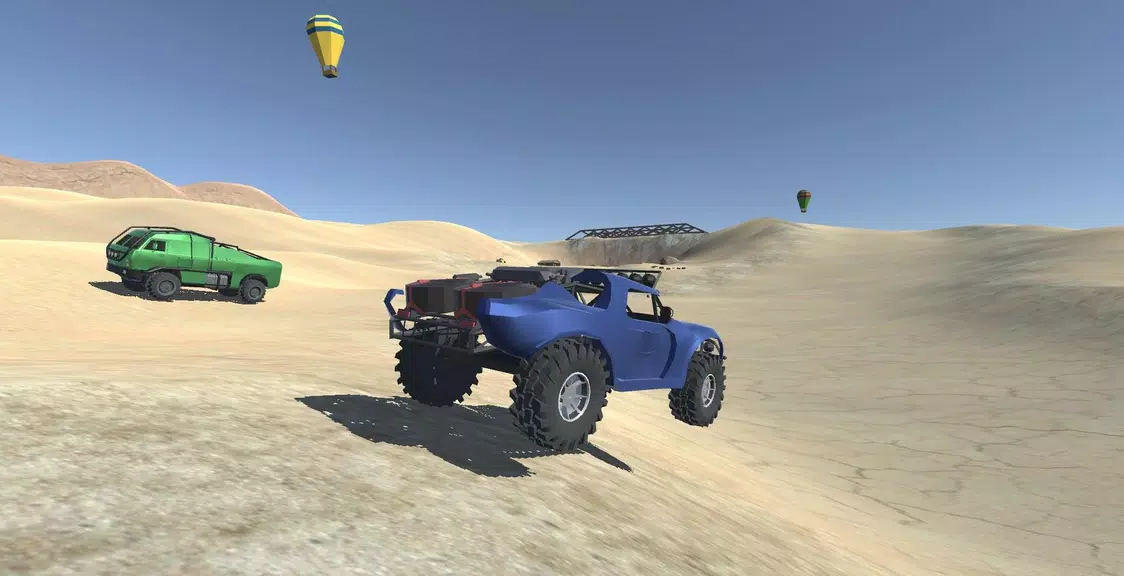
Maps are structured as large, connected zones with a mix of open dune fields, narrow ravines, and hidden pockets such as oases and dry riverbeds. Objectives are spread across these areas and include timed checkpoints, salvage and recovery tasks, and destination waypoints that reward exploration. Environmental events — sandstorms, wind gusts, and temperature-driven visibility changes — alter the landscape temporarily and open new tactical routes while closing others, encouraging multiple approaches to the same challenge.
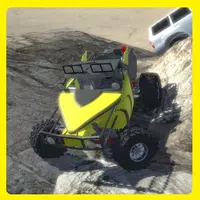
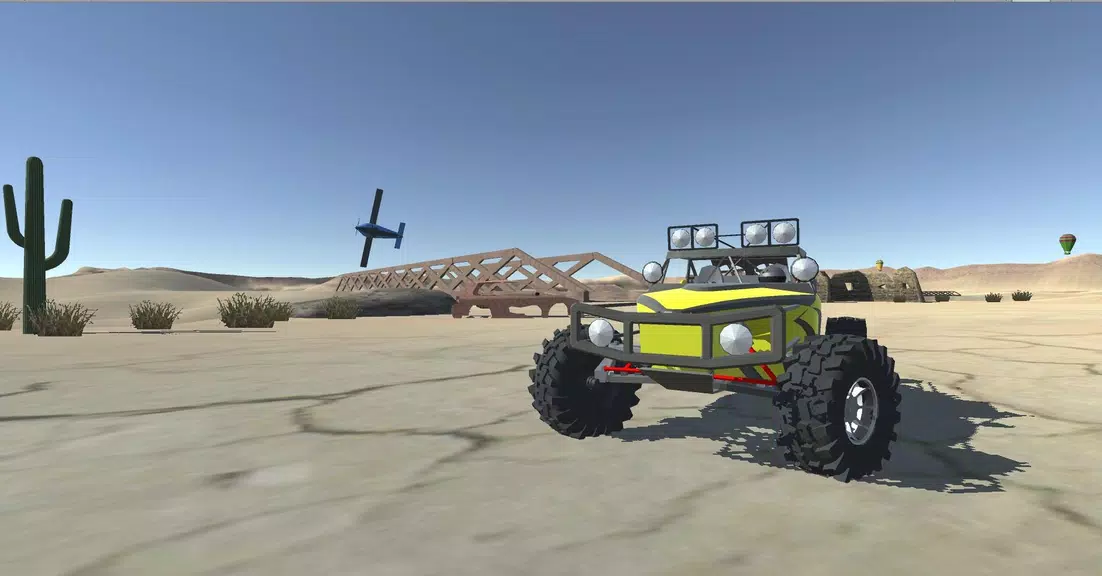
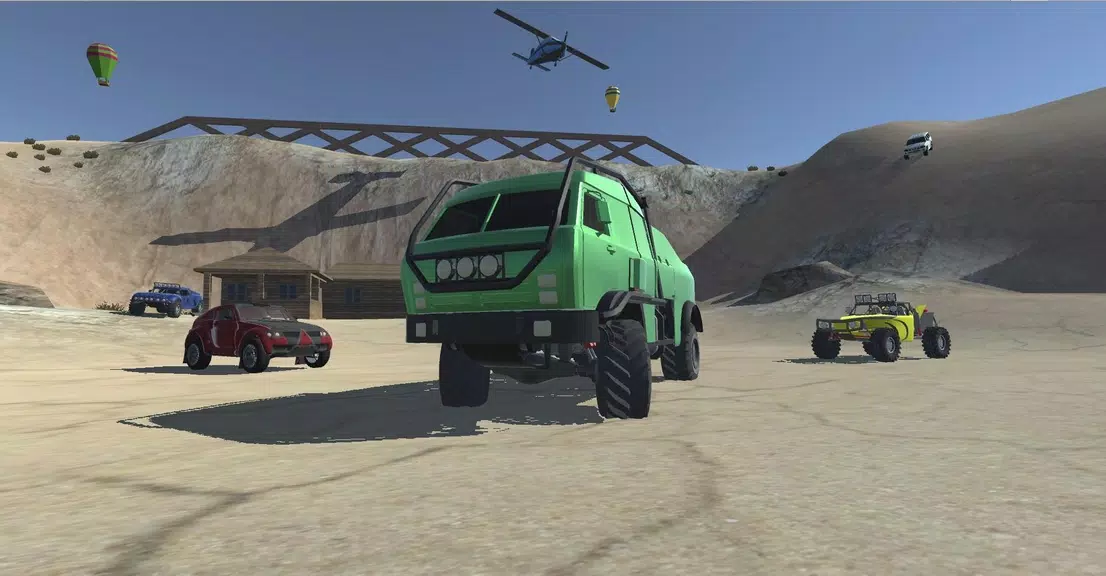
The vehicle roster spans lightweight buggies and dune racers to heavy-duty trucks and specialized recovery rigs. Each class has defined trade-offs: lighter vehicles accelerate and handle quickly but struggle in soft sand, while heavier rigs carry more equipment and resist being swept by dunes. Progression grants performance parts such as reinforced suspensions, off-road tires, intake snorkels, and winches; these upgrades change handling, climb capability, and reliability, allowing players to match a vehicle’s setup to intended routes.
Beyond performance parts, players can tune tire pressure, select gear ratios, and shift weight distribution to suit specific terrain. Functional customization affects how a vehicle behaves under load and during recovery operations, and cosmetic options let you personalize appearance without altering performance. Strategic planning — packing spare parts, fuel canisters, and recovery tools — is an important layer: a prepared loadout reduces the risk of long recoveries and supports longer expeditions into remote map regions.
The game supports multiple control schemes to fit different play styles: tilt steering, on-screen touch controls, and external controllers are all accommodated. Camera modes include chase, cockpit, and hood views with adjustable sensitivity and field of view. Accessibility options provide steering and braking assists for newcomers and an advanced simulator mode that removes assists for players seeking a purist experience. These settings make it easier to learn vehicle behavior while preserving depth for expert players.
Progression is delivered through campaign missions, open-world objectives, and a variety of challenge modes. Completing missions and exploratory objectives grants currency and parts used for upgrades. Challenge conditions — limited fuel runs, timed navigation through poor visibility, or vehicle-only handicaps — add replay value by testing different skill sets and encouraging repeated attempts with alternative setups. The combination of upgrade choices and variable environmental conditions keeps routes fresh across multiple play sessions.
Visuals emphasize atmosphere and readable environmental cues: realistic lighting, heat haze, and particle effects for sand displacement help communicate surface conditions and depth. Persistent terrain deformation provides visual feedback about previous runs. The audio design complements the visuals with engine notes, wind, and tyre sounds that change according to surface and speed, giving players auditory cues for grip and mechanical strain without distracting from navigation.
Cooperative elements are present, allowing players to team up for joint expeditions where towing and repair cooperation can be essential in difficult areas. Shared leaderboards and community events are implemented to highlight notable runs and encourage community-driven challenges without requiring intrusive online mechanics. A snapshot feature lets players capture scenes from solo or cooperative runs to share within community channels or save locally.
The title is optimized with scalable graphics and performance options so a broad range of devices can run the game; lower-end hardware can reduce texture and shadow detail while higher-end systems enable enhanced lighting and particle fidelity. Battery and thermal management options help preserve device stability during long sessions. Single-player and free-roam experiences are designed to be playable without constant network access, making it possible to enjoy expeditions offline when connectivity is limited.
Begin with a mid-tier vehicle and a modest set of upgrades to learn how different surfaces influence handling. Spend time in free-roam areas to experiment with tire pressure and gear changes before attempting timed missions or harsher challenge modes. Master basic recovery techniques, including winching and tow operations, and refine your loadout and vehicle tune to match the route: careful preparation and incremental upgrades are the most reliable path to success in Off-Road Desert Expedition.