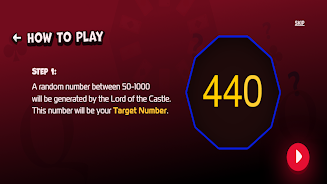
Dekagon is a tactical puzzle-platformer that blends precise timing with level-based challenges. Players navigate geometric arenas, unlock mechanics, and refine strategies across stages. The game emphasizes pattern recognition, modular upgrades, and a steady difficulty curve that rewards patience and experimentation.
Dekagon places emphasis on short, focused runs across small, handcrafted maps. Each level introduces a new rule or obstacle that shifts how you move, attack, or interact with the environment. Sessions are designed for repeated attempts: failures teach new patterns, and small victories push you to explore alternate routes.
The heart of Dekagon is its movement and timing system. Players control a single avatar that can dash, rebound off surfaces, and trigger context-sensitive tools. Levels feature pressure plates, rotating platforms, and directional fields that change your momentum. Mastering momentum conservation is critical for clearing later stages.
Several design choices make Dekagon engaging: progressive introduction of mechanics, compact level design that encourages experimentation, and a crisp control scheme that feels responsive on touchscreens. Rather than overwhelming the player, the game layers complexity so each new mechanic reframes earlier challenges.
Progress through Dekagon is less about raw power-ups and more about learning. Early levels teach a movement or interaction; later maps require combining those lessons in sequence. Players succeed by mapping out the ideal approach, recognizing repeating rhythms, and adjusting speed to match environmental cues.
Resource management is subtle: limited retries, checkpoint placement, or optional bonus rooms alter how aggressively you pursue perfection. Players who methodically test hypotheses tend to advance faster than those relying solely on reaction.
Visual presentation favors legibility over ornamentation. Colors highlight active zones, and particle feedback communicates success or failure quickly. The UI keeps essential options visible but unobtrusive, letting the level geometry remain the focal point.
Dekagon supports both tap-and-swipe controls as well as a simplified one-touch mode for casual players. Control customization allows sensitivity adjustments and swap options, so you can tune responsiveness to your playstyle. These accessibility features reduce frustration and broaden appeal without lowering strategic depth.
Replay value in Dekagon comes from mastery. Even after completing stages, players revisit levels to shave seconds off runs, discover alternate exits, or collect optional challenges. Social features like leaderboards or ghost replays further extend engagement by encouraging friendly competition.
Installing Dekagon is straightforward: download from the official store, grant minimal permissions, and start on the first tutorial level. Expect a small initial download and occasional content updates that add new level packs or challenge modes. The game is optimized for modern devices but scales gracefully on mid-range hardware.
Dekagon rewards careful observation and deliberate practice. If you enjoy games that blend precise controls with evolving puzzles, it offers a compact, satisfying experience that scales with skill and curiosity.