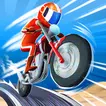
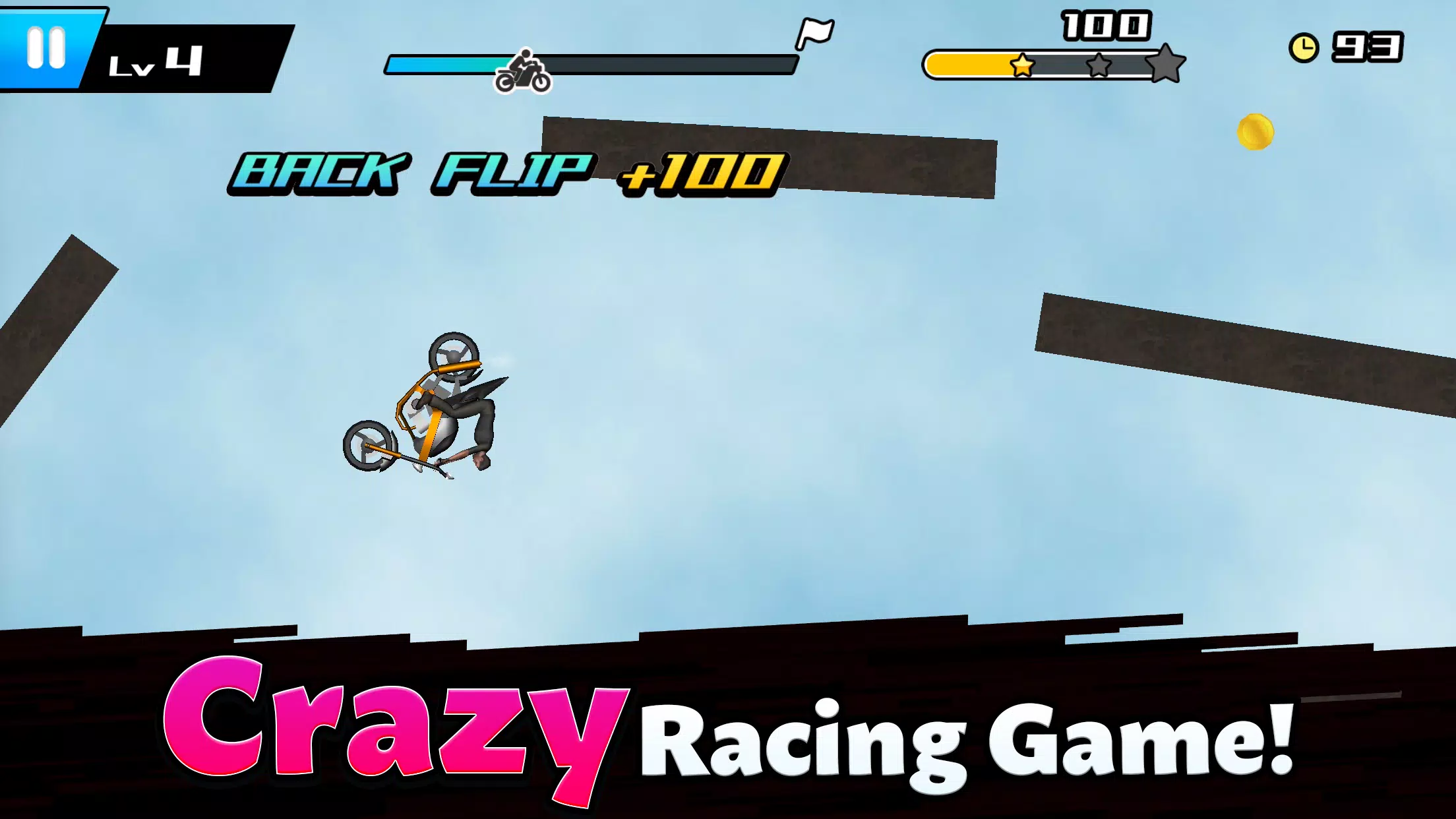
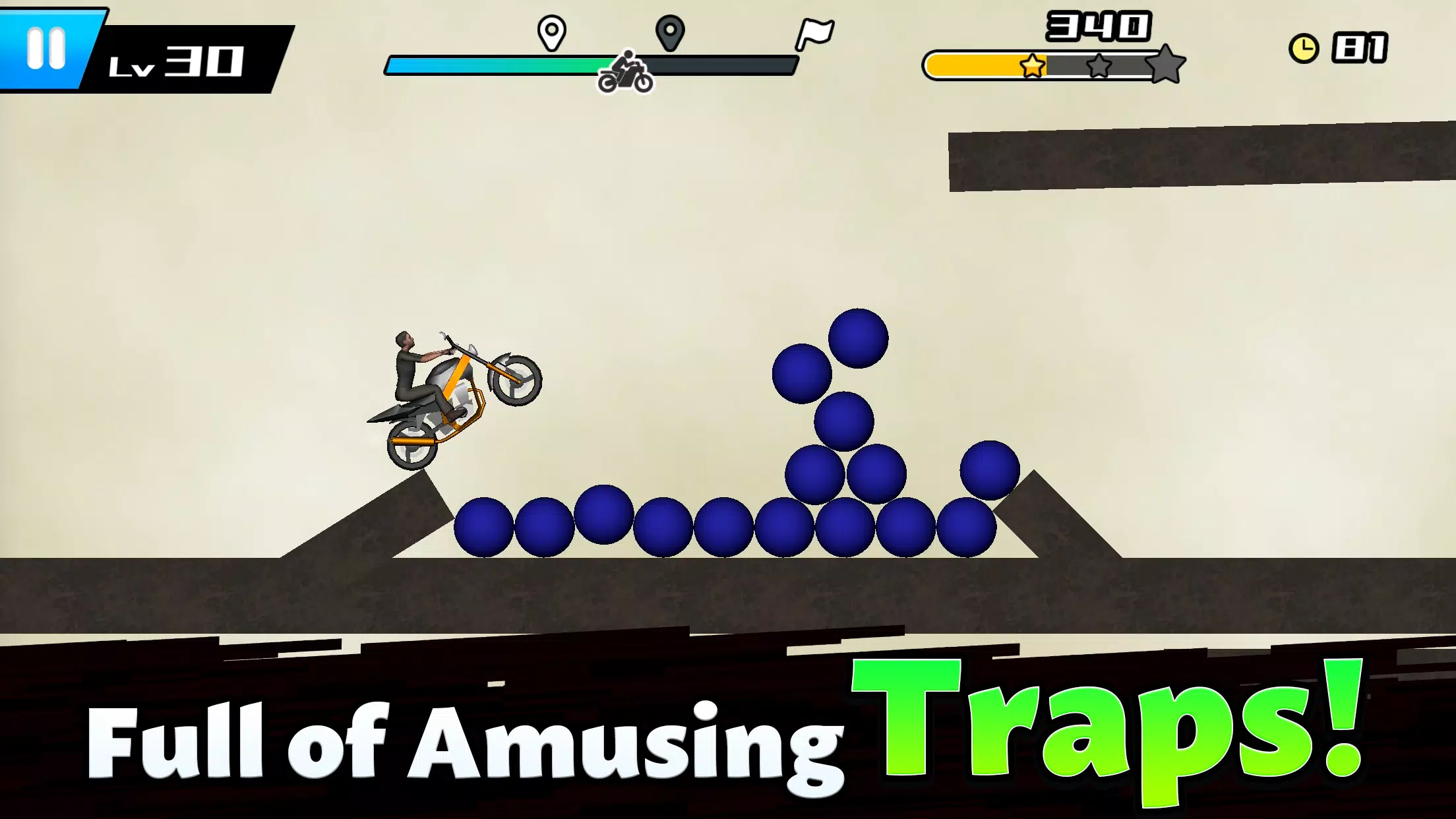
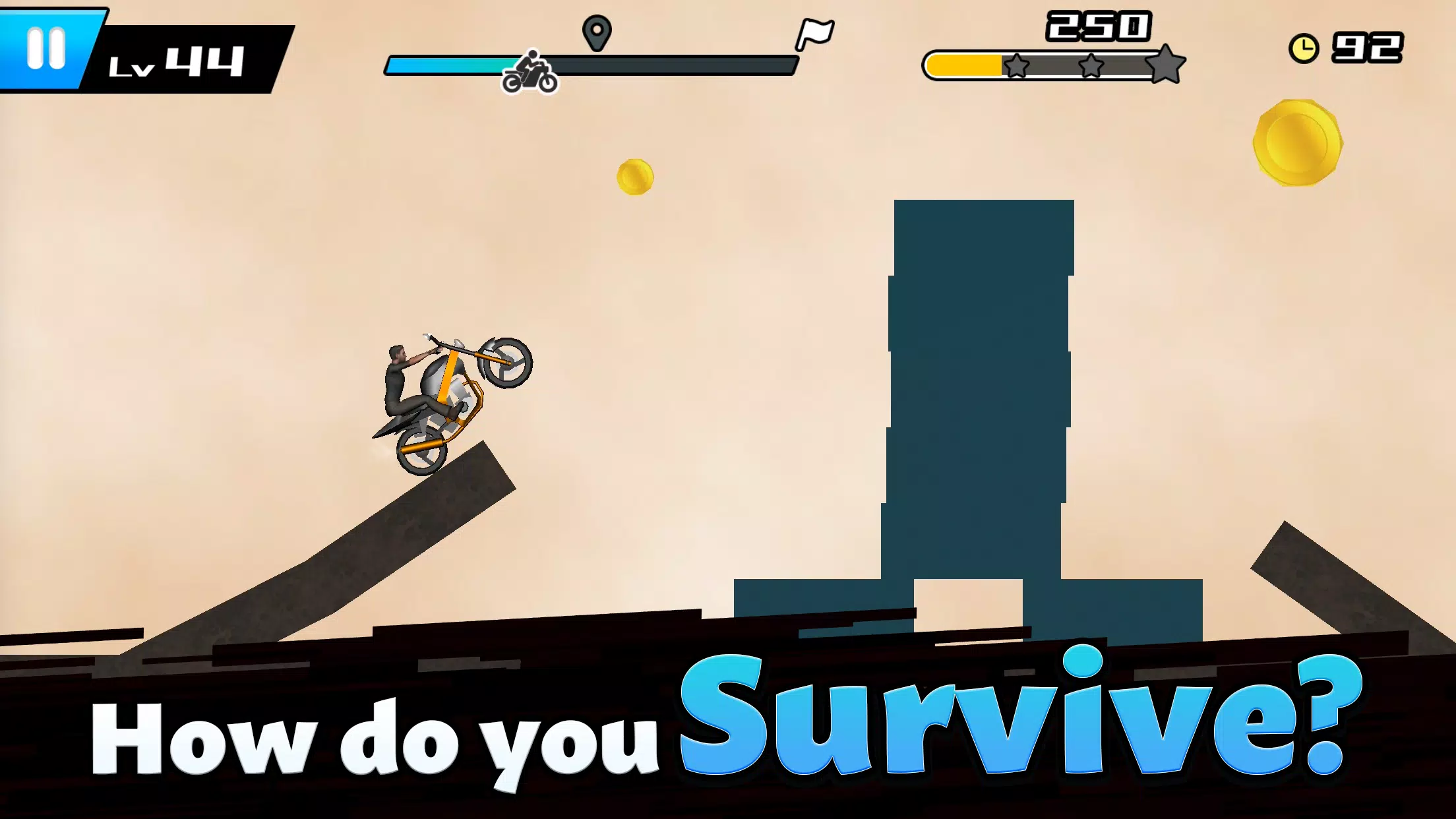
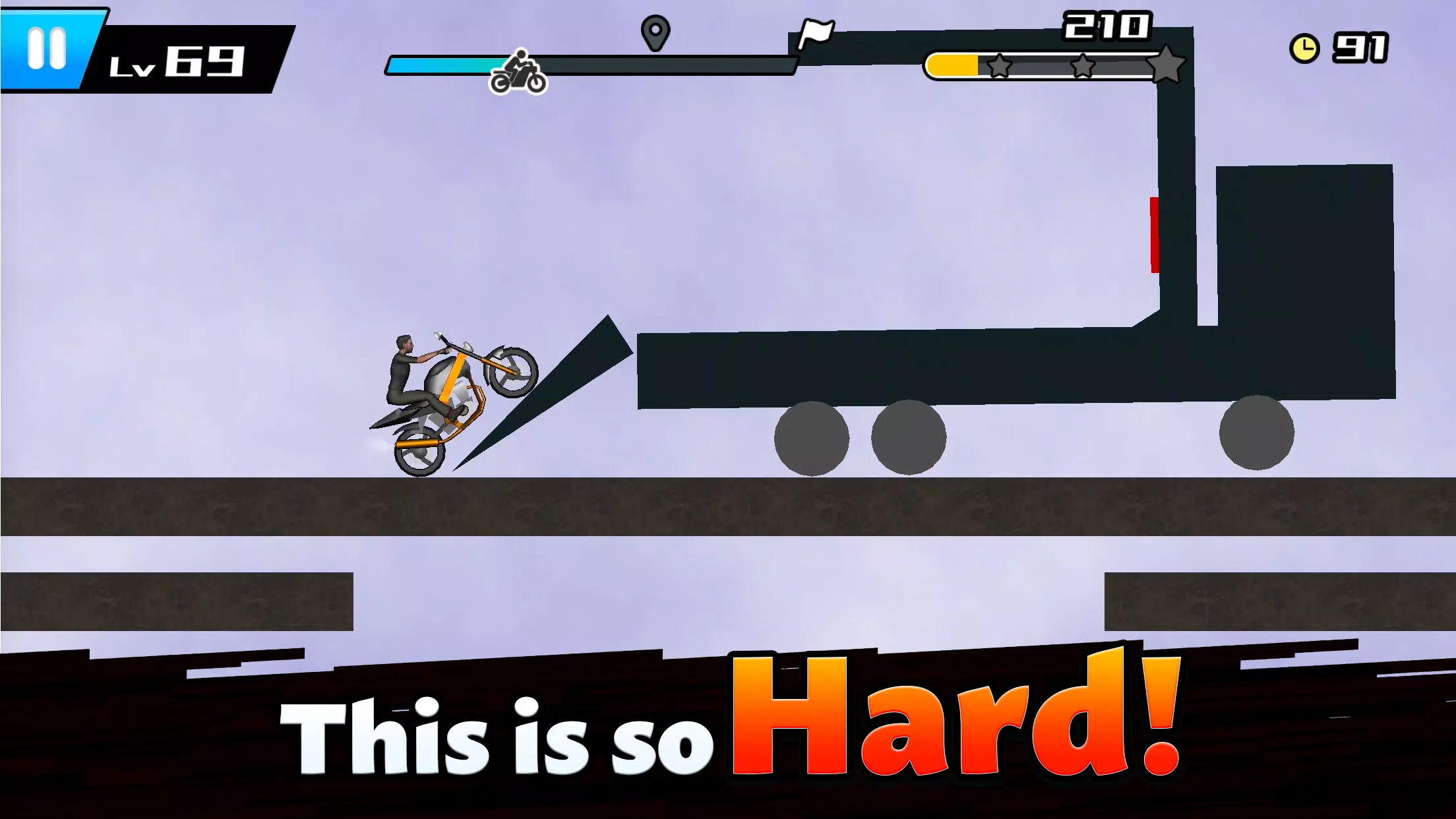
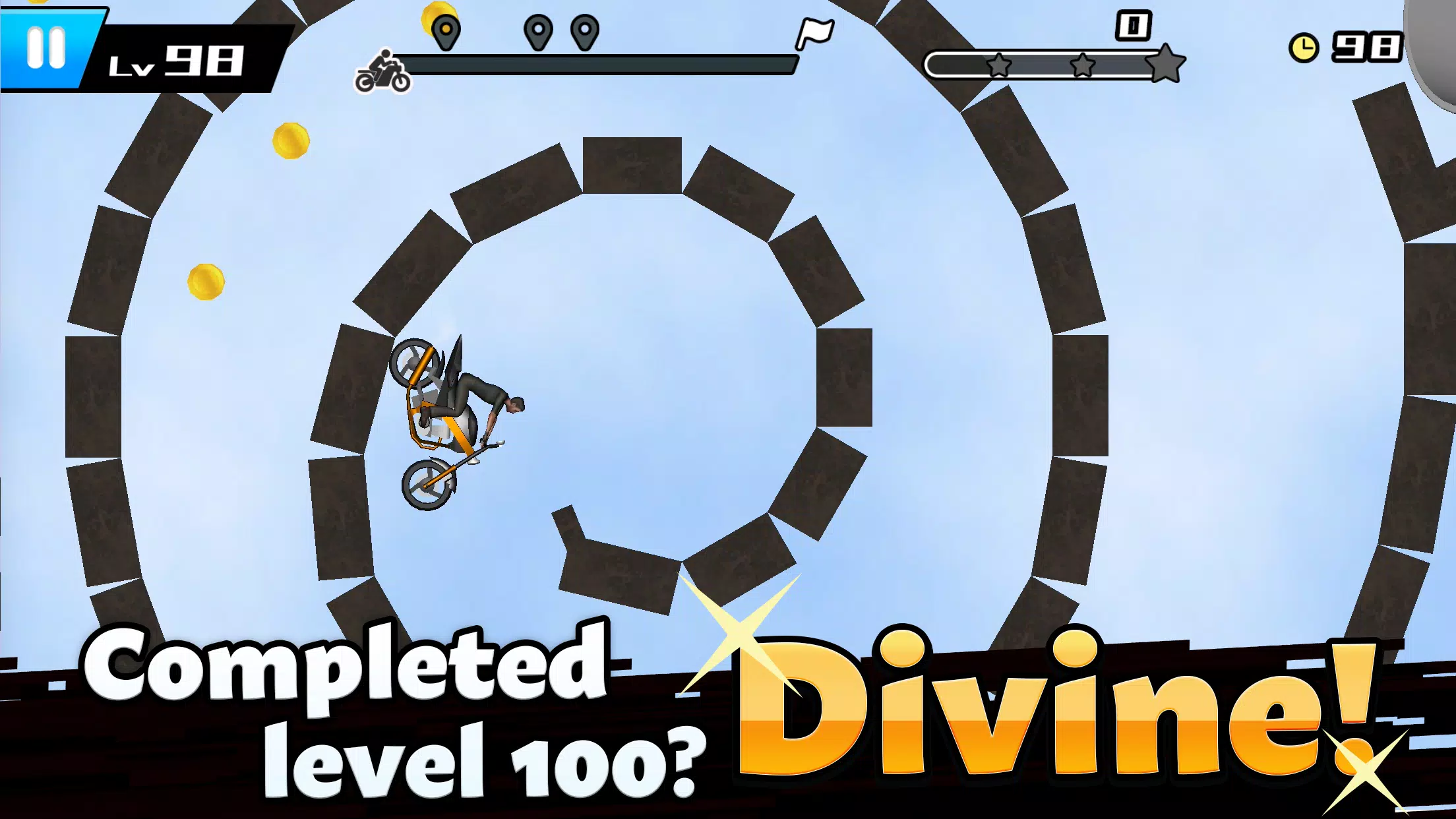
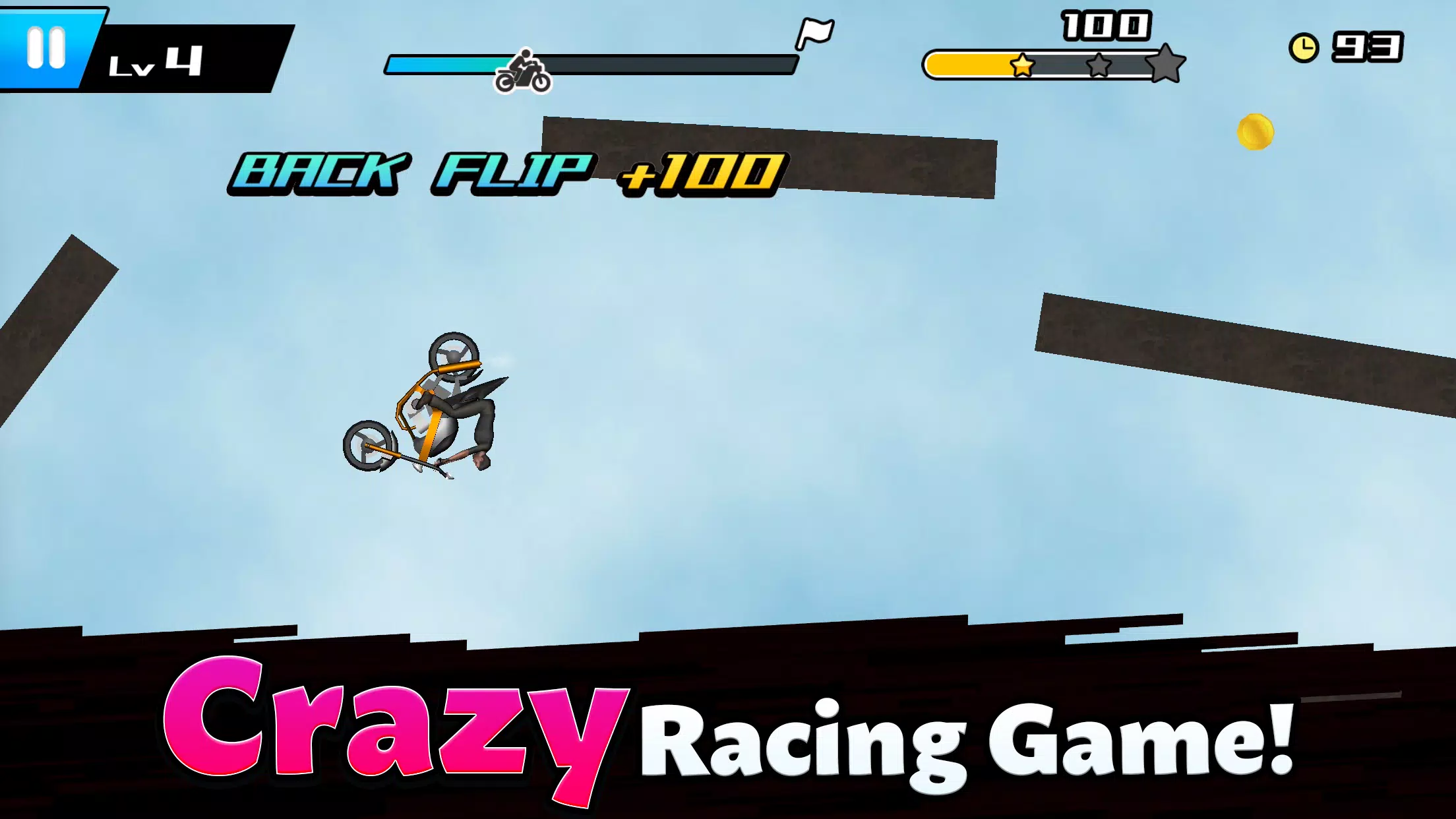
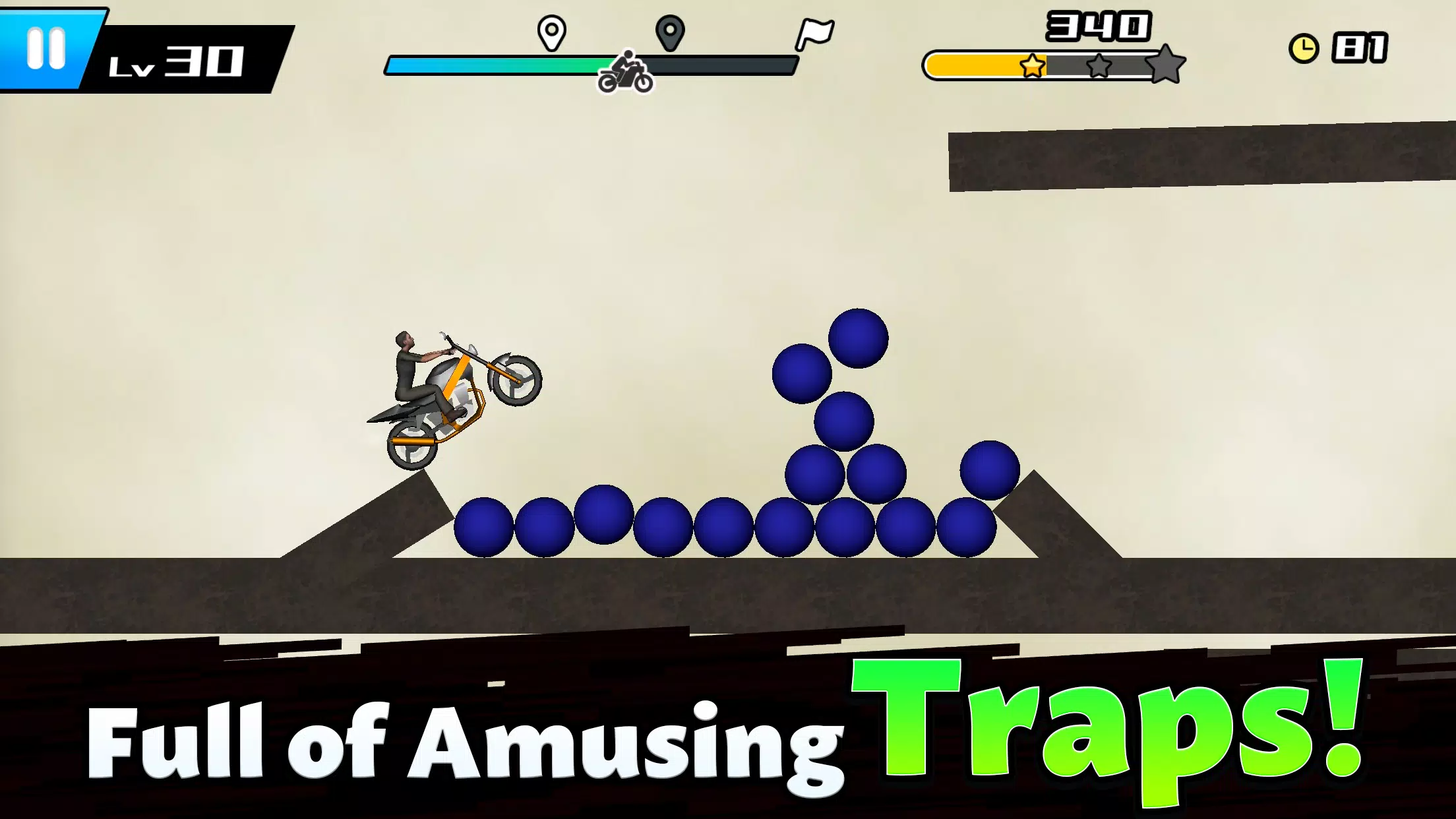
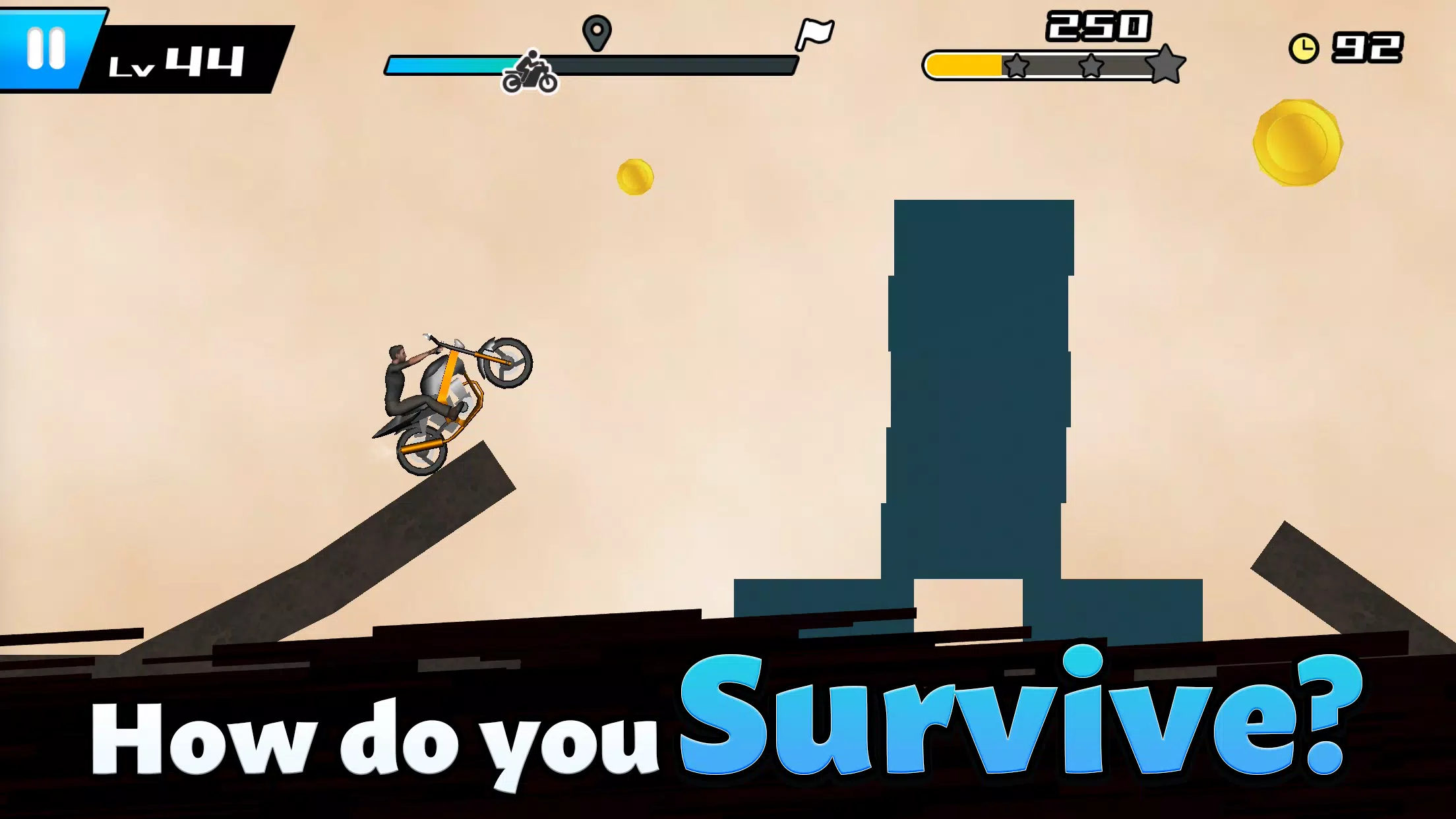
Crazy Bike Racing Level 100 is an adrenaline-focused motorcycle arcade title that packs short, intense stages into a compact progression loop designed for quick sessions. This editor overview describes the core gameplay, controls, level construction, progression systems and accessibility so you can understand what to expect before installing. The description emphasizes mechanics and player experience rather than marketing claims, making it easier to decide whether the pacing and challenge suit your play style.
The game centers on momentum, balance and timing rather than complex inputs. Each level presents a sequence of ramps, gaps and hazards that reward precise throttle control and body adjustments. Stages are intentionally short so failure feels like an invitation to try again rather than a long setback; this design encourages incremental improvement and experimentation with different approaches to the same obstacle. Environmental elements such as moving platforms, timed traps and variable surfaces appear gradually, teaching players to read the track and adapt without abrupt difficulty spikes.
Controls are deliberately simple—accelerate, brake and lean forward or backward—yet the physics model gives those actions meaningful consequences. Throttle modulation affects how the bike climbs inclines and stabilizes on landings, while small mid-air tweaks shift the bike’s center of mass and influence how you touch down. Suspension behavior and impact response are tuned so that learning how weight distribution and throttle timing interact feels like developing a skill set, not memorizing a sequence. Input sensitivity and responsiveness can be adjusted to suit different devices and player preferences.
Tracks in Crazy Bike Racing Level 100 range from tight urban obstacle courses to open desert stretches and custom stunt arenas. Each level is built to emphasize a readable line: clear visual cues and contrast help you anticipate upcoming hazards at speed. Designers include alternate routes and hidden shortcuts that reward exploration, while a handful of stages focus on technical linking of jumps where consistency is more important than outright speed. The level order ramps complexity by introducing new mechanics in isolation before combining them into longer sequences.
Progression hinges on an in-game upgrade system where earned currency unlocks performance improvements and cosmetic options. Engine and transmission upgrades increase top speed and acceleration, suspension and chassis changes improve landing stability, and tire options impact grip on different surfaces. Early upgrades are intended to make runs more consistent, while later investments let experienced players refine split-second performance. Cosmetic customization lets you change paint, decals and bike accessories to personalize your ride without affecting competitive balance.
Beyond the campaign, the game includes timed trials and challenge stages that restrict certain upgrades or impose unique rules to test specific skills. Daily or rotating challenges provide short-term goals that refresh familiar tracks with new objectives. Leaderboards track best times and high scores to offer a way to compare performance; these rankings are optional and local or synced when the device is online, allowing players to focus on personal improvement if they prefer.
The visual approach favors bold colors and high contrast to keep the track readable at speed. Effects such as motion blur and particle sparks are used sparingly to emphasize impacts and landings without obscuring important details. Sound design provides clear engine tones, throttle feedback and distinct impact cues so auditory input supports split-second reactions. Music is upbeat and designed to complement the gameplay intensity rather than distract, with options to adjust audio levels independently.
Success rewards methodical play as much as fast reflexes: choosing smooth lines, timing throttle releases before big jumps and adjusting approach angles can produce more consistent runs than simply holding full throttle. Practicing short sequences, analyzing replayed attempts and focusing initial upgrades on stability will shorten the learning curve. Over time, small technique refinements—such as subtle mid-air corrections and suspension timing—compound to reduce mistakes and improve overall times.
The title is optimized to run across a broad range of Android hardware with adjustable graphics and performance settings to preserve frame rate on older devices. Control mapping and sensitivity options help accommodate different play preferences and physical accessibility needs. Core single-player modes and practice runs are designed to work offline, while leaderboard sync and event updates occur when an internet connection is available; this balance keeps the game accessible for short sessions on the go.
After installing Crazy Bike Racing Level 100, a brief tutorial introduces camera behavior, basic inputs and how upgrades affect handling. Starting with early stages builds currency for essential upgrades that increase consistency, while timed trials and challenge maps provide focused practice for specific techniques. The short-stage design, clear feedback on landings and rotating challenges support a replay loop that rewards refinement: return to a run, tweak your approach, and shave off fractions of a second over repeated attempts.