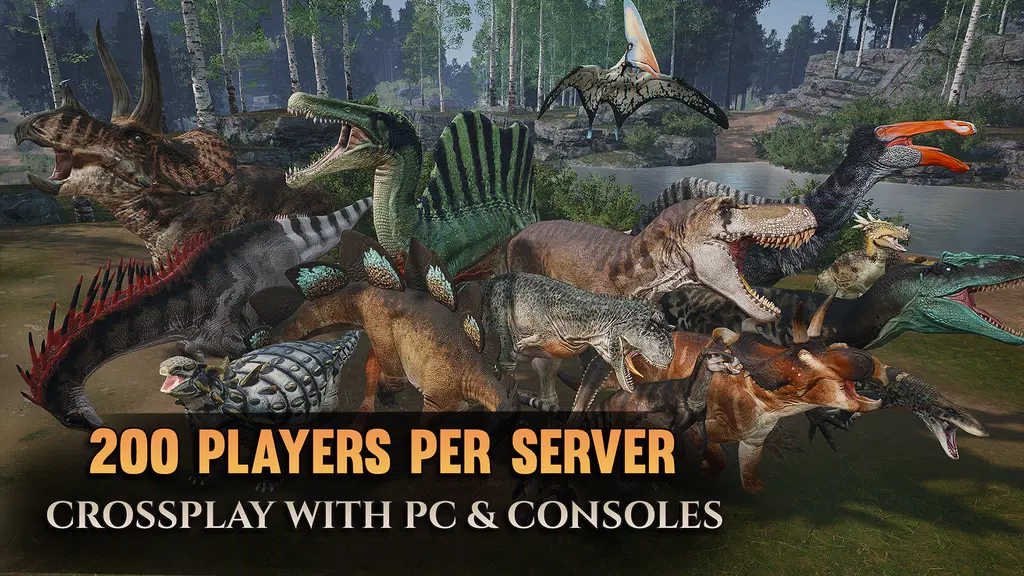
Path of Titans is a multiplayer dinosaur survival game that puts players in the skin of customizable prehistoric creatures, focusing on growth, social interaction, and exploration across large open maps. It combines progression systems, player-driven ecosystems, and cross-platform play for extended cooperative and competitive sessions.
The moment-to-moment gameplay emphasizes exploration and emergent encounters rather than scripted missions. Players control juvenile dinosaurs and work toward adult forms by hunting, foraging, and completing natural objectives. Combat can be tense and strategic, with bite, tail, and charge mechanics that reward positioning and timing rather than button-mashing.
Movement and stamina are central to survival. Sprinting drains energy; careful pacing lets predators and prey interact realistically. The game favors realistic animations and weighty physics, so charging into a pack or clawing at an enemy requires an understanding of momentum and cooldowns. Path of Titans encourages players to learn its systems instead of relying on stats alone.
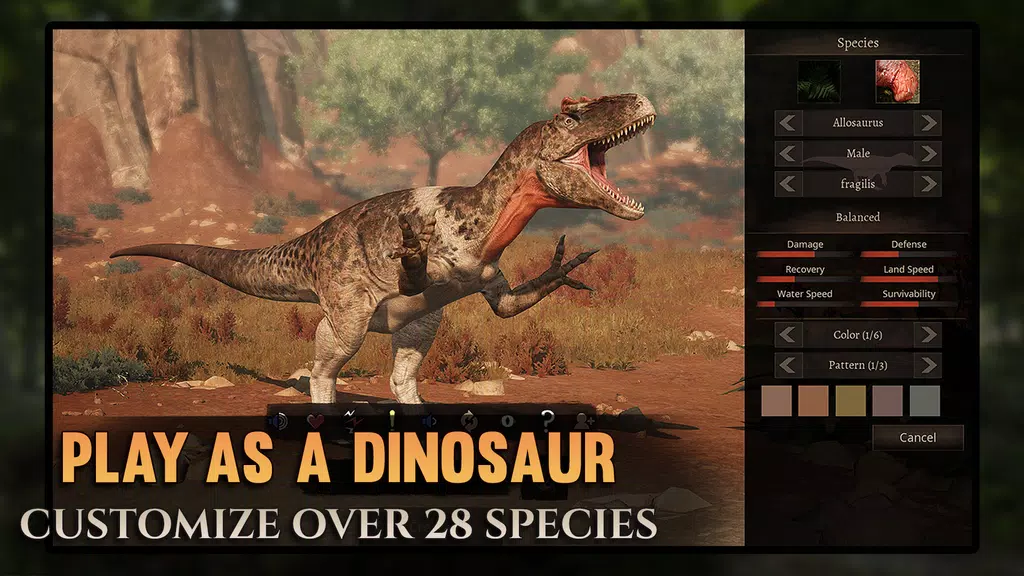
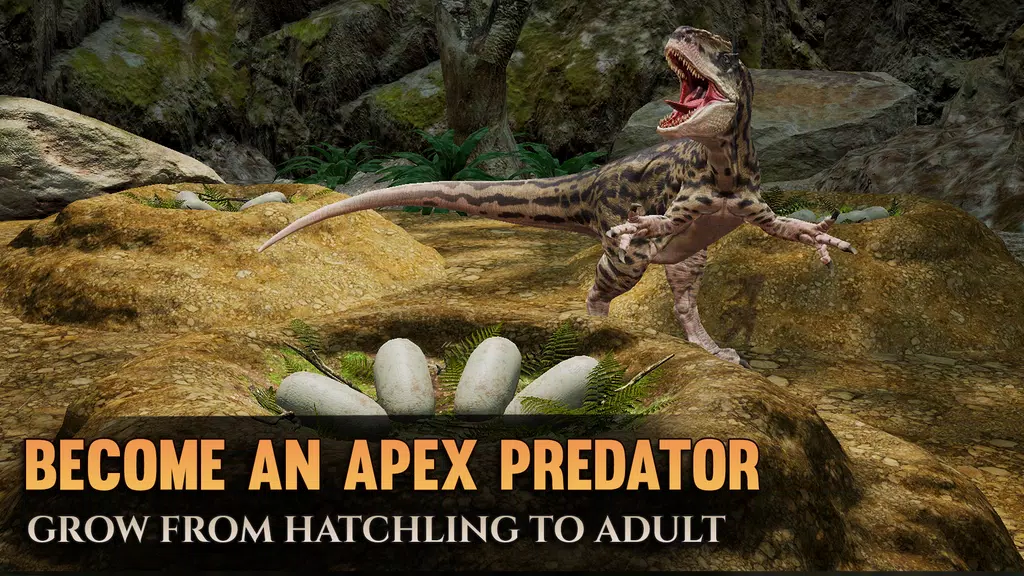
Character progression is presented through a clear growth loop. Starting as a hatchling or juvenile, you earn experience by feeding, engaging with others, and surviving threats. As you level up, new skins, horns, and abilities unlock. Customization is deep—players can alter body proportions, color patterns, and armor-like features to create distinct silhouettes that hint at their playstyle.
Choices during growth affect later performance. Investing in speed makes you an effective scout but reduces raw power. Defensive builds excel in contested areas and can hold territory. That trade-off system gives each creature a tactical role within a group and encourages team compositions in multiplayer sessions.
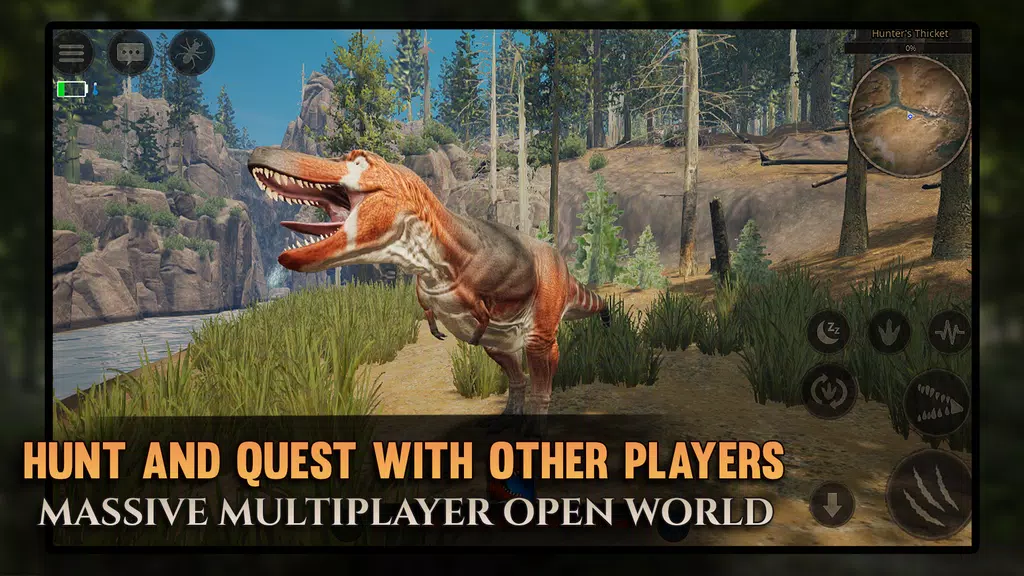
Maps in Path of Titans are large and varied, with river valleys, forests, and open plains. Environmental design supports ambushes and migration routes, which adds life to the world. Player interaction ranges from tentative alliances to full-scale combat. Tribes and casual groups can form to share resources or defend spawn points, creating social dynamics that evolve organically.
Dynamic day-night cycles and weather events alter visibility and movement. Rain can reduce scent cues and soften ground, while nightfall favors stealthy predators. These systems influence how players plan hunts, migrations, and breeding seasons.
Controls are designed for both touchscreen and controller setups. The UI keeps vital stats visible without overwhelming the screen, and customizable HUD options let players prioritize information. Performance scales with device power: high-end hardware yields smoother framerates and more detailed shadows, while lower-spec devices retain core mechanics at reduced graphical fidelity.
Newcomers should begin in safer zones and focus on steady growth rather than immediate dominance. Learn a few maps to understand common food sources and choke points. Join active servers and tribes to benefit from cooperative hunting and shared knowledge. Practice patience—surviving long-term requires observation and restraint as much as aggression.
Path of Titans stands out because it blends realistic movement and social gameplay with long-term goals. The satisfaction of watching a juvenile mature into a powerful adult, or of coordinating a hunt with teammates, creates memorable sessions. Regular updates and community-driven events keep the experience fresh and invite players to return frequently.
To begin, download the game from your device store, create an account, and select your starter species. Use the in-game tutorials to familiarize yourself with basic controls and survival mechanics. From there, explore servers at your own pace and look for community guides to accelerate your progress.