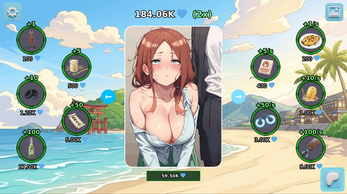


Miku Nakano Clicker: Beachday is a light, character-driven idle clicker that places Miku at a sunny seaside festival where simple taps and smart upgrades unlock new interactions, outfits, and scenes. The game blends incremental mechanics with collectible visuals to deliver a casual, relaxing progression loop suitable for short sessions.
At its heart, Miku Nakano Clicker: Beachday follows classic clicker mechanics: tap the screen to collect points, spend currency on upgrades, and automate production to grow your income even while idle. Reaching milestones unlocks new beach areas, mini-games, and interactive cutscenes. The pacing is deliberately gentle, encouraging steady advancement rather than frantic tapping.
Progression is driven by a mix of one-time purchases and repeatable upgrades. Early upgrades increase per-tap rewards, while later tiers unlock passive gain sources such as assistants or event stalls. Prestige-style resets provide permanent boosts and cosmetic rewards, giving players reason to restart with faster progress. Strategic upgrade choices help balance short-term gains versus long-term growth.
While Miku is the central figure, the game features multiple costume sets and background scenes that change the visual tone of the beach. Costumes are earned through in-game currency, event challenges, or achievement milestones. Each new outfit includes unique animations and poses that add variety to the idle loop and reward players who pursue collection goals.
Beyond tapping, players can engage with small interactive features like photo frames, souvenir stalls, and timed challenges. These mechanics provide short bursts of active play and occasional minigames that yield bonus currency or limited-time items. The balance between active and passive activities is designed to keep the experience fresh without demanding lengthy sessions.
The visual presentation emphasizes colorful, anime-inspired art with a focus on charm rather than realism. Smooth character sprites, expressive idle animations, and layered beach backgrounds create a pleasant atmosphere. Sound design supports the visuals with upbeat background tracks and satisfying click effects; audio cues also signal important milestones and completed upgrades.
Miku Nakano Clicker: Beachday offers a variety of personalization options. Players can mix and match costumes, change background scenes, and adjust display elements on a simple HUD. Cosmetic items do not affect progression but provide goals for completionists and a way to showcase achievements. Seasonal events introduce limited-time cosmetics that encourage returning players.
Controls are straightforward: tap to earn, long-press for certain interactions, and use intuitive menus for upgrades and customization. The interface is optimized for one-handed play on phones, with responsive buttons and readable fonts. The game performs well on a broad range of devices; lightweight assets and adjustable graphic settings help maintain smooth frame rates on older hardware.
The title includes light social features such as leaderboards and shareable screenshots. Players can compare progress, showcase outfits, and participate in community-limited events. These systems encourage friendly competition without imposing aggressive multiplayer mechanics or pay-to-win dynamics.
New players can jump in within minutes: complete a short tutorial that explains tapping, upgrades, and the shop. Collect a starter costume and explore the beach areas to find hidden interaction points. Save up for the first passive income upgrade to ease the early grind and experiment with cosmetics to personalize the experience.
Miku Nakano Clicker: Beachday appeals to players who like relaxing, collectible-focused idle games with a character-driven aesthetic. The mix of steady progression, cosmetic goals, and bite-sized interactivity makes it suitable for casual play between other activities. Light events and predictable progression systems make advancement rewarding without becoming overwhelming.