

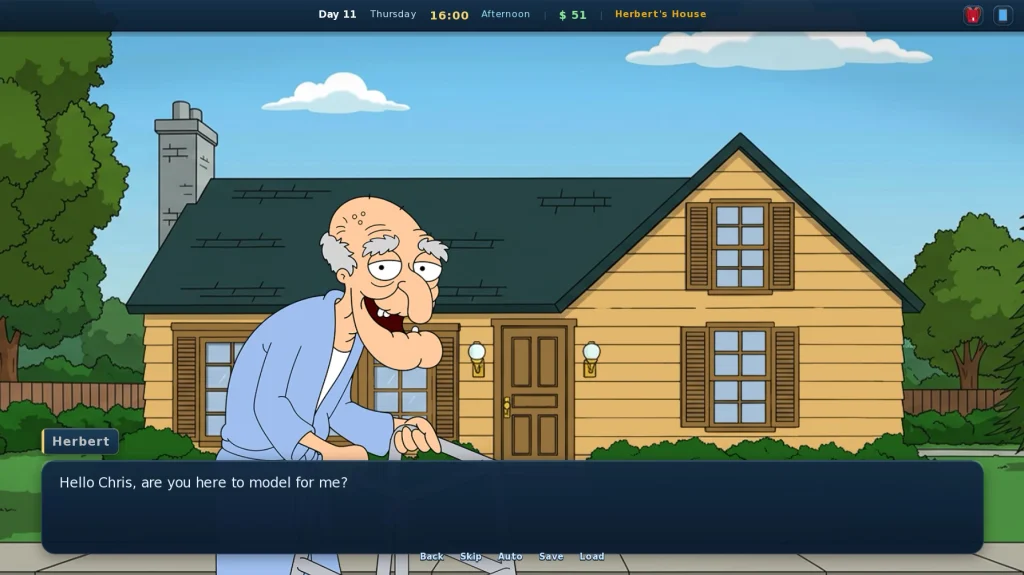
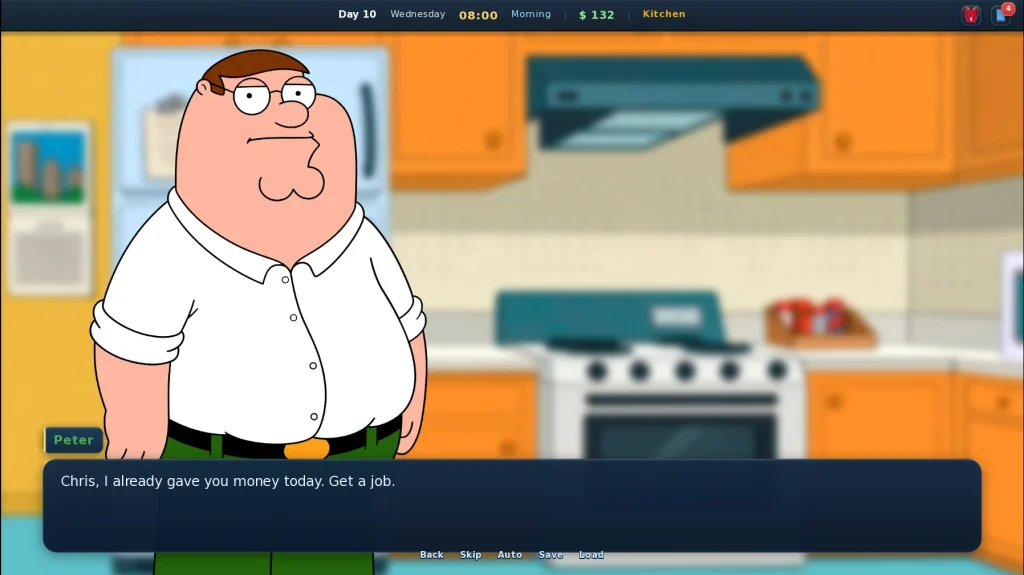
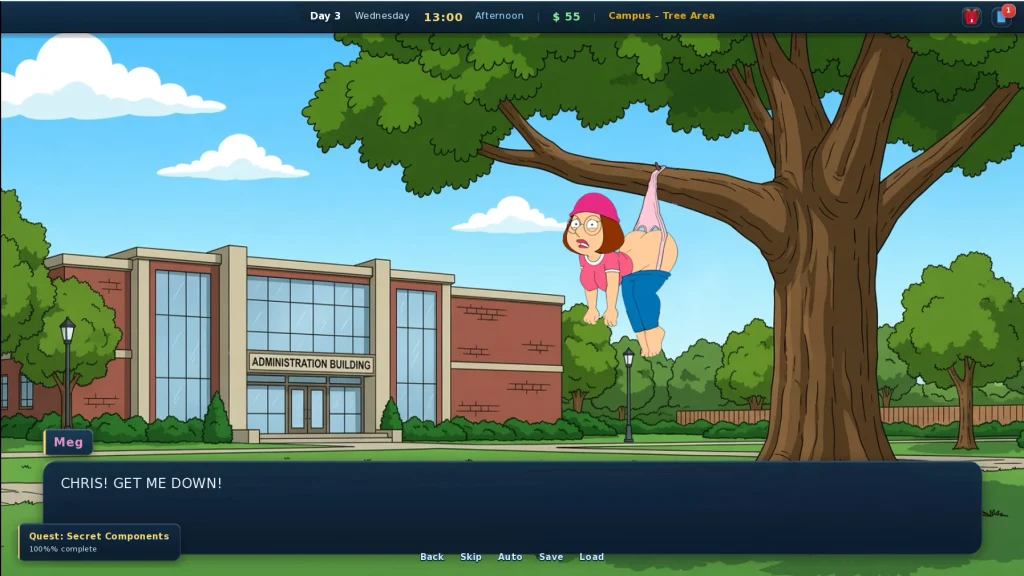
Inside The Griffins is a fan-made, mature-themed simulation set in a recognizable animated household in Quahog; this unofficial parody offers a story-driven single-player experience in which you control an adult, reimagined protagonist and explore the family home and the surrounding city while navigating day-to-day choices and relationships. Inside The Griffins focuses on roleplay, character customization, and narrative branching rather than explicit material, and the project is presented for mature audiences with an emphasis on storytelling and decision-based gameplay.
Inside The Griffins blends open exploration with structured missions to create a character-driven slice-of-life simulation. Players move through a living household environment and several neighborhood districts of Quahog, meet recurring characters from the household and the town, and make choices that influence story beats and personal relationships. The title is intended as a parody and an experimental early build; it emphasizes player agency, time management, and emergent interactions rather than explicit or exploitative content.
Gameplay mixes free-roam exploration of interiors and outdoor areas with mission hubs that provide short-term objectives and longer story arcs. Controls are optimized for touch screens with contextual buttons and a simple tap-to-interact system; movement and camera are handled through on-screen controls designed for one-handed play on phones and two-handed play on tablets. Interactions are menu-driven when needed, keeping core actions straightforward for mobile sessions while still allowing deeper menu-based choices for conversations, inventory, and schedules.
Progression in Inside The Griffins is built around time management and relationship systems. Daily schedules include activities such as work, study, or social events and each choice consumes in-game time and resources. Affinity meters track how characters respond to your decisions; higher affinity unlocks additional dialogue options, side stories, and unique quests. Skill-like progression is represented through unlockable actions and access to new locations rather than formal leveling, encouraging players to experiment with different routines and priorities.
The game adopts a cartoon-inspired visual approach that references the familiar aesthetic of the source material without copying it directly; environments are crafted with clear silhouettes, bold colors, and readable UI elements so scenes remain legible on small screens. Optimizations target a broad range of Android devices: lower-resolution texture settings and performance presets are available to help maintain stable framerates on older hardware, while higher-quality visuals can be selected on modern devices.
Levels are structured around the Griffin house as a central hub and several connected city districts that open as the story progresses. Missions range from short errands that introduce mechanics to multi-step story quests that progress character arcs. Many missions include optional objectives that offer extra rewards or branching outcomes, increasing replayability by encouraging alternative playstyles and different scheduling choices.
Customization lets players tailor the protagonist’s appearance and wardrobe, influencing social interactions and certain scene outcomes. Roleplay mechanics include choice-driven dialogue, outfit-based social modifiers, and simple inventory items that can be used to influence conversations or unlock unique activities. Customization is intended to support roleplaying variety rather than serve as a cosmetic-only layer.
Replay value comes from branching dialogues, multiple quest resolutions, and affinity-driven storylines that reveal different character perspectives on repeat playthroughs. Challenge is presented through scheduling constraints, resource trade-offs, and mission-specific timers that require planning and prioritization rather than reflex-based difficulty. Optional side stories and hidden interactions reward players who explore off the beaten path.
The interface emphasizes clarity and ease of use with an accessible tutorial that introduces core systems gradually. Accessibility options include adjustable text size, subtitle toggles, and customizable audio levels; controls can be simplified for players who prefer fewer on-screen buttons. The title supports local save slots so players can maintain multiple playthroughs without an online account.
Inside The Griffins is designed as a single-player, offline experience that does not rely on persistent internet connectivity for core gameplay. This allows play during commutes or in areas without service while preserving player progress locally. Compatibility targets a wide range of Android versions with scalable graphics settings and performance profiles to accommodate low- and mid-range devices.
This is an unofficial fan project developed by FRANKTOPIA and labeled as an early release. The build focuses on narrative systems and core gameplay; players should expect ongoing updates and potential bugs in this early version. The developers emphasize that mature themes are handled from a narrative perspective and that the game avoids sexualization of characters who are canonically minors, presenting an adult-focused reimagining consistent with responsible content practices. Current release: version 0.1, which establishes core systems and invites player feedback for stability and feature refinement.