

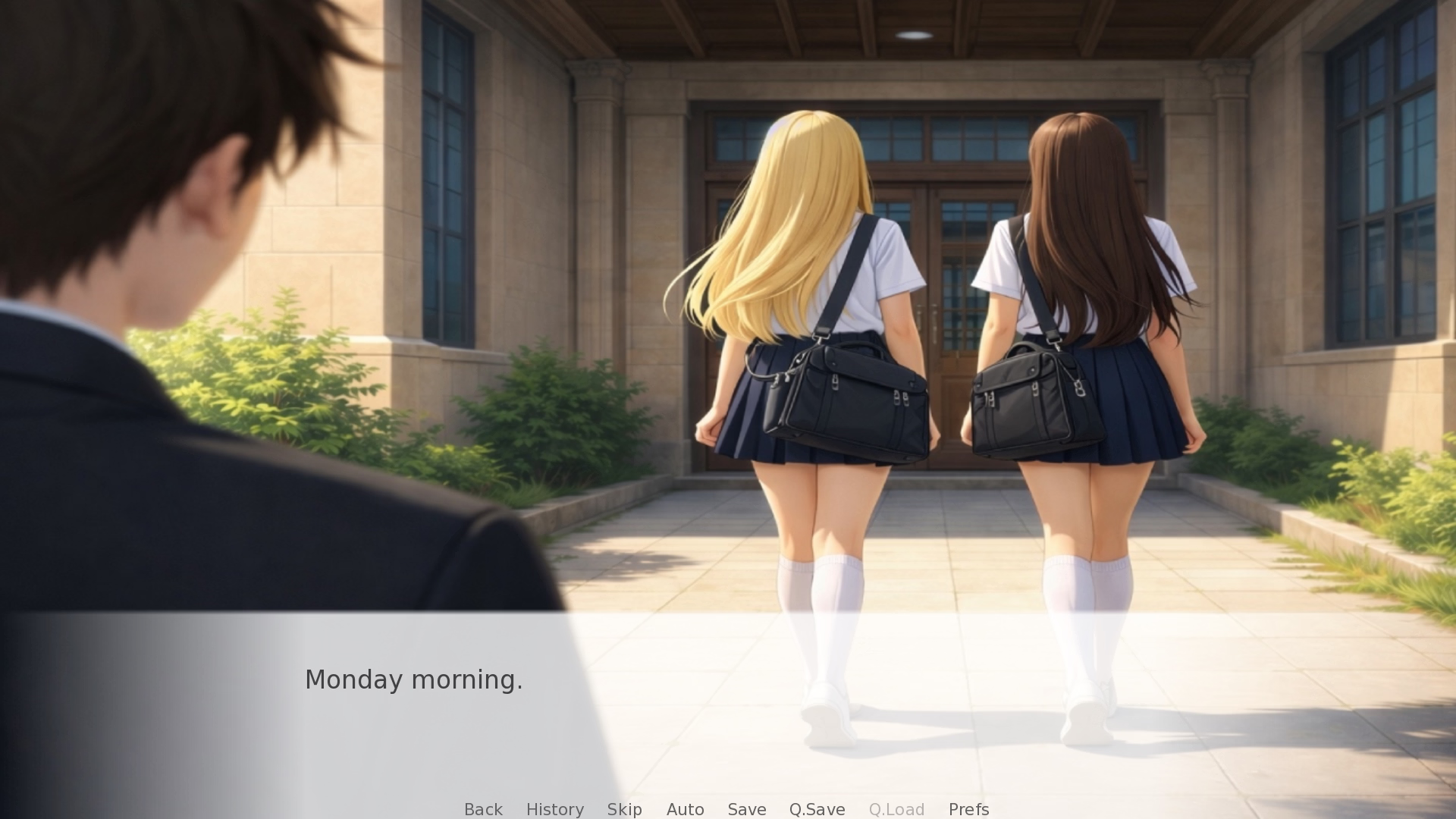
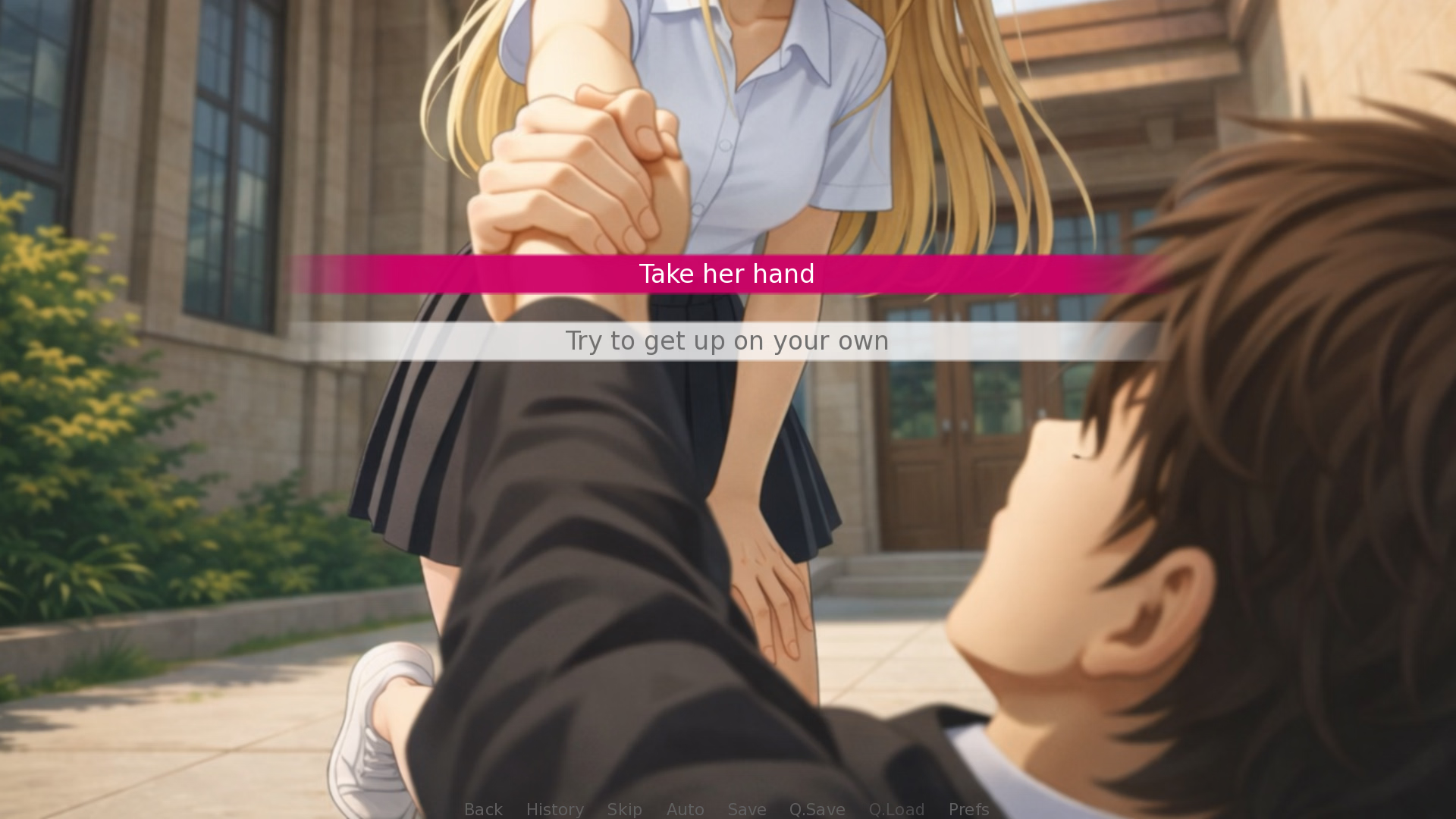

EmmaStar is a story-driven casual dating sim that places you in a college setting where choices shape a developing relationship with your long-time crush. The game focuses on branching dialogue and decision points as you attend classes, explore campus locations and navigate mature, emotionally complex scenarios that affect your standing with characters and the narrative direction. Players who appreciate choice-driven storytelling and multiple possible outcomes will find EmmaStar centered on meaningful agency and replay potential.
The core loop of EmmaStar is conversation and consequence: dialogue trees and pivotal decisions influence character reactions, short-term events and long-term endings. The title offers a range of narrative branches that react to your play style, so the same scene can lead to different outcomes depending on earlier choices. Visual content includes carefully rendered character artwork and animated sequences that adapt to story beats, and the presentation is enhanced by a warm musical score designed to support tone and atmosphere rather than distract from the story. The game is explicitly intended for a mature audience and presents relationship themes with narrative context rather than sensational detail.
Gameplay follows a visual-novel structure with a straightforward tap-and-select control scheme that works well on phones and tablets. Player input is primarily through choosing dialogue options and deciding how to spend time on campus activities; key decision moments are clearly signposted and important choices are often accompanied by brief explanatory text so players understand potential stakes. A set of relationship and trust indicators provides feedback on how characters perceive your actions, and a simple progression meter tracks major story arcs so you can anticipate how decisions will ripple forward. The interface includes a log function to review past dialogue and an option to skip scenes you have already completed to streamline replaying certain branches.
EmmaStar is built around branching progression rather than linear leveling. As you unlock branches and endings, the game records progress so you can return to earlier points and explore alternative choices without starting from scratch. There are outfit or presentation variations tied to certain scenes that change how characters react visually, and some scenes are gated by relationship thresholds which encourage experimentation and revisiting different paths. The combination of branching scenes, multiple endings and visual variations supports replayability: new conversations, animated sequences and artwork unlock as you discover different relationship outcomes.
The title favors clean renders and character-focused composition, with an emphasis on readable UI elements and consistent color palettes to help scenes read clearly on smaller screens. EmmaStar uses AI-assisted artwork tools in production to create detailed CGs and animated moments that are then reviewed and refined by artists, producing a polished look while keeping file sizes reasonable. Audio design centers on a pleasant musical backdrop and subtle ambient cues to support immersion. Accessibility features include adjustable text size, dialogue history, and toggles for animation speed to accommodate different reading paces. The game runs offline for single-player sessions after installation, so you can play without a constant network connection.
Rather than combat or timed action, the primary challenges in EmmaStar are narrative trade-offs: balancing attention between classes, social commitments and personal choices, and managing trust levels with key characters. Decision-making often requires weighing short-term benefits against longer-term relationship effects, creating a steady, low-pressure challenge that rewards thoughtful play and careful observation of character reactions. Save slots and a clear chapter structure make it easy to experiment with different approaches, and the game provides feedback about choices so players can learn how to influence outcomes more deliberately.
The developers are active in addressing community feedback. Early releases received praise for music and art quality, while some players reported occasional bugs such as progress rollbacks, brief image flickers during certain animated sequences and a dress-render transparency issue that affected a small number of scenes. Version 0.2 adjusted the versioning and added a modest set of new scenes; some players felt that update was compact and noted a narrative branch that surprised them. Version 1.0 improved several visuals and audio elements, though a few users reported errors that required temporary rollbacks. The team continues to refine mechanics such as relationship meters and scene transitions based on player reports and aims to deliver regular but measured updates rather than frequent small patches.