



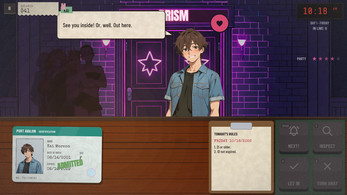
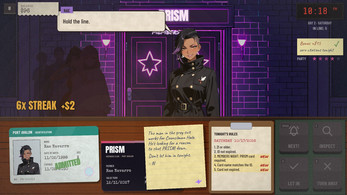
Door Policy is a strategic puzzle game that challenges players to manage access, navigate shifting layouts, and solve timing-based riddles across dozens of levels. With minimalist visuals and precise controls, Door Policy blends planning and quick reflexes to turn simple door mechanics into tense, rewarding encounters.
At its core, the experience revolves around doors as the primary obstacle and tool. Every map presents a network of entrances, switches, and moving platforms that interact with each other. Players must study patterns, predict door behavior, and coordinate movements to reach goals or escort NPCs safely. The concept is elegant: a small set of mechanics layered to produce challenging scenarios.
Door Policy’s mechanics are intentionally focused. Each level typically introduces one new rule or object, such as timed locks, pressure plates, or one-way doors. Combining these elements leads to emergent puzzles where sequencing and timing are critical. Controls are simple — tap, swipe, or hold — allowing the design to emphasize thought over complex inputs.
Levels are organized to teach gradually, encouraging experimentation without harsh penalties. Early stages feel like tutorials, while later maps demand multi-step planning and split-second execution. Success usually comes from anticipating how several systems combine rather than relying on a single trick. Players who enjoy thinking several moves ahead will find a satisfying learning curve.
Although Door Policy keeps core systems minimal, it offers light progression elements to keep players invested. Cosmetic unlocks, alternative skins for doors and characters, and optional challenge modes extend replay value. These additions do not change puzzle logic but provide goals for completionists and a sense of growth as new aesthetics open up.
The presentation leans toward clean, readable graphics that prioritize clarity. Icons, door states, and switch positions are easy to parse at a glance, which is essential for planning and speed runs. Backgrounds are restrained, preventing visual noise. Sound design focuses on crisp cues to reinforce action — a satisfying click when a lock engages or a subtle chime when a puzzle is solved.
Menus are straightforward, and in-game prompts use minimal text to communicate new mechanics. The touch controls are responsive, with support for gestures that feel natural on mobile devices. A short calibration setting helps players adjust sensitivity for more precise timing, which is especially useful on smaller screens.
These small habits help players transition from solving individual rooms to mastering entire stages efficiently.
Door Policy rewards careful thinking and offers satisfying payoffs when plans come together. The balance between mental puzzles and timing tests creates moments that feel earned. Achievement hunters and puzzle fans can pursue tighter clears or tackle optional challenge runs for added longevity.
Installation is quick and the first set of levels is free to play, making it accessible to casual players. For those seeking more content, optional packs expand the level roster with fresh mechanics. Before jumping into advanced modes, take time to learn the basic interactions — understanding one gate’s behavior often unlocks strategies for entire level groups.
Door Policy is a compact, thoughtfully designed puzzle title that turns a single, relatable mechanic into a varied game experience. Its approachable interface and steadily increasing complexity make it a good fit for players who enjoy deliberate challenges and polished mobile gameplay.