




Aristocrat Girls V1.3a opens as a compact, story-driven college drama that puts you in the shoes of a rural student suddenly relocated to the city after a family tragedy; the title Aristocrat Girls V1.3a frames the experience around cohabitation with three roommates, coursework, part-time work and an investigation into a missing parent. This first paragraph summarizes the setting and tone so you know what to expect: a character-focused, choice-driven narrative where everyday decisions about money, study and relationships shape which story paths are available.
The game centers on branching dialogue and a small set of interlocking systems rather than fast-paced action. Conversations have weight: choices change how your roommates respond, which in turn opens or closes investigative leads. You spend in-game hours on study, shifts, social time or personal investigation, and each allocation has clear consequences for your finances, grades and what evidence becomes available. The investigative thread is deliberately approachable—notes, dialogue logs and optional scene exploration reveal clues that must be connected to advance the mystery.
Time plays like a light resource: you plan a weekly schedule with a calendar view, deciding whether to attend lectures for grade benefits, work extra shifts to avoid missed bills, or spend evenings talking to housemates to unlock new dialogue. The trade-offs are intentional and visible, so planning feels strategic without becoming opaque. Mini-tasks such as reviewing notes or following up on a lead occur in short, focused scenes that fit within the apartment-and-campus loop.
The interface is optimized for touch devices: tap to advance text and choose dialogue options, swipe to cycle through character portraits and rooms, and tap interactive hotspots to inspect evidence. Menus present a clear calendar, inventory of notes and a dialogue log so you can revisit earlier exchanges. Controls are kept intentionally simple to keep the focus on reading and decision-making rather than reflexes.
Progression follows an academic-semester rhythm: performance in exams and class participation affects unlocks and availability of certain branches. Financial pressure functions as a soft challenge—missed payments reduce your options and may force you into additional work shifts, whereas better budgeting opens optional scenes and items. Investigation difficulty scales with thoroughness: more diligent note-taking and repeated conversations yield greater access to evidence and alternative endings.
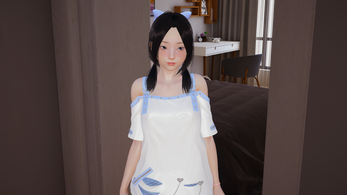
Visually, the game favors expressive 2D character portraits and atmospheric backgrounds of the apartment and city. Animations are modest and used to enhance mood rather than over-animate interactions, while text readability and clear scene framing remain central. Ambient music and restrained sound design underline emotional beats and transitions so dialogue stays front and center.
Small customization options let you personalize your room and daily routine; cosmetic choices influence some NPC reactions and can unlock character-specific scenes. The apartment serves as a hub where conversations, clue review and small interactive moments take place, reinforcing the feeling of cohabitation and evolving relationships between the protagonist and the three roommates.
Multiple endings and branching scenes encourage replay: prioritizing academics, finances or relationships leads to different resolutions and reveals alternate pieces of the mystery. The game is designed for short replays that let you focus on specific branches or missed clues, making it straightforward to explore different approaches and discover hidden interactions that alter later chapters.
Accessibility features include adjustable text size, dialogue speed controls and a toggle to skip repeated animations, accommodating varied reading preferences. Autosave plus manual save slots support comfortable pacing, and offline play is supported so you can progress without a persistent connection. The presentation aims for clear, measured pacing and predictable mechanics to minimize technical friction and let players concentrate on character development and investigation.
Early investment in studying and building rapport with at least one roommate typically opens crucial dialogue paths; review notes regularly to connect disparate clues, and balance work with academics to avoid being locked out of key scenes. The game Aristocrat Girls V1.3a rewards curiosity—small, optional interactions often surface important information more reliably than headline events.