
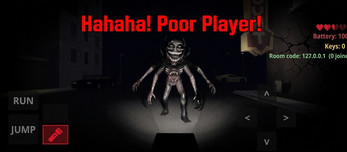
Don't walk in the city at 3:00 AM blends tense stealth mechanics with atmospheric horror to create a short-form urban survival experience. Players navigate dim streets, avoid unseen threats, and solve situational puzzles while time pressure and limited resources force careful decisions in every encounter.
At its core, Don't walk in the city at 3:00 AM is a single-player, narrative-driven title that leans on mood, sound design, and simple but effective mechanics. Sessions are compact and focused: each run lasts long enough to build suspense, and the city map shifts subtly as you progress, keeping familiar routes unpredictable.
The game's loop centers on exploration, stealth, and resource management. You move between street segments, choose when to run or hide, and decide whether to use scarce items that can buy time or silence. Encounters are resolved through context-sensitive interactions rather than complex combat systems, which keeps emphasis on atmosphere and player choice.
There are no traditional character trees or classes. Instead, progression comes from learning the city’s rhythms and unlocking shortcuts or safe spots. Adversaries are varied but abstract; the game refrains from overexplaining their origin, which maintains tension and lets the player fill in the gaps.
Visuals favor a minimalist palette: muted street lamps, slick asphalt, and silhouettes. That stripped-back presentation keeps focus on gameplay rather than spectacle. Sound does heavy lifting here—ambient hums, distant footsteps, and sudden silence all cue danger or opportunity. These elements combine to make each night feel like a living, hostile environment.
Controls are intentionally simple, with context-aware taps and swipes to move, hide, or interact. Menus are tidy and unobtrusive, letting players jump straight into the night. The learning curve is gentle; new players can pick up the basics quickly, while deeper strategies emerge through repeated runs.
Don't walk in the city at 3:00 AM rewards pattern recognition and adaptive thinking. Small victories—escaping a tight chase or discovering a hidden alcove—feel meaningful. The procedural tweaks to the environment and the short session length make it easy to try again without a big time commitment.
The game is optimized for a broad range of devices and runs smoothly on lower-end hardware thanks to its modest visual demands. Load times are quick and battery impact is reasonable, which helps when players want to squeeze in a single tense run during a commute or a break.
Install, grant the minimal permissions asked for, and choose a difficulty setting that matches your comfort level. The first few attempts function as a tutorial: pay attention to audio cues and the behavior of threats. As you learn, experiment with riskier routes to earn higher scores and uncover new urban secrets.
Don't walk in the city at 3:00 AM is a focused experience that prioritizes atmosphere and decision-making over flashy mechanics. If you enjoy short, suspenseful sessions that emphasize tension and improvisation, this title delivers a memorable late-night stroll you won't forget.