
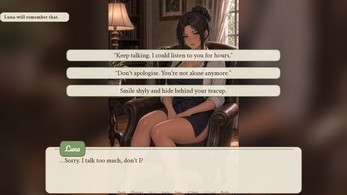

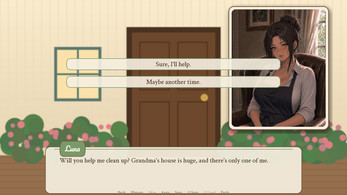
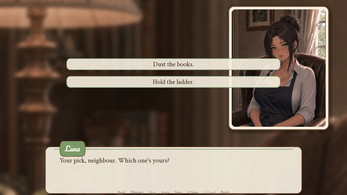
Will You Help Me? / Pomożesz mi? (Demo) is a compact narrative puzzle-adventure that emphasizes observation, cooperation, and quiet storytelling. This demo introduces a handful of sympathetic characters and a sequence of interconnected rooms and brief outdoor areas where small interactions and conversational choices open new paths and reveal hints about the underlying story. The tone favors slow discovery over action, and the demo serves as a focused preview of the design philosophy and core mechanics.
At the center of the experience are environmental puzzles that require planning, sequencing, and careful attention to detail rather than speed. Each scene presents a clear goal and a set of interactive elements such as movable objects, switches, and environmental cues like light, shadow, and sound. Solving puzzles typically involves multiple small steps—examining a clue, repositioning an item to create a connection, or using one object to alter another—and often depends on reading character requests and acting on them in the right order. The design encourages lateral thinking and low-pressure experimentation.
Controls are optimized for touch devices with straightforward gestures: tap to interact, drag to reposition objects, and use a short contextual menu to combine or apply items. The interface is intentionally uncluttered so that the focus remains on exploration and puzzle solving. Tutorial prompts appear gradually and are integrated into early scenes so new players can learn by doing. In this context, Will You Help Me? / Pomożesz mi? (Demo) keeps interactions clear with visual highlights and concise feedback to reduce guesswork while preserving a sense of discovery.
Levels in the demo are compact and deliberately constrained to reduce cognitive load and memory use. Rather than a single sprawling map, progression is built as a chain of short scenes that introduce new mechanics and narrative beats in manageable steps. Choices you make—helping a character, repositioning an object, or revealing an optional route—can influence access to later tools or paths, creating light branching without overwhelming complexity. Save points are placed at key moments to let players experiment without losing meaningful progress.
The demo pairs soft, hand-painted backdrops with stylized characters and restrained animation to create an intimate, readable look. Lighting and color are used thoughtfully to draw attention to interactable elements while maintaining immersion. The soundtrack relies on ambient textures and subtle motifs that change with the mood of each scene, and sound cues are used as puzzle feedback rather than constant direction. Together, the audio and visual design support a reflective play pace where atmosphere enhances, rather than distracts from, the puzzles.
Accessibility options aim to make the demo approachable: toggleable subtitles, reduced-motion settings, and basic control sensitivity adjustments help accommodate different needs and preferences. Scenes are compact to reduce memory demands and the demo runs fully offline, which makes it suitable for playing on commutes or in places without a stable connection. These choices prioritize inclusivity and practical usability on a wide range of mid-range phones and tablets.
Replay value comes from exploring alternative solutions and discovering optional interactions that are easy to miss on a first pass. Though customization in this build is intentionally modest—focused on interface and audio settings—the structure rewards curiosity and repeated playthroughs to uncover small divergences in how scenes can be resolved. Finding different sequences of actions or revisiting earlier choices often reveals subtle narrative details or hidden interactions.
The demo is optimized for efficient resource use: assets and scenes are tuned to keep CPU and memory demands modest and to reduce load times. The app scales UI elements to maintain comfortable touch targets across a variety of screen sizes and resolutions. If you experience slowdowns on older hardware, reducing animation intensity in settings or closing background applications can improve responsiveness without altering the gameplay experience.
Take a moment to observe each scene before acting because visual and audio cues frequently hint at non-obvious solutions. Talk to every character you encounter, since dialogue often points to items or actions you’ll need later. Experiment with combining or repositioning objects in unconventional ways—some solutions emerge only after a few small trials. Think in short sequences of steps rather than expecting a single dramatic action to resolve a puzzle, and make regular use of save points when testing different approaches.
To begin, install Will You Help Me? / Pomożesz mi? (Demo) and play through the brief tutorial that introduces the core mechanics and controls. Spend your first session moving through accessible areas at a relaxed pace, testing a few different solutions for each puzzle to get a feel for how interactions chain together. This demo presents a clear snapshot of the game’s design priorities—puzzle logic, character-driven moments, and atmosphere—and helps you decide whether to follow future updates or a fuller release.