
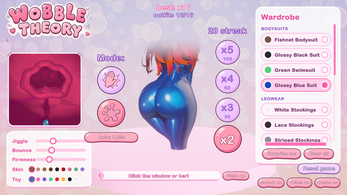
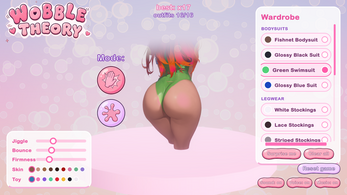
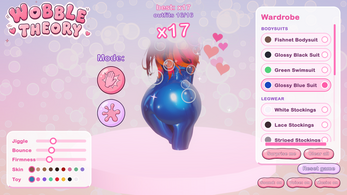
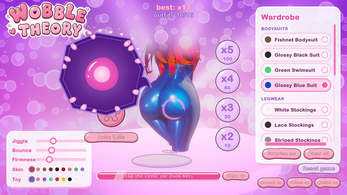
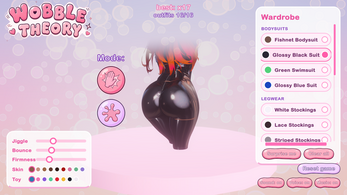
Wobble Theory is a compact physics playground designed for short, experimental play sessions when you need a little mental fidgeting on the go. This indie title places a simple wobble-and-balance concept front and center, so you can nudge objects, watch reactions, and learn how small inputs ripple through a scene without committing to long levels or a narrative campaign.
The core gameplay in Wobble Theory leans on emergent physics rather than puzzles with single correct solutions. Each level or scene presents a small arrangement of objects, supports, and obstacles; your primary objective is exploration and discovery. Gentle puzzles introduce constraints and suggested goals, such as balancing an object on a platform or transferring momentum to trigger a sequence, but success often rewards curiosity and varied approaches rather than exact timing. Levels are short by design, encouraging a few minutes of play that can be repeated with different tactics to uncover subtle behaviors.
Controls are intentionally straightforward: touch-and-drag to push or reposition elements, tap to apply small impulses, and pinch-to-zoom in scenes that benefit from a closer view. Responses are immediate and tactile so that experimenting feels satisfying from the first try. The app emphasizes low friction input—there are no complex combos or steep timing demands—so the interaction loop focuses on cause-and-effect learning and the delight of watching the simulated world respond to your inputs.
Progression in Wobble Theory is lightweight and incremental. Instead of a long campaign, you unlock new tweaks to the environment, such as additional object types, altered friction settings, or subtle gravity variations that change how a scene behaves. Levels are grouped into short sets that introduce a new mechanic and then allow free-play within that constraint to encourage experimentation. You can expect a steady but modest flow of new toys and modifiers; the goal is to broaden the palette of behaviors, not to gatekeep core mechanics behind paywalls or long grinds.
The visual approach favors clarity and playful personality. Objects have readable silhouettes and a restrained color palette so physics interactions are easy to parse, while small visual flourishes help convey momentum and collisions. Ambient audio and soft feedback sounds emphasize satisfaction rather than competitive intensity; sound can be toggled or muted in settings. Overall the presentation keeps focus on the mechanics while offering a cohesive aesthetic that feels handcrafted rather than overly polished or flashy.
Wobble Theory includes modest customization options that let you tailor the session to your preferences: visual presets to change contrast and color emphasis, a simulation speed slider for slower or faster motion, and simple toggles for audio cues. These options support experimentation by making it easier to see subtle movements or to speed through repeated trials when you’re testing a particular setup. Customization is intentionally limited so the core experimental experience remains consistent across devices.
Replay value comes from the open-ended nature of the mechanics and randomized or hand-crafted setups that reveal different outcomes depending on how you interact. Challenges are gentle: a set of optional scenarios suggests goals and constraints, but the game rewards creative solutions and repeated attempts to discover new behaviors. There are simple satisfaction cues and non-intrusive scoring that let you gauge progress or compare different approaches to the same scene, without turning the experience into a leaderboard-driven grind.
The design prioritizes approachable controls and readability: adjustable sensitivity and visual presets aim to help players with different preferences, and the UI keeps instructions short and contextual. Wobble Theory is fully playable offline and does not require an account, so you can dip in anywhere without connectivity concerns. The lightweight install and modest performance needs make it suitable for a variety of Android devices, from newer hardware to older phones that benefit from low-resource apps.
This app is ideal for players who enjoy short, thoughtful experiments with physics systems, for those looking to unwind with low-pressure interactions, and for anyone curious about prototype game design. It’s a good fit if you appreciate indie projects and want to explore how small parameter changes can produce surprising results. Wobble Theory is offered as a free download with no paywall, so you can explore its mechanics and provide feedback directly to the creator if you wish.
Wobble Theory works as a playful testbed: modest in scope but rich in emergent moments, it rewards patience, repeated tinkering, and a willingness to try odd inputs. If you enjoy discovering how simple rules lead to complex movement and prefer short, replayable sessions over long-form content, this little physics toy is worth installing for casual exploration and hands-on learning.