
Kopfschmerzwissen is a certified medical app designed to help people prevent and manage headaches and migraines through structured tracking, evidence-based analysis and practical self-care tools. The app focuses on daily logging of symptoms, triggers and medication so you can see patterns, receive tailored guidance and prepare clearer reports for consultations with a healthcare professional.
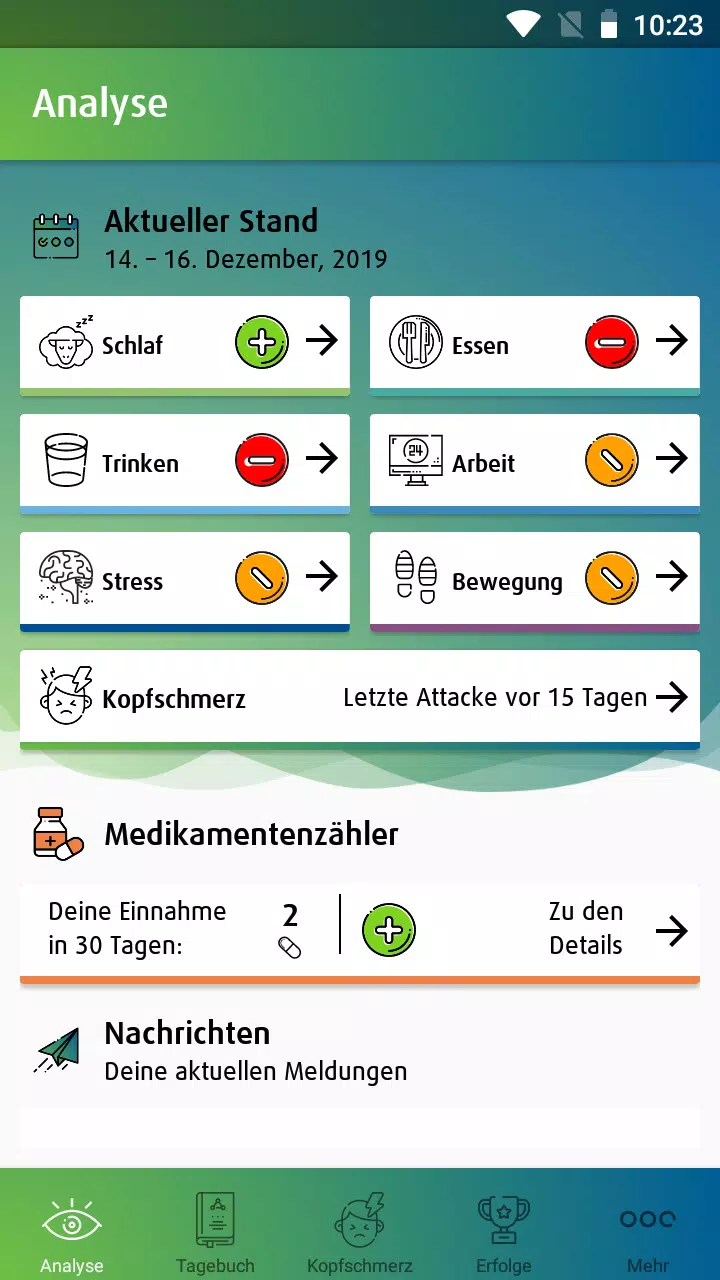
Kopfschmerzwissen guides users through a simple workflow: register headache events, note associated factors such as sleep, diet and stress, and record medications and their timing. The app applies ICHD-3 criteria to suggest likely headache classifications, highlights risk factors like medication-overuse headache and produces clear, shareable reports that clinicians can review. A built-in Jacobson progressive muscle relaxation exercise supports stress management as part of an overall prevention plan. All data is stored locally on your device without advertisements, and the app has been developed to meet medical certification standards for clinical relevance.
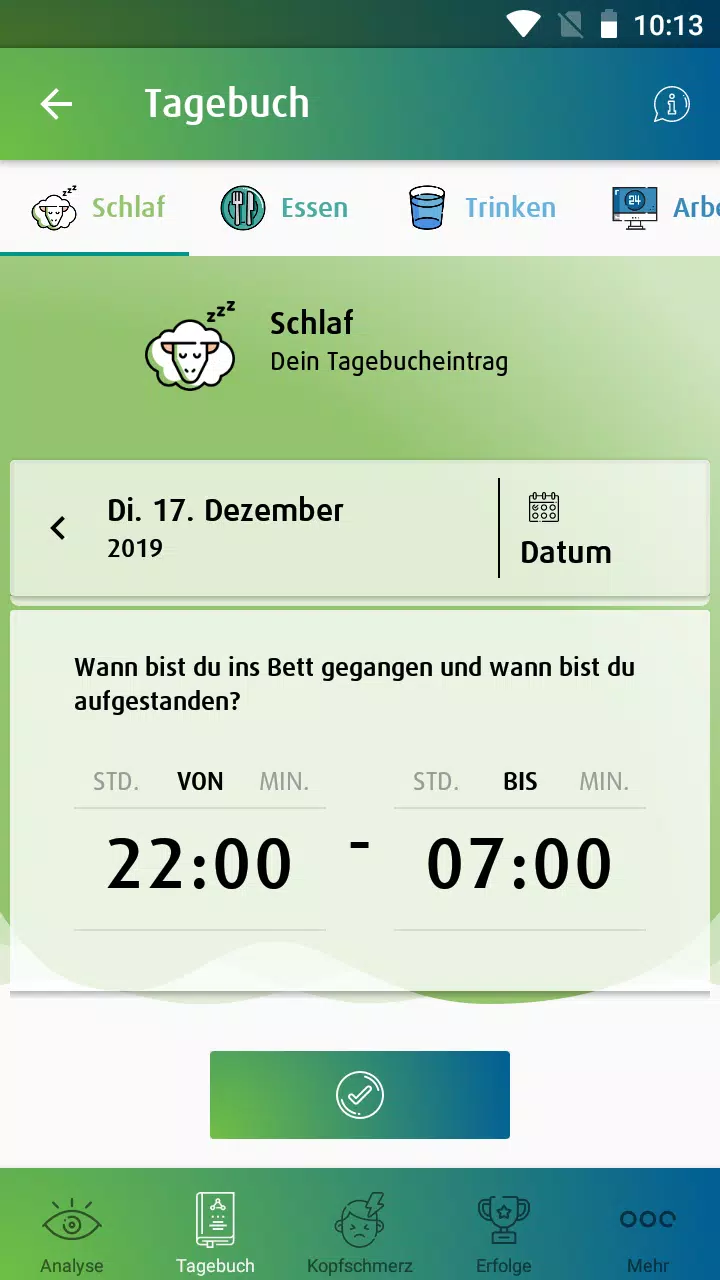
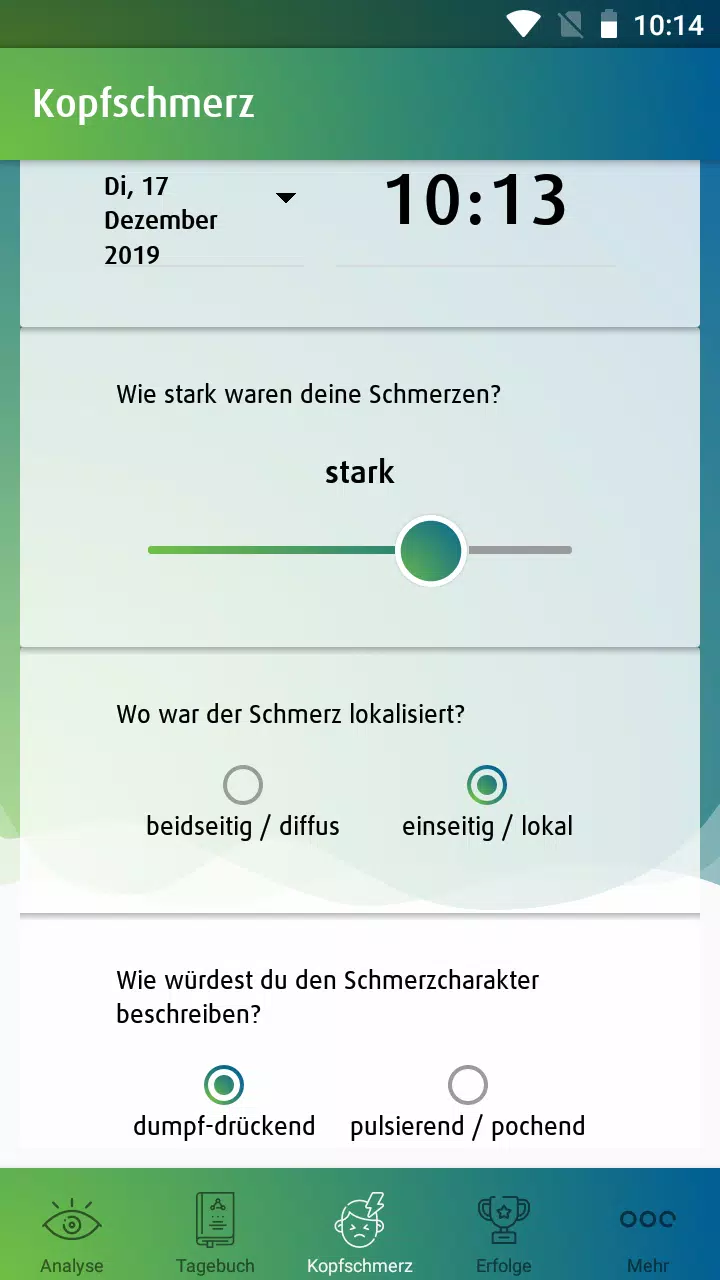
Data entry is optimized for quick, repeatable use so daily logging does not become a chore. Controls include simple pain scales, selectable trigger categories, time-stamped medication records and optional notes for context. You can edit entries, add photos for visual context, and set reminders for medication or preventive actions. The app intentionally avoids complex menus: common inputs are one or two taps, and contextual help explains each field. This makes it easy to keep a continuous diary that feeds the analysis engine.
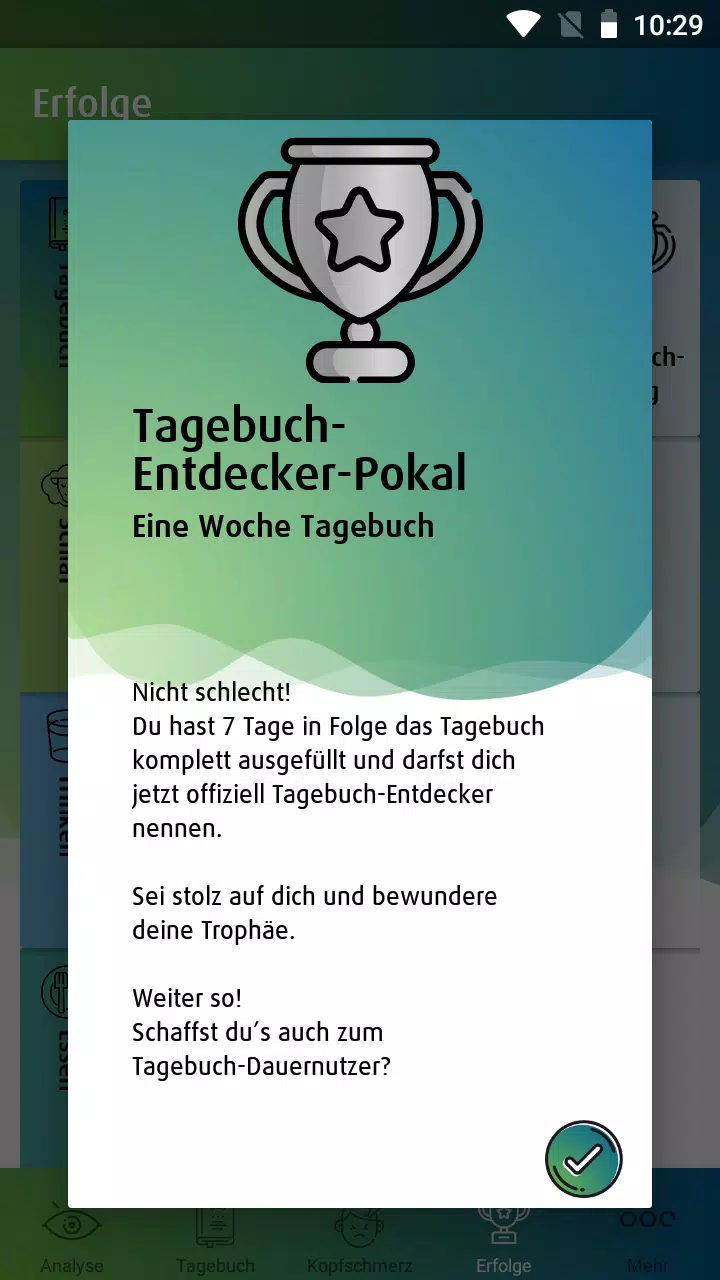
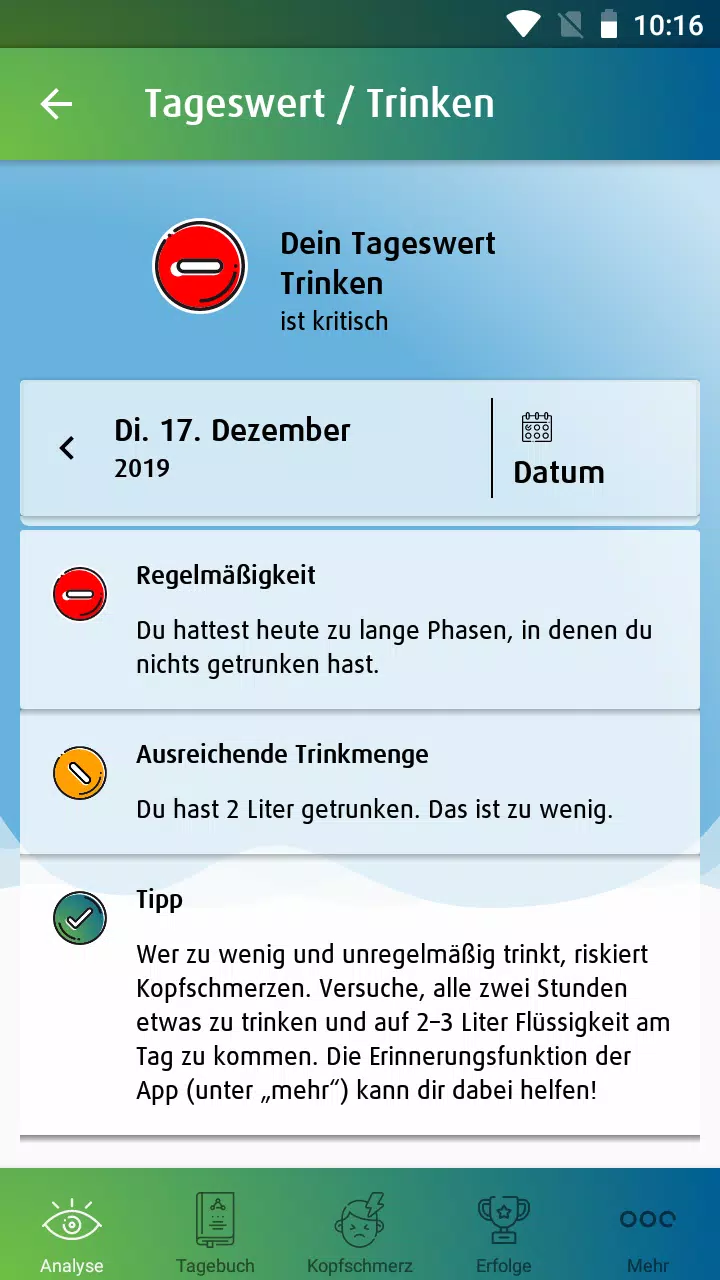
Over weeks of use the app builds personalized prevention plans based on your logged habits, symptoms and lifestyle. Trend charts and analytics show changes in attack frequency, duration and intensity, and the app highlights correlations between triggers and attacks to support behavior change. Goal tracking helps you establish practical targets—such as reducing days with headache per month—and reminders encourage consistent entries. Kopfschmerzwissen adapts its recommendations as the dataset grows, so advice becomes more relevant the longer you use it.
The interface favors clarity: color-coded timelines, simple charts and readable summaries let users and clinicians grasp patterns at a glance. Visual elements emphasize contrast and legibility and the main screens prioritize the diary and recent trends. The design approach minimizes distractions and keeps clinical outputs—such as ICHD-3–based assessments and exportable reports—easy to find when preparing for an appointment.
The app organizes activity into daily entries and rolling summaries by week and month, so you can review recent behavior and long-term change. Customization options let you choose which triggers to track, how often to receive reminders and which preventive measures to include in your plan. Regular use delivers ongoing value: long-term diaries improve classification accuracy, enable richer reports for clinicians and make it easier to test and refine lifestyle changes. The relaxation module and goal reminders are designed to be reused frequently as part of a sustained prevention routine.
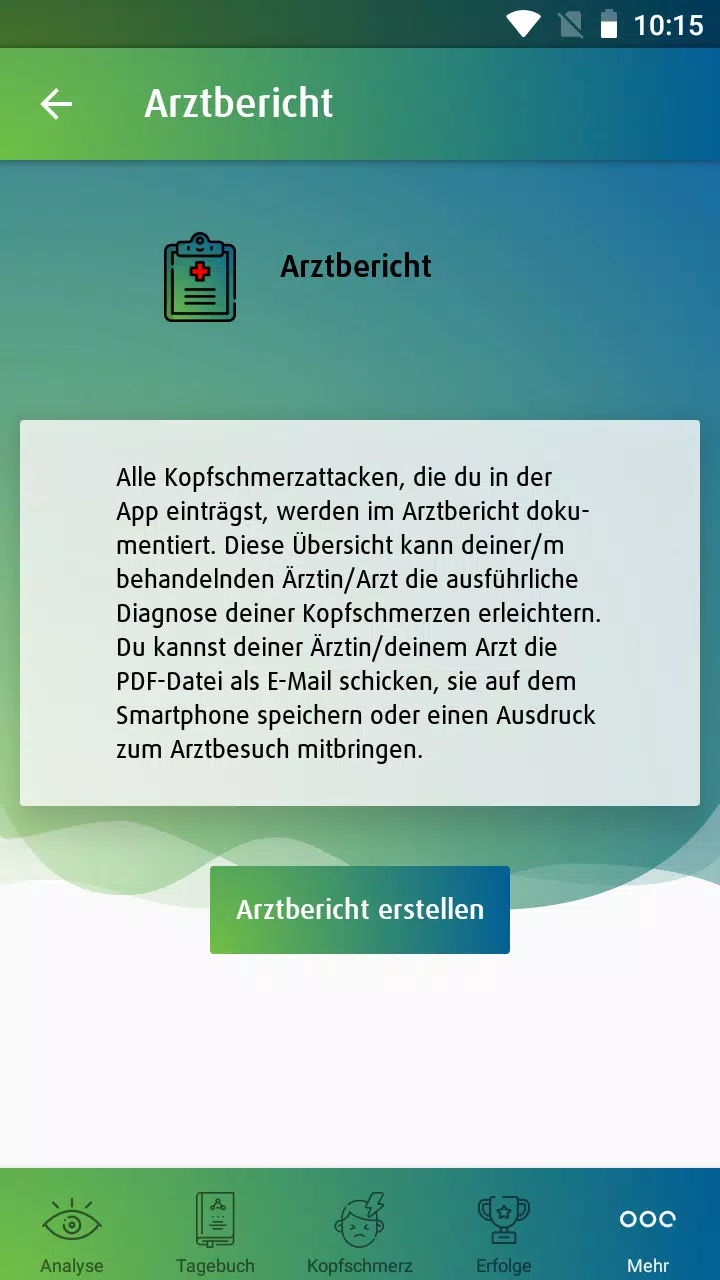
Kopfschmerzwissen runs fully on-device and works without an active internet connection, preserving privacy and ensuring the core functionality remains available offline. The app supports Android accessibility features, adjustable text sizes and high-contrast display options to accommodate a wide range of users. Local data storage reduces dependency on network services and avoids third-party advertising, while export functions allow you to create PDFs or share summaries with a clinician when you choose.
The app typically requires an activation code, often provided by a health insurance program or clinician, which may limit immediate access for some users. Accurate classification and useful recommendations depend on consistent diary entries, so results are best when logging is regular. Kopfschmerzwissen stores data locally by design, so cross-device synchronization or automatic cloud backup is not provided; users should export reports if they need to share or back up information externally. The app complements medical care but does not replace professional diagnosis or urgent treatment.
Setup begins with basic profile details and a few guided example entries to familiarize you with the controls. Most users find that daily logging for a month produces meaningful trend data and that simple habit adjustments suggested by the app reduce the burden of frequent attacks. The editor-style presentation makes it straightforward to prepare a clean report for your next appointment, and built-in relaxation and reminder features support steady progress toward prevention goals.