
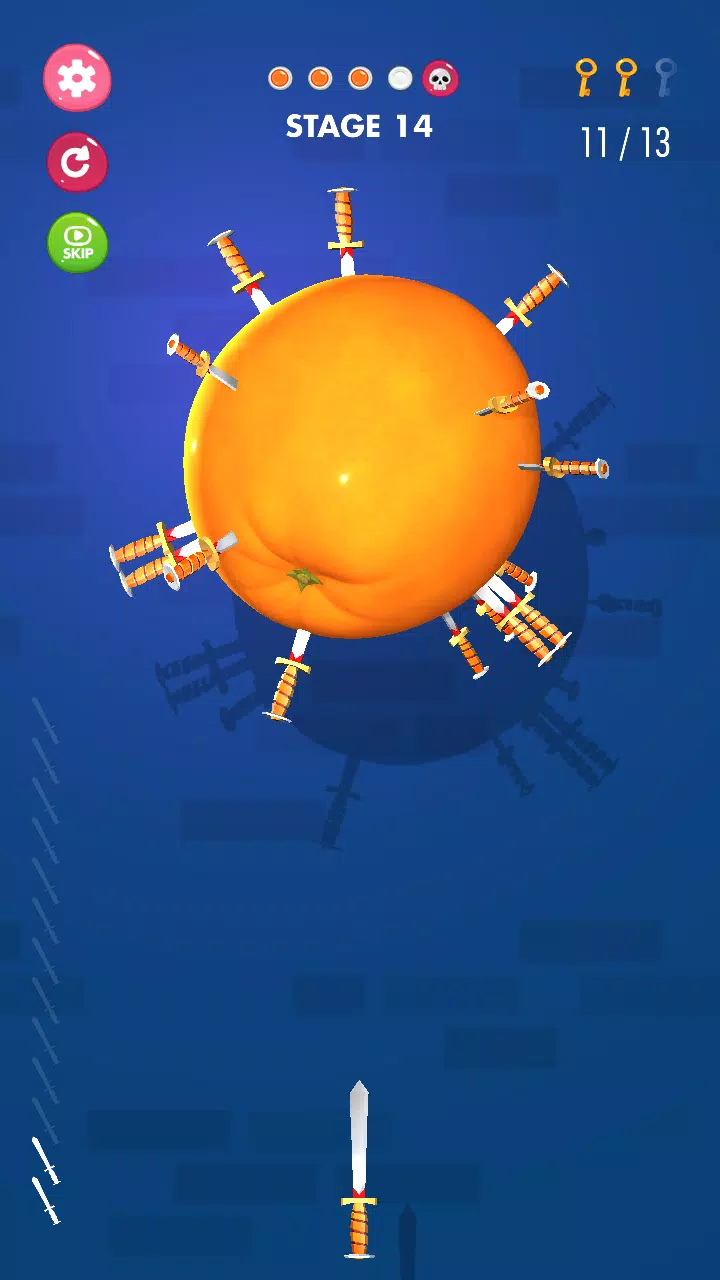
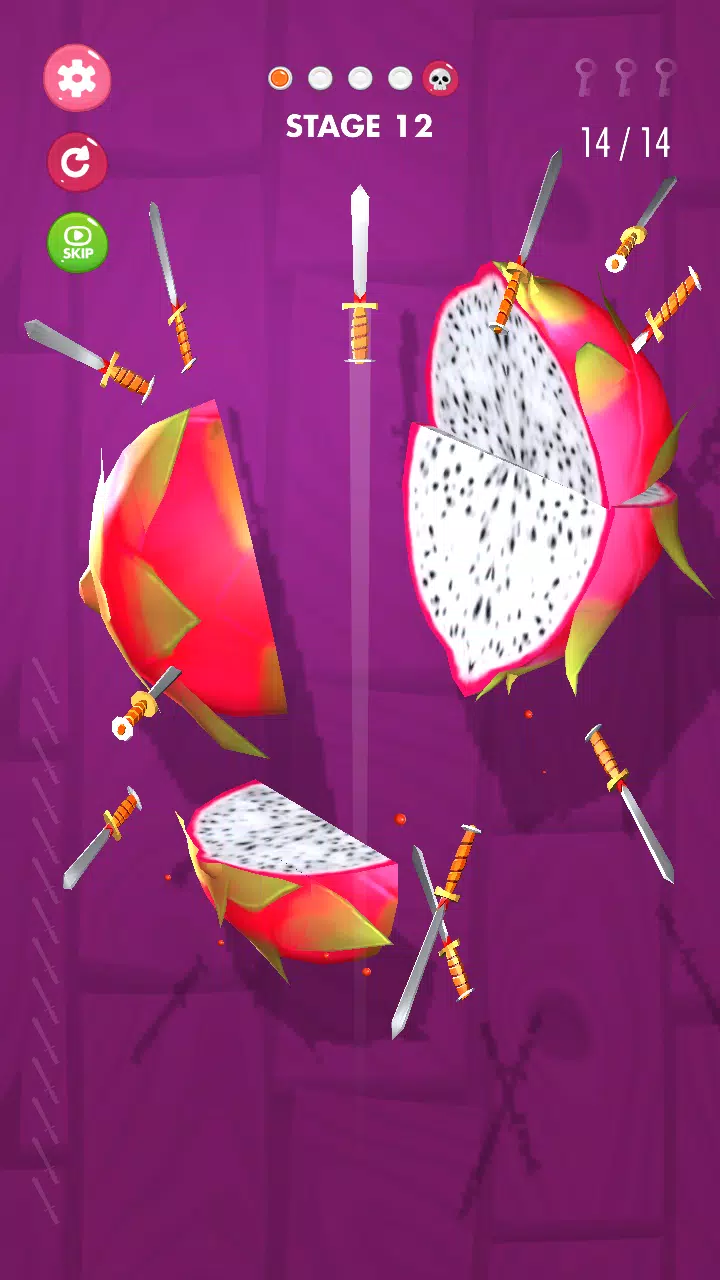
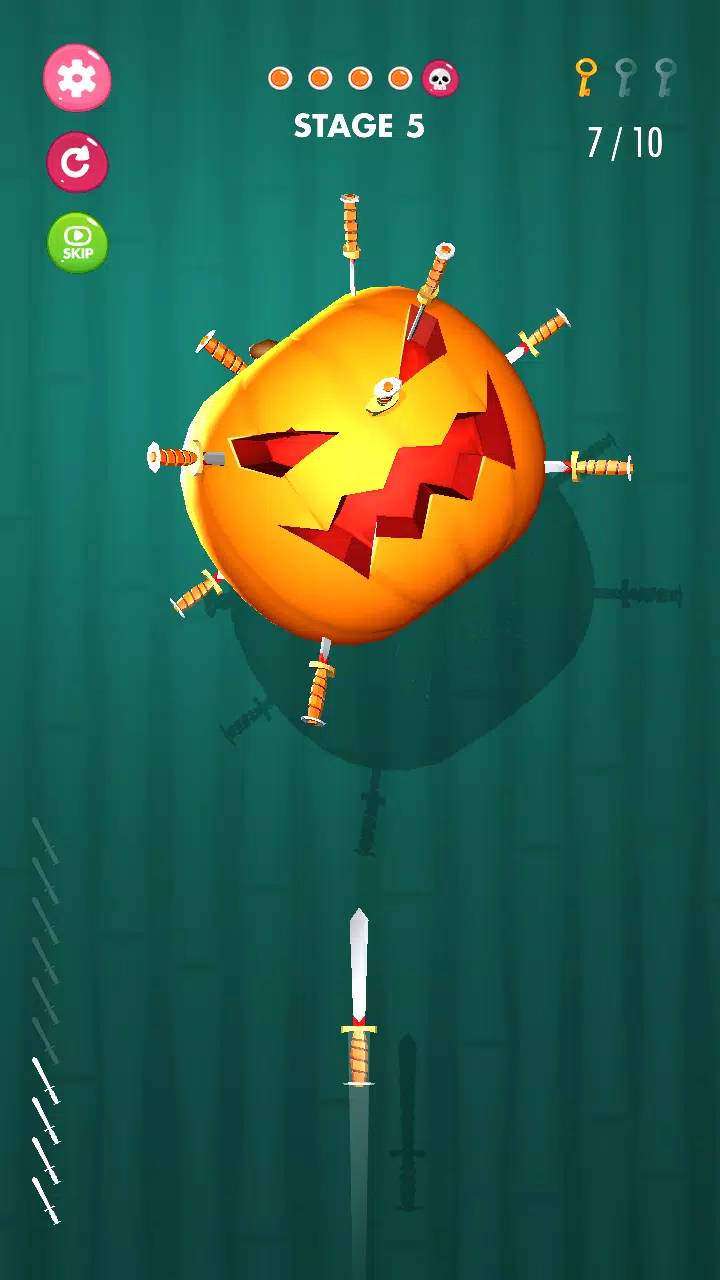
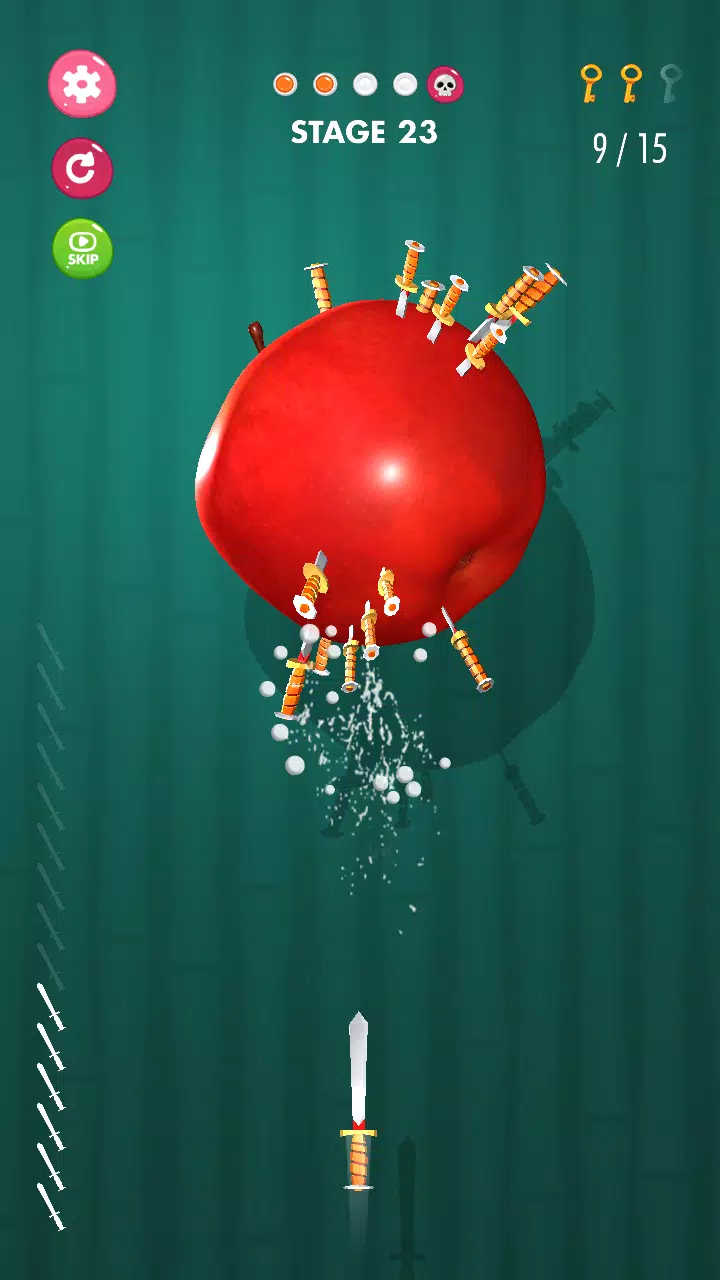
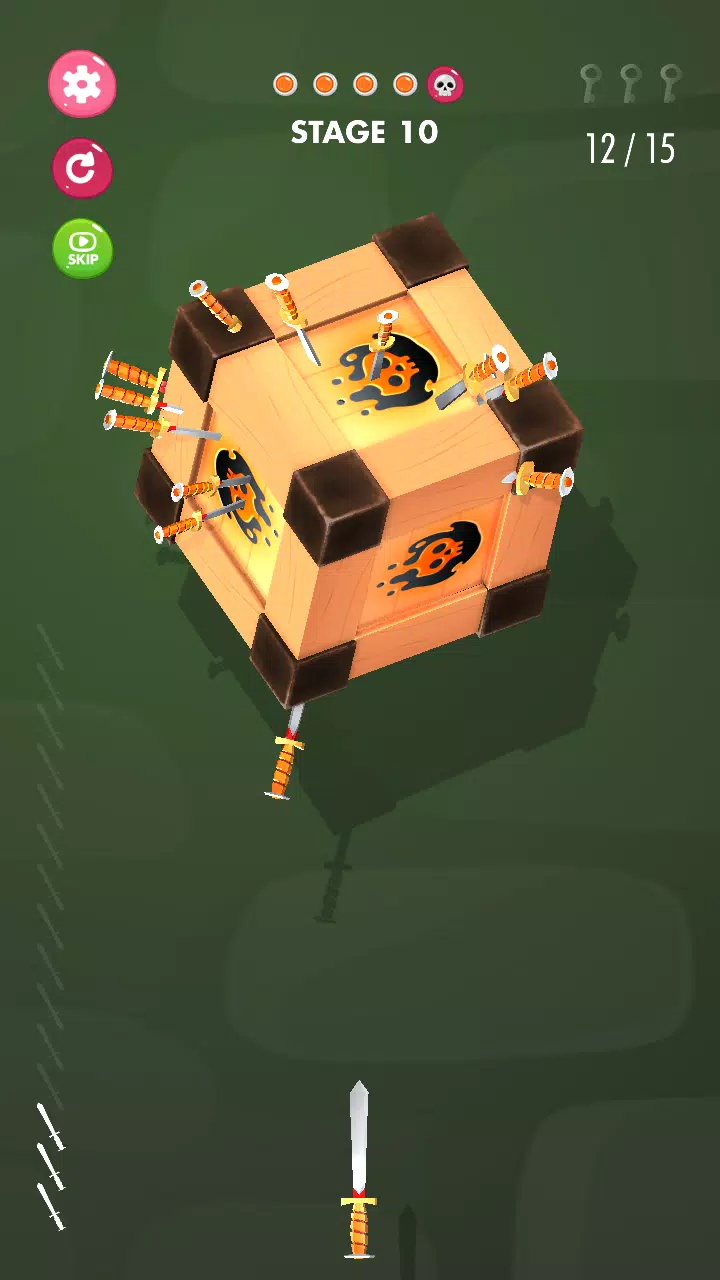
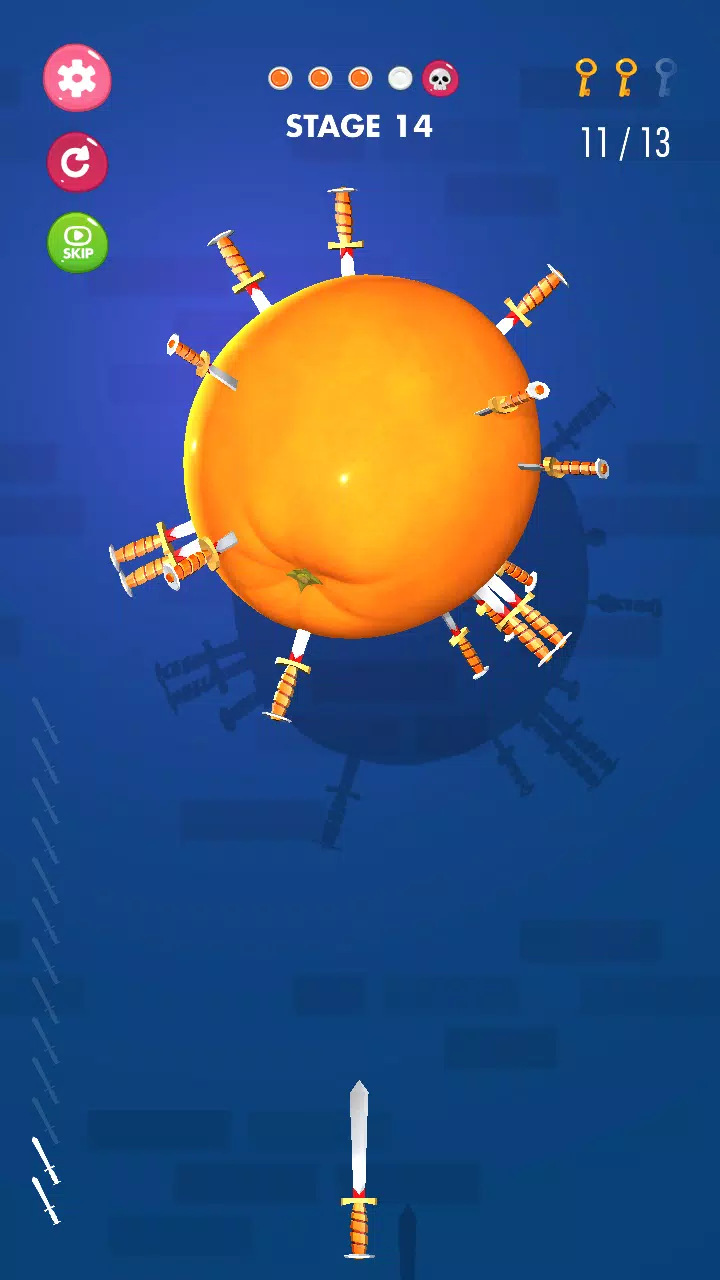
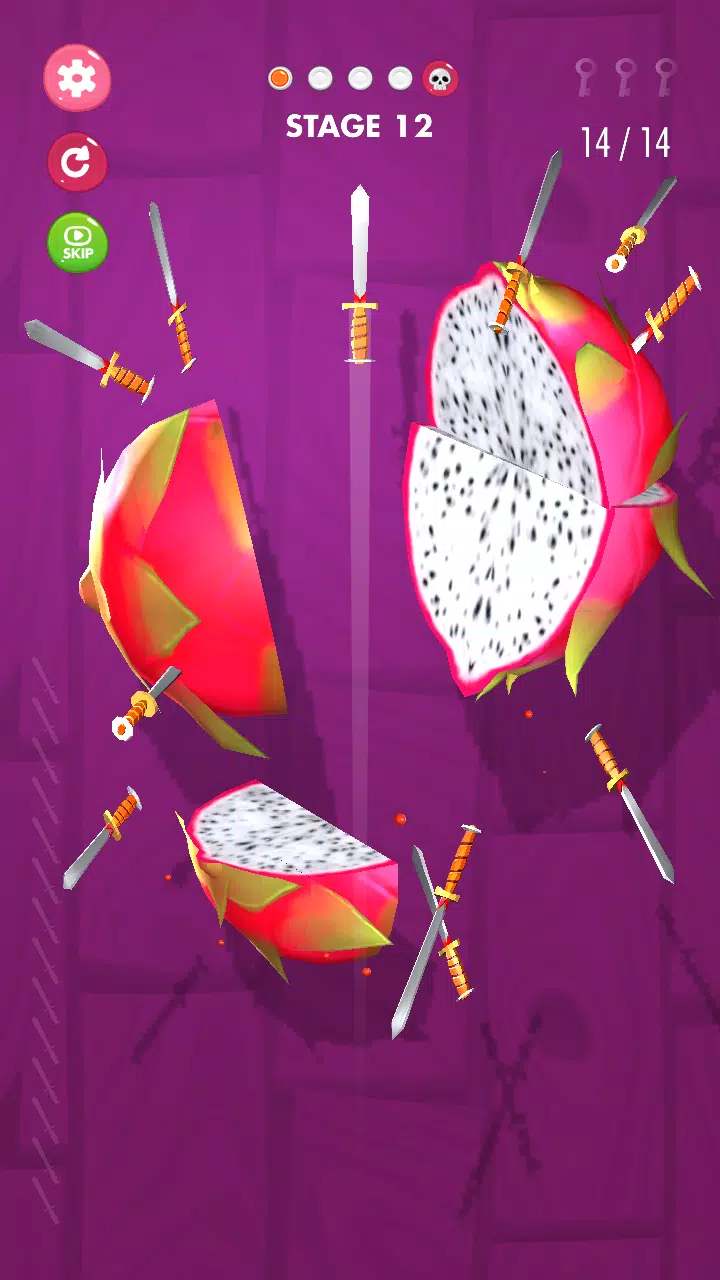
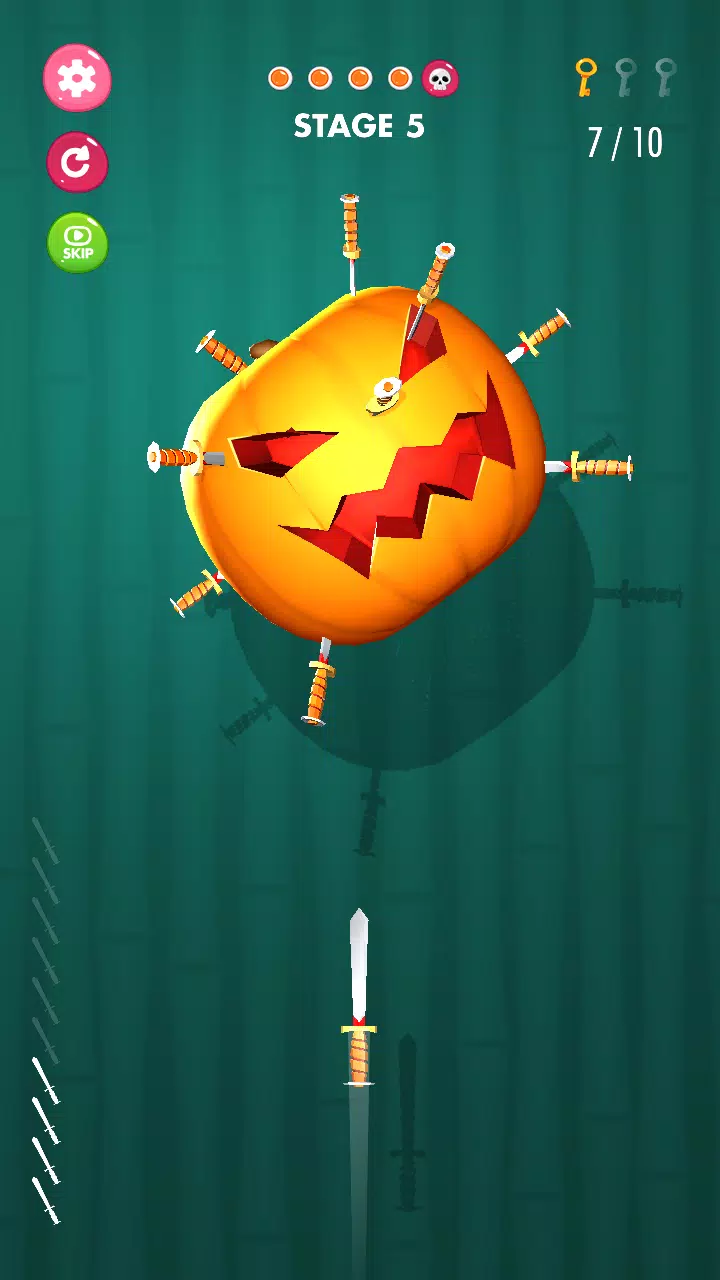
Knife Hits 3D is a focused, skill-based knife-throwing game that puts timing and precision at the center of each short round, challenging players to lob knives at spinning fruit targets while avoiding previously embedded blades. The gameplay loop is straightforward to pick up — line up the throw, choose the right moment, and conserve a limited supply of knives — but the difficulty ramps through level design and timing windows, which keeps sessions quick, rewarding, and ideal for short breaks or repeated practice.
The experience emphasizes clean mechanics and gradual progression. Players can expect a variety of rotating fruit targets and obstacles that alter timing requirements, a growing catalogue of knives that change how you approach a stage, and regular content refreshes that introduce new level layouts. Upgrades are earned through in-game stars and rewards, allowing players to improve knife performance and access tougher stages without relying on intrusive prompts or exaggerated monetization language. Visual and audio feedback is tuned to make each successful throw feel satisfying while failures clearly communicate what to adjust next.
Controls are intentionally simple to support fast, twitch-style play: throws rely on touch-based timing and aim rather than complex gestures, which makes the game accessible to new players while still offering room for skill development. The core risk-reward mechanic comes from managing a small number of knives per level and avoiding collisions with knives already stuck in the target. Stages reward careful observation of rotation speed and pattern changes, so learning level rhythms and refining release timing is the most reliable path to improvement.
Progression in Knife Hits 3D follows a star-and-reward economy that encourages replaying levels to earn better equipment. Stars collected during play unlock incremental upgrades that improve accuracy, throwing stability, or other performance traits implied by superior knives; these upgrades make later, more complex levels approachable without removing the underlying skill requirement. The upgrade path is designed to feel meaningful: new knives introduce subtle differences in handling that can change your strategy for particular level types, but they do not replace the need for precise timing.
Levels are organized to increase in complexity, beginning with simple, slow-spinning targets and progressing toward tightly timed sequences, multiple rotating elements, and stages that punish poor timing with instant failure. The limited-knife rule creates a natural tension that turns small mistakes into learning opportunities, while weekly content updates refresh level designs and introduce new obstacles to keep the challenge cycle active. Optional challenge modifiers within certain levels can change spin direction or introduce intermittent blind spots, giving experienced players additional goals to pursue.
The title uses a clean 3D aesthetic that focuses on readable target motion and clear visual cues for timing. Brightly colored fruit and contrasting knife models help the eye track rotation and judge distances, and short impact animations punctuate successful hits. Sound design complements the visuals with crisp effects for throws and collisions; subtle ambient audio and optional vibration feedback enhance immersion without distracting from the gameplay loop.
Customization centers on choosing knives that suit your playstyle and pursuing upgrade paths that alter performance rather than purely cosmetic changes. Replay value arises from level mastery, completing harder variations, and returning to earlier stages to achieve full-star ratings. Because levels are designed for brief sessions, players can iterate on strategies, experiment with different knives, and measure improvement through faster clears and higher star counts, which keeps the game engaging over time.
The mechanics favor short, touch-driven interactions, which helps accessibility for players who prefer straightforward controls and predictable input methods. Many stages can be played without a constant internet connection, allowing practice on the go. Visual clarity and consistent feedback make it easier for players to learn timing cues, and adjustable sound or vibration settings let users tailor the experience to their environment.
For steady progress, focus on learning the rotation patterns of a level before attempting to conserve all knives; experiment with different knives after earning upgrades to find which handling characteristics match your timing. Treat early levels as practice for rhythm and aim, and revisit them when upgrading equipment to farm stars more efficiently. The combination of limited resources and precise timing rewards patience and observation, making Knife Hits 3D a compact, repeatable challenge that improves with practice.