
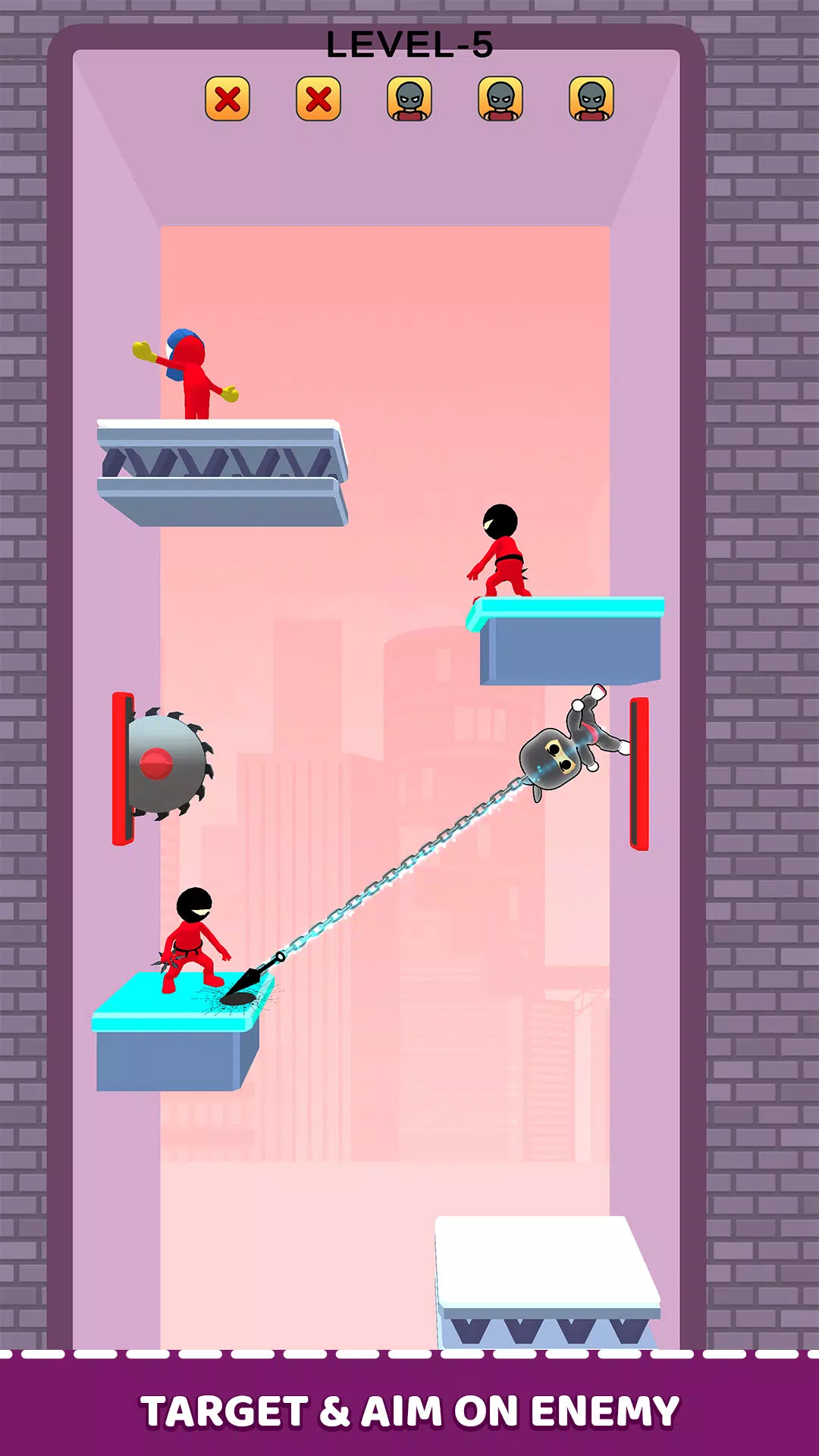
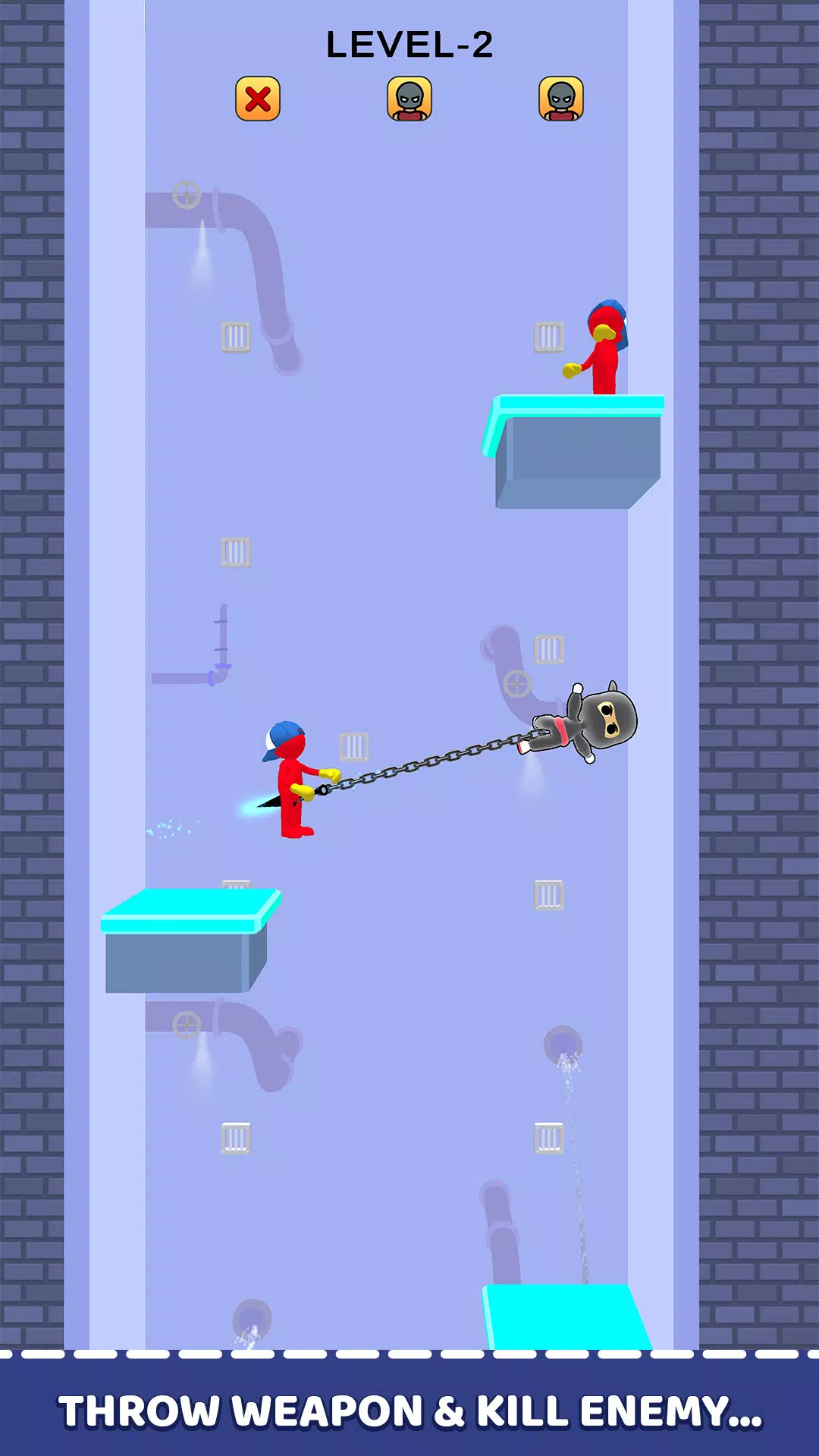
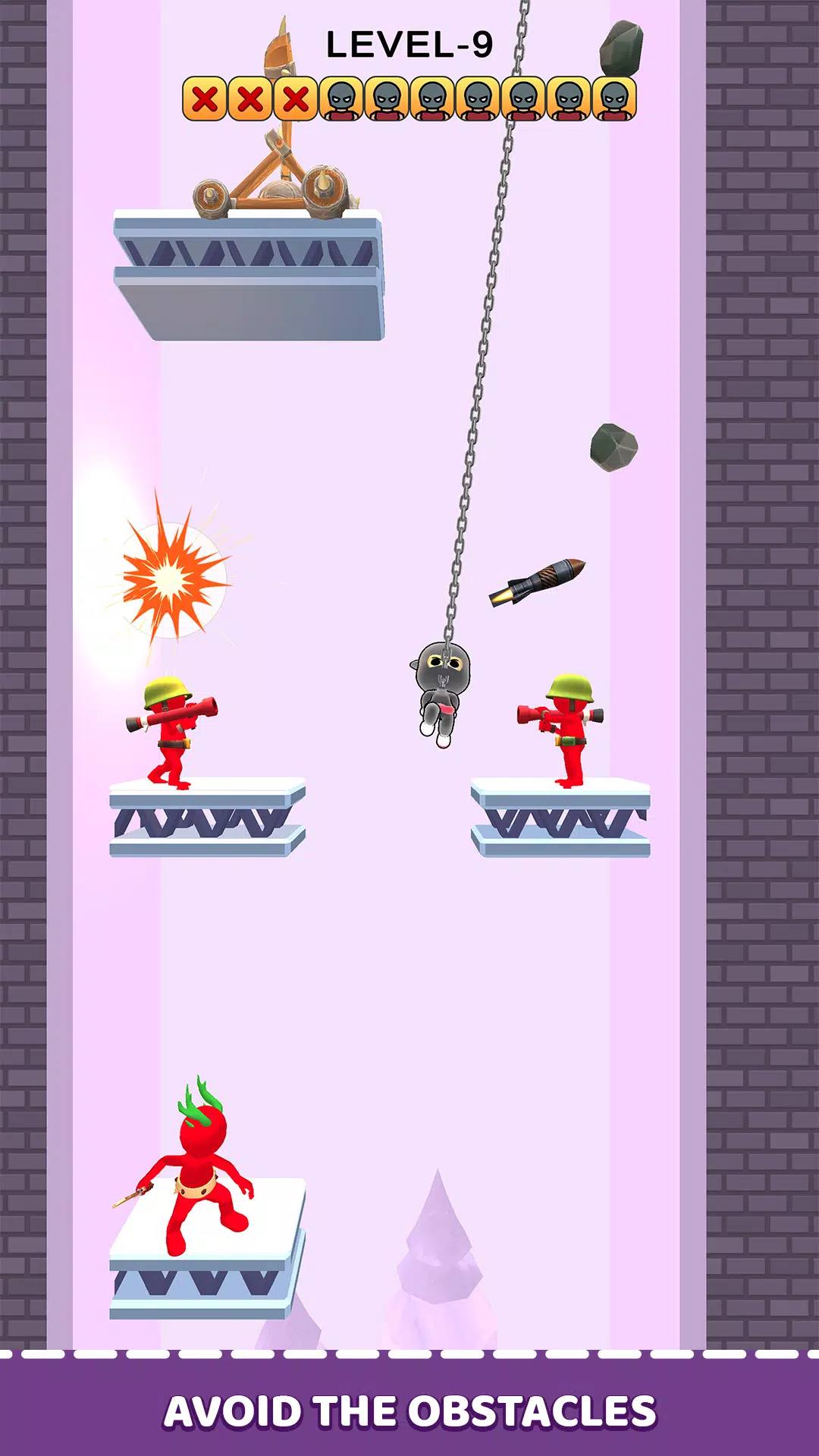
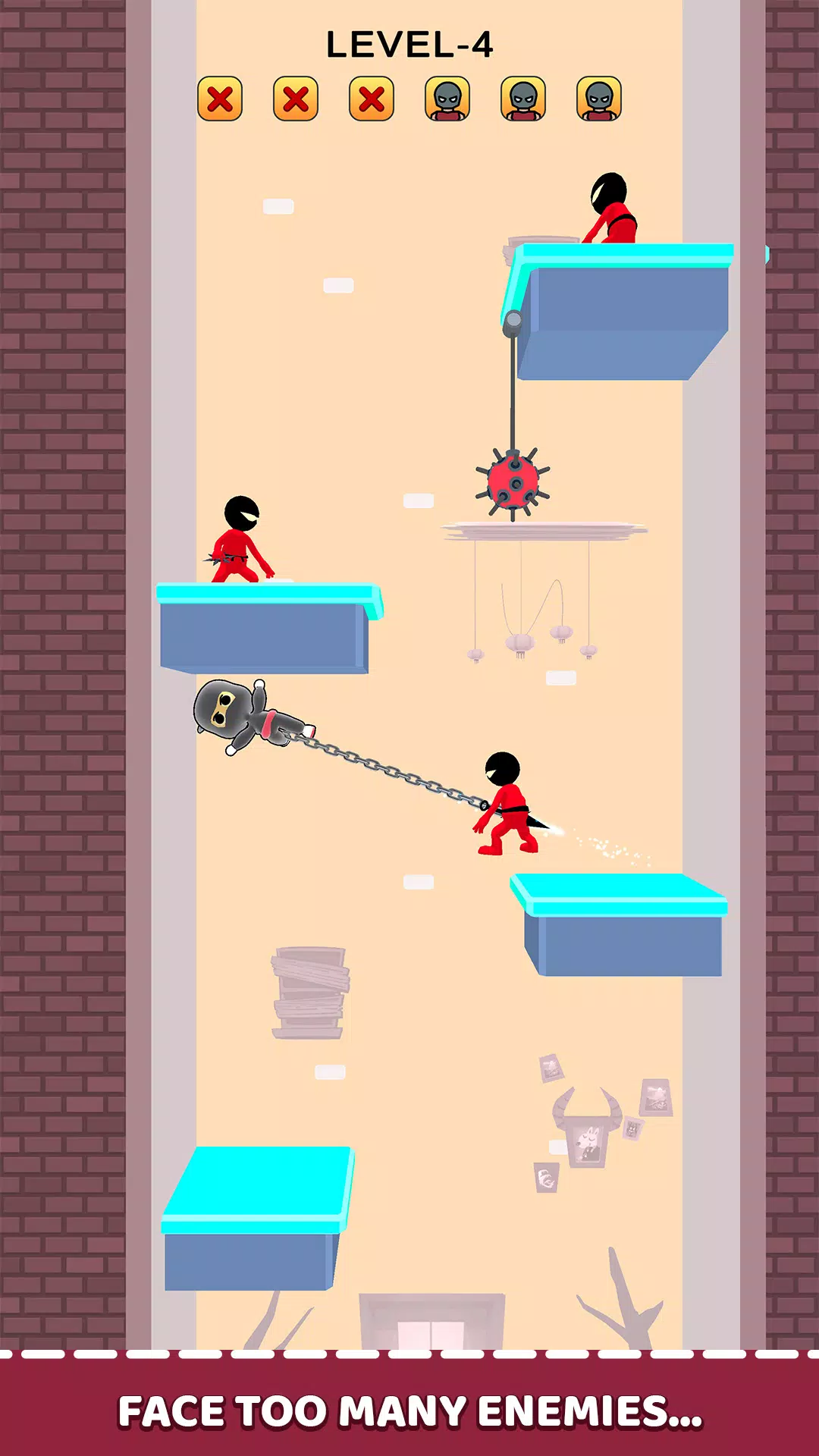
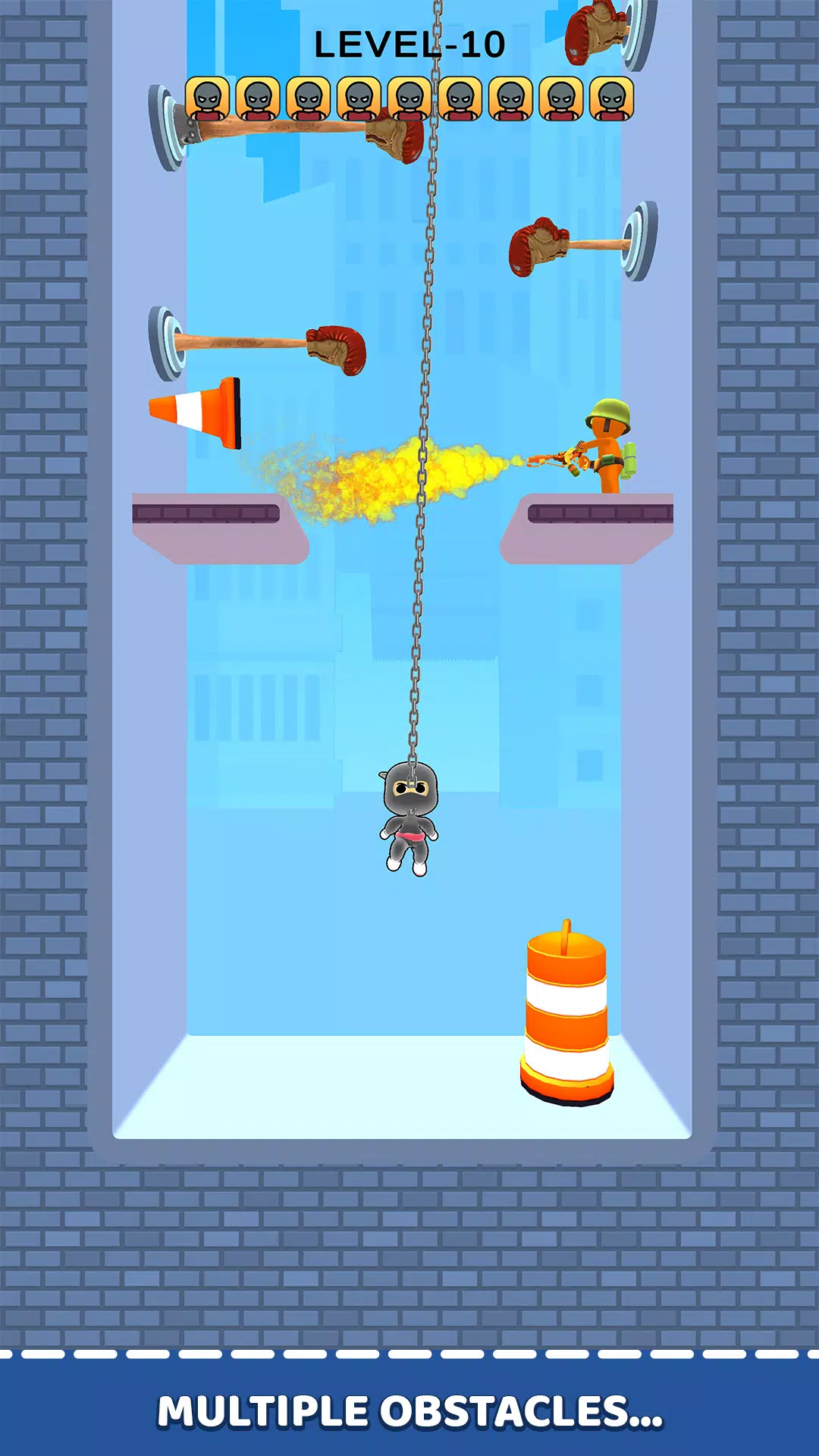
Rope Race 3D puts you in the shoes of a kunai-wielding ninja who races along ropes and rooftops to outmaneuver rival warriors and clear trap-filled arenas. Rope Race 3D blends fast, short-form action with stealth elements and timing-based challenges: teleport bursts let you close distance or escape, precision kunai throws enable ranged takedowns, and quick dodges or rope swings keep encounters dynamic. Each level is designed for rapid engagement — you learn patterns through repeat attempts, refine aim and timing, and gradually tackle tougher arenas and bosses as your skill improves.
The core gameplay centers on movement along ropes, rooftop traversal and quick, skill-based strikes. Controls are optimized for mobile: tap to throw or interact, swipe to dodge or change direction along a rope, and an on-screen modifier triggers short-teleport maneuvers. A simple context-sensitive input scheme reduces clutter while still allowing precise actions, and optional control sensitivity settings help players tune responsiveness for their device. Combat favors short windows of opportunity rather than long confrontations, so anticipating enemy patterns and mastering dash/teleport timing matters more than button mashing.
Progression is built around mastering mechanics and unlocking incremental upgrades that reward practice. Players can unlock new kunai types and slight weapon variations that change throw speed or recovery time, as well as cosmetic options for outfits and rope effects that personalize the look without altering core balance. Levels open up gradually: completing a set of arenas or beating a boss will grant access to harder zones and challenge modifiers. The game keeps meaningful choices modest and focused on playstyle refinement rather than collectible hoarding, so progression feels like a natural extension of getting better at the core mechanics.
Environments emphasize verticality and short, intense engagements: neon-lit cyber-cityscapes, tight rooftop clusters, and trap-lined corridors create varied contexts for the same core loop. Designers blend static hazards with moving obstacles and sightline-based enemy placements to encourage stealth or aggressive play. Visually, Rope Race 3D uses clean, stylized graphics with clear contrasts so important gameplay elements — ropes, enemy silhouettes, trap zones — read well on small screens. Audio cues and visual feedback are tuned to make each hit or near miss informative, helping players learn through sound and animation as much as through repetition.
Replayability comes from layered difficulty and score-oriented goals rather than a long campaign. Each arena includes optional challenge modifiers and target times that reward tighter execution, and boss encounters introduce distinct attack patterns that require adapted tactics. Rather than adding extraneous systems, Rope Race 3D leans on short, repeatable runs where personal bests, mastery of a tricky teleport trick, or beating a difficult boss act as the main incentives to return. For players who enjoy incremental mastery, the game offers a steady stream of fresh encounters as enemy behaviors and trap layouts are combined in new ways.
The user experience aims to be approachable for new players while remaining deep for those who pursue high-skill play. A brief interactive tutorial demonstrates rope traversal, teleport windows and kunai throws, and optional hints can be toggled off once familiar. Accessibility options include adjustable control sensitivity, a simplified input mode that reduces multi-touch requirements, and readable visual markers for traps and enemy telegraphs. The game is playable offline and is optimized for a range of devices, with performance settings to balance visual fidelity and frame rate for older hardware.
Rope Race 3D delivers tight, skill-based encounters that reward timing and spatial awareness. Its short, focused levels make it ideal for quick sessions while still offering depth for players who want to master movement and weapon timing. The visual and audio feedback is clear and purposeful, which helps both learning and immersion without relying on complicated menus or lengthy cutscenes.
The emphasis on reflexes and precision can be demanding for casual players who prefer slower-paced or story-driven experiences. Because the design prioritizes combat mechanics and challenge runs, narrative depth is limited and repetitive patterns can emerge over long play sessions unless players seek out higher difficulty modifiers. Some players may also prefer more extensive customization than the game provides, since cosmetic and modest weapon upgrades are intended to enhance play rather than change it dramatically.